Complete Guide to Takayama Festival in Spring & Autumn 2026
Known as one of Japan's most beautiful festivals, the Takayama Festival is another cultural event bustling with delicate yatai floats and lively night matsuri, yet with more pleasant spring and autumn weather for your ideal Japan tour. Below, we prepare an ultimate Takayama Matsuri travel guide for 2026, from the latest dates and schedule, to a sample itinerary with surrounding highlights to plan your memorable trip to Japan.
When is the Takayama Festival 2026/2027
Actually, the Takayama Festival is an annual event celebrated in mid-spring and autumn, held from April 14 to 15 (Takayama Spring Festival) and October 9 to 10 (Takayama Autumn Festival) each year.
| Takayama Festival | Date | Location |
|
Takayama Spring Festival (Sanno Matsuri) |
April 14 to 15 | Hie Shrine |
|
Takayama Autumn Festival (Hachuman Matsuri) |
October 9 to 10 | Sakurayama Hachimangu Shrine |
Takayama Festival Schedule
| April 14 | April 15 | October 9 | October 10 | |
| Float Display | 9:30 am to 4 pm | 9:30 am to 4 pm | 9 am to 5 pm | 9 am to 4 pm |
| Goshinko | 1 to 4 pm | 0:30 to 4 pm | 1:20 to 3:30 pm | 8:30 am to 4 pm |
| Night Festival | 6 to 8:30 pm | - | 6:15 to 8:30 pm | - |
Check the map of the Takayama Festival schedule below for more detailed times to join those events.
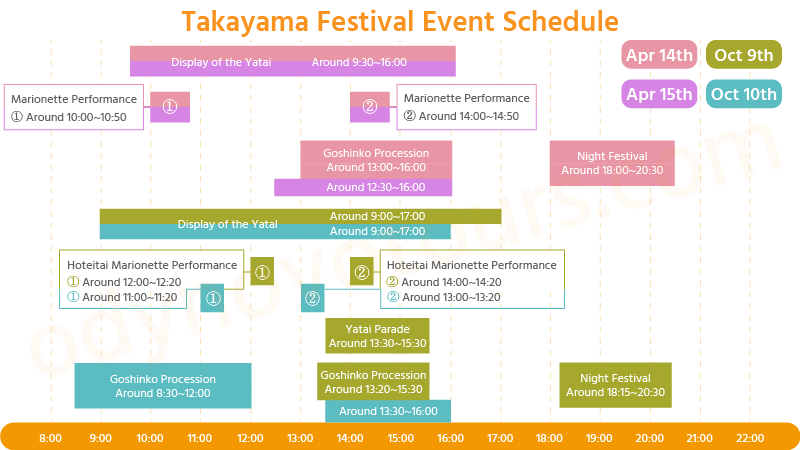 Takayama Festival Event Schedule
Weather During the Takayama Festival
Held in mid-April and early October, the weather during the Takayama Festival is comfortable and pleasant. You can enjoy the mild temperature between 5 to 15℃ (41 to 59℉), with gentle winds and a little bit chilly after sunset.
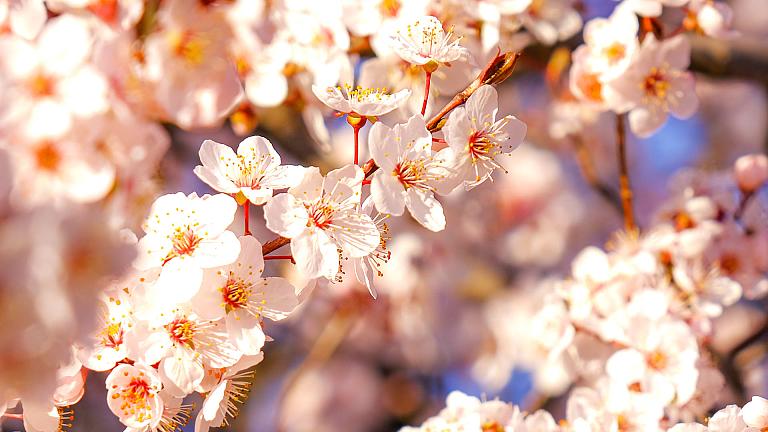
Meanwhile, you might catch some late cherry blossoms during your mid-April journey, as well as the moderate humidity paired with the sakura season. If you prefer more crispy air and clear skies, then the autumn days far from the wet season will be easier for your Takayama Festival journey.
What is the Takayama Festival
Simply speaking, the Takayama Festival is a seasonal event to celebrate the coming of spring and the harvest season. Highlighted by its dozen huge and delicate yatai (highly decorated hand-pulled floats, also known as dashi) floats with carvings, chochin lanterns, and mechanical karakuri puppets, as well as the grand night parade around the old town of Takayama, it is considered one of Japan's most beautiful festivals.
Sanno Matsuri, the spring Takayama Festival, is held around the Hie Shrine in the southern half of the old town, while the autumn one, also called Hachiman Matsuri, is at the Sakurayama Hachimangu Shrine in the northern half.
Recommended Tour Itinerary
Difference Between the Takayama Festival & Gion Matsuri
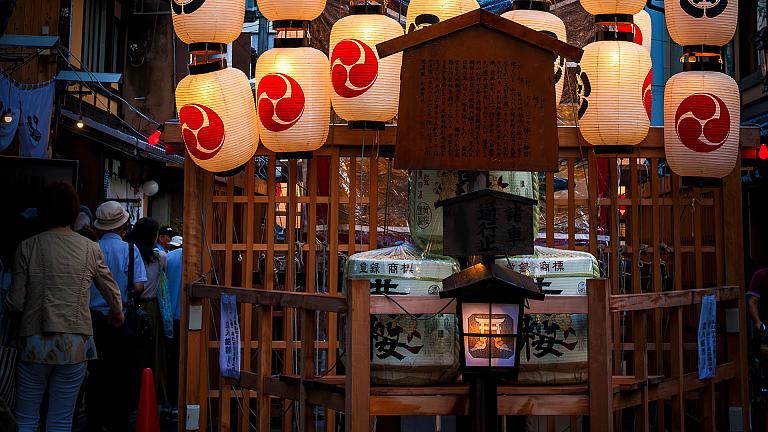
Compared to the month-long Gion Matsuri during the whole of July, we can consider the Takayama Festival a mini-sized Gion event, but it holds its float parade at night.
With fewer floats (about 12 in spring and 11 in autumn) during the Takayama Festival procession, yet still equipped with its unique puppet performance, a more tranquil Japanese countryside atmosphere, and much pleasant outgoing weather. And both are authentic cultural experiences to fulfill your Japan travel.
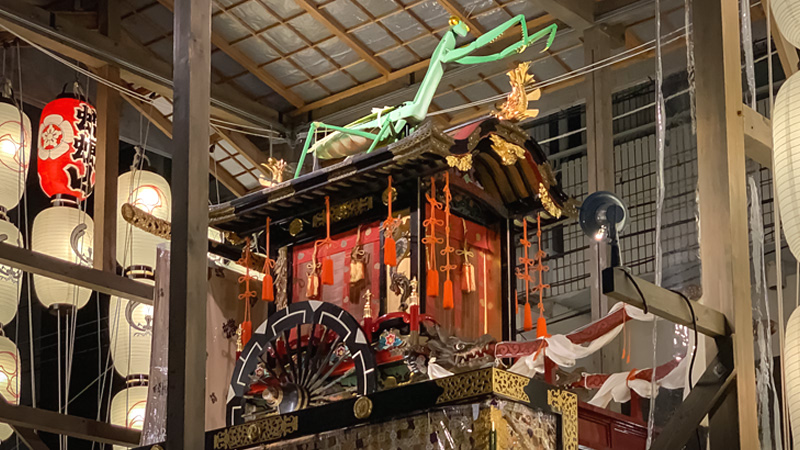 Japanese Traditional Floats
How Does the Takayama Festival Celebrate
The good news is that the spring and autumn Takayama Festival share a similar way of celebration (except the daytime float parade only takes place on the first day of the autumn festival), so you can pick your sightseeing date according to your holiday schedule and other seasonal highlights you would like to enjoy during your trip to Japan - pick the spring one for some stunning procession photos against with cherry blossoms!
Delicate Yatai Floats Display
One of the main events during the Takayama Festival, when almost the whole old town streets of Takayama are lined with 11 to 12 festival yatai floats like art. Leave some time there to discover their different carvings and textiles, capture those glowing gilded fittings beneath the shining sun, as well as those lit-up paper lanterns at night.
By contrast, these works of art are never brought out in the rain; instead, they are carefully kept inside the storage halls, where you can still see them. Hoping for good weather every time the festival comes around.
Karakuri Puppet Performance
The mechanical karakuri puppet performances (displayed 2 times each day) on top of yatai floats are the highlights that make Takayama special. Registered as a cultural asset, you can admire these marionettes playing their vivid dancing movements and elegant gestures - of course, under control by 6 to 9 skilled puppet masters.
| Date | Time | Where to See |
| April 14 & 15 | 10 to 10:50 am & 2 to 2:50 pm | Takayama Jinya (Otabisho) |
| October 9 | 0 to 0:20 pm & 2 to 2:20 pm | Sakurayama Hachimangu Shrine |
| October 10 | 11 to 11:20 am & 1 to 1:20 pm | Sakurayama Hachimangu Shrine |
Also, make your early arrival (about half an hour in advance) to secure the great spots for admiring the shows.
Goshinko Procession
It is the daytime mikoshi parade, where hundreds of locals dress in formal samurai costumes, escort and guide the portable shrine (carrying the patron deity of the Hie Shrine) to walk around the old town, paired with rhythm drums and lively lion dancing performance.
| Date | Time | Route |
| April 14 | 1 to 4 pm | From Hie Shrine to Otabisho |
| April 15 | 0:30 to 4 pm | From Otabisho to Hie Shrine |
| October 9 | 1:20 to 3:30 pm | From Omotesando St. to Takayama Police Station |
| October 10 | 8:30 am to 4 pm | From Omotesando St. to From Omotesando St. |
Night Festival With Grand Yatai Parade
Also known as Yoimatsuri, but only stages on the first night of the festival: hundreds of paper lanterns lit up the floats again, while locals put on their yukata and hakama to join the slow and sacred yatai float parade throughout the wooden buildings and ancient streets, which can be the true highlight of the Takayama Festival.
Note: There is also an afternoon yatai procession only at the autumn festival on October 9.
Map of Takayama Festival Procession Routes
Takayama Spring Festival
The spring festival procession is a round trip between Hie Shrine and Otabisho, and you can make your base around the Otabisho or Takayama Shrine for easy access to both the day and nighttime parade.
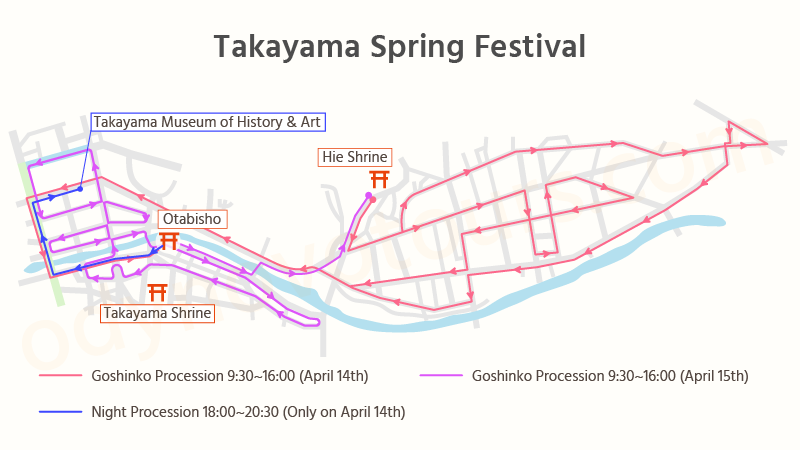 Map of Takayama Spring Festival Procession
Takayama Autumn Festival
With a daytime float procession on the first day, the parade routes of the Takayama Autumn Festival are more complicated. If the floats are your main target, make your linger around the Sakurayama Hachimangu Shrine is always a good choice.
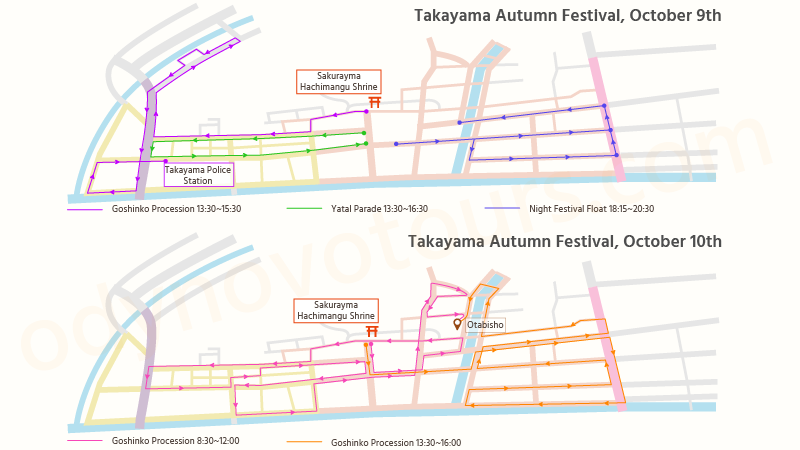 Map of Takayama Autumn Festival Procession
How to Get to Takayama
Located in Gifu Prefecture, Takayama's high altitude makes this mountain city fairly isolated, but you can still take advantage of Japan's well-connected transport network to make your arrival.
From Tokyo to Takayama
When starting from Tokyo, you can take a direct plane to Kanazawa first (about 1 hour), and after a 2-hour car drive or a 2.5-hour train ride from Kanazawa, you will be sent to Takayama city, with a pass by to Shirakawago, one of the most famous Japanese villages.
Or, benefit from the Japan railway system. Board the Tokaido Shinkansen to Nagoya after a 1.6-hour bullet train ride, and continue to the Hida Limited Express to Takayama, within 2.5 hours.
From Osaka to Takayama
Things go more easily when starting from Osaka, where you can reach Nagoya city in no more than 50 minutes. Then, make your train transfer to the Hida Limited Express, with a total time of 3.5 hours to reach.
While considering adding Shirakawago to your itinerary, still make Kanazawa your first stop (about 2.5 hours to reach).
More Attractions Around Takayama
- Shirakawago: Takayama's tranquil neighbor, with an idyllic countryside atmosphere to capture those hundred-year-old traditional grass-roofed houses, sip homemade sake wine and tofu dishes, and slow down your pace again inside this peaceful World Heritage Site.
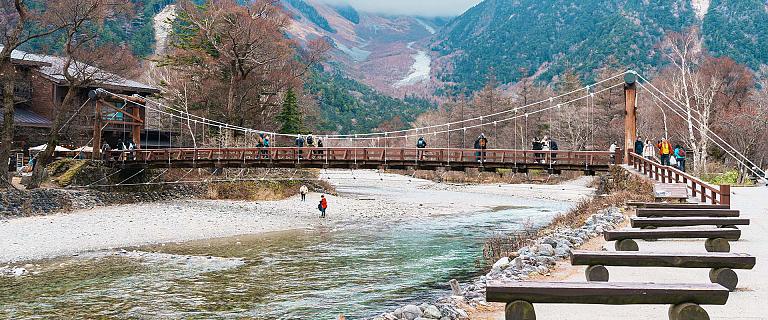
- Kamikochi: a scenic alpine valley, offers a better choice if you are looking for more about nature and outdoor activities, whether to make a deep dive into the Japanese mountains, or wander along the river with a simple camp. While during your autumn festival visit, it can also be the best places for some stunning fall foliage.
- Yuki no Otani (Snow Wall): mid-April is also the opening period of the Yuki no Otani, when you can catch the thick snow wall about 18 meters high. However, crowded and much cooler weather conditions may be more common to see during mid-April, so leave more time for this wonder drop by.
- Kanazawa: the "little Kyoto" of Kanazawa can be your ideal base for the castles, gardens, and ancient street collection, best for history fans to have a tea ceremony, discover the samurai culture, and enjoy kaiseki cuisine. Its convenient transport there also makes a suitable last stop before heading to other cities.
Recommended Tour Itinerary
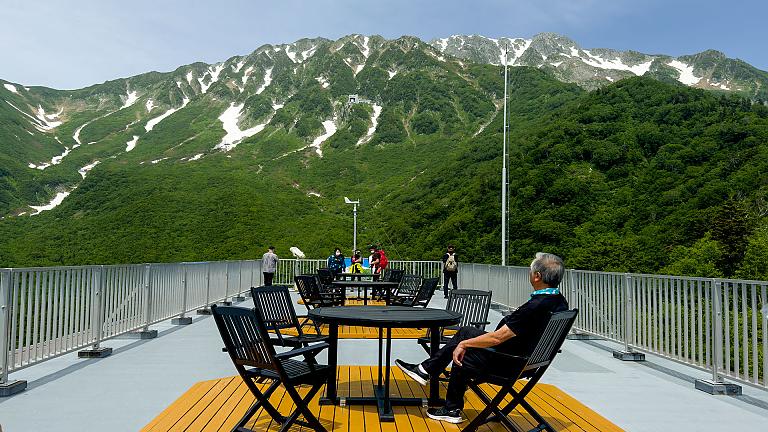
Sample Japan Itinerary With Takayama Festival
The different seasons' celebrations of the Takayama Festival are the biggest advantage you can take advantage of, and below is a sample itinerary you can combine with the cherry blossoms or autumn leaves, or just contact us for more details and ideas to plan your Japan trip with the Takayama Festival.
- Day 1-2 Osaka: Entry from Osaka, stay 1 or 2 days there, and relax with its lively beats, tasty food, and cozy city attractions.
- Day 3-4 Kyoto: Make Kyoto your next stop, where you can still capture its stunning sakura blossoms against those iconic temples and shrines during your early April visit in Japan.
- Day 5-6 Kanazawa-Shirakawago-Takayama: time to head to Kanazawa, and make your one-day drop by at Shirakawago before your festival celebration at Takayama.
- Day 7-8 Takayama: Time for the Takayama Festival, join the procession from day to night, enjoy festival food, and take your Instagram photos.
- Day 9 Kamikochi: Day trip times, pick somewhere to linger before leaving Takayama, and Kamikochi is the most recommended during your autumn visit.
- Day 10-12 Tokyo: From more attractions to convenient transport, take Tokyo as your final stop to conclude your journey.
Other Japanese Festivals You May Also Like
- Gion Matsuri: Held in July, it is a month-long traditional summer event with more floats to display and see during the grand parade, another one of the three most beautiful festivals in Japan.
- Aomori Nebuta Festival: Takes place in the northern city of Aomori, also a summer festival, but with a more relaxing atmosphere, bustling with various shapes of large lantern floats, including historical and cartoon characters
- Chichibu Night Festival: The final one of the most beautiful festivals in Japan, Chichibu Night Festival in December is a more visual matsuri compared to those in Takayama and Gion, where you can also see fireworks shows and Kabuki performances on the floats.
Recommended Tours
-
 Hokkaido Autumn Foliage Nature Tour8 DaysSapporo, Furano, Daisetsuzan, Lake AkanExplore This Tour
 -
-
Best of Tokyo & Snow Monkey in Nagano5 DaysTokyo, Nagano, Matsumoto, Narai, jukuExplore This Tour
-
Japan Hanabi Festival Tour: Nagano Fireworks Show 20269 DaysTokyo, Nagano, Kyoto, Nara, OsakaExplore This Tour

Related Posts You May Like