How to Plan a Trip to the Izu Peninsula, Japan
Within easy reach of Hakone and Tokyo, Izu is a compact peninsula where scenic train lines hug the coast, winding roads connect hidden coves, and volcanic landscapes shape both its terrain and its rich onsen culture. Yet this same layout also makes a Japan tour to the Izu Peninsula slightly less straightforward.
In this guide, we'll navigate Izu's highlights, choose the right base, and plan an itinerary that makes the most of its unique location and travel rhythm.
- Is the Izu Peninsula Worth a Visit
- The Best Time for the Izu Peninsula
- How to Travel from Tokyo to the Izu Peninsula
- How to Get Around the Izu Peninsula
- Is an Izu Day Trip from Tokyo Recommended
- East Coast or West Coast, Which is Better
- What to Expect in the Izu Peninsula
- Where to Stay in the Izu Peninsula
- Sample Izu Itinerary for Your Reference
Is the Izu Peninsula Worth a Visit
While the Izu Peninsula isn't typically a first-choice destination for first-time visitors to Japan, it is well worth considering if you are seeking a balance of city exploration with coastal landscapes, beach relaxation, hot springs, quieter nature, and a more peaceful side of Japan.
Compared to the more classic golden route through Tokyo, Kyoto, and Osaka, Izu can be a detour between Tokyo and Kyoto, offering a slower, more scenic experience to its mountains, waterfalls, and rugged coastline, which appeals especially to families and couples looking to unwind.
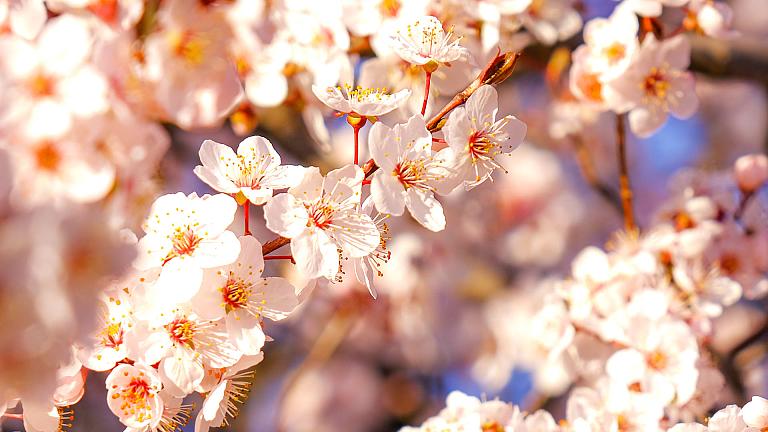
Its location makes it particularly convenient for those flying in and out of Tokyo, which works well as a natural extension of a Tokyo itinerary, whether as a short coastal escape or as part of a broader route that includes Hakone and views of Mount Fuji (especially the February journey to capture those early cherry blossoms).
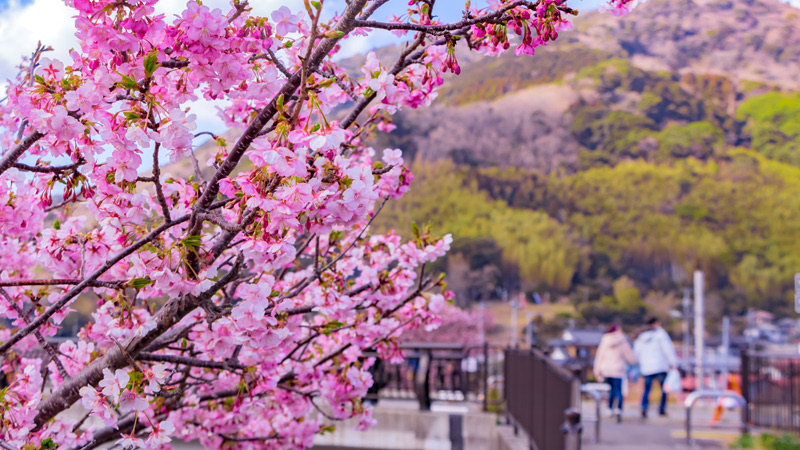 Early Cherry Blossoms in Kawazu Town
Spring is the Best Time for the Izu Peninsula
Though it is a year-round destination, spring is always the best time to visit the Izu Peninsula. Thanks to Izu's unique early-blooming cherry blossoms, you can expect a longer cherry blossom season (from February to mid-April) with more flexibility to avoid peak crowds and to secure more comfortable prices.
If you're looking for the most comfortable weather overall, both spring (March to May) and autumn (September to November) offer pleasant temperatures and clear skies for coastal walks and outdoor exploration.
Summer is also a popular season (usually warmer and more crowded) to enjoy its beaches and coasts, rivaling Hawaii, and autumn, the fall foliage season, is ideal for both the mountain and coastal hike. Winter, considered the low season, is more comfortable for enjoying the hot spring with the cooler air.
Recommended Tour Itinerary
How to Travel from Tokyo to the Izu Peninsula
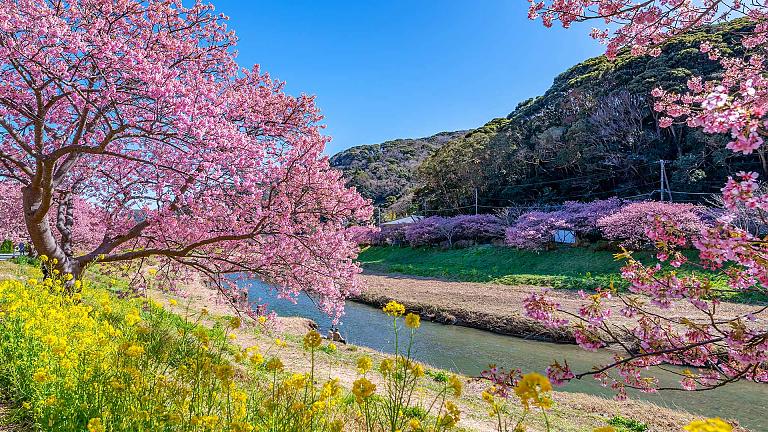
The Shinkansen bullet train is the most convenient way to travel from Tokyo to the Izu Peninsula. You can take the direct Tokaido line from Tokyo to Atami, which usually takes around 1 hour.
However, when visiting further to Kanazu or Shimoda in the southern peninsula, there will be another 1.5-hour train ride along the Izukyu Railway.
How to Get Around the Izu Peninsula
While exploring the eastern coast, you can still take advantage of public transportation networks. Train lines connect the coastal destinations well, from Atami to Shimoda. However, for the central and western parts of Izu, a private car ride is more recommended, since buses run less frequently, and the tracks have not yet been laid completely.
Waiting times can be long for public transport during your central and southern Izu trip. Alternatively, consider traveling with Odynovo for a more seamless and carefree journey. Led by a private driver and guide to explore the peninsula comfortably, without worrying about schedules or navigation, while also benefiting from local insights and a well-planned route. Please feel free to contact us.
In short, trains are ideal for the east, but a car (or a private tour) is the best way to get around the whole peninsula of Izu.
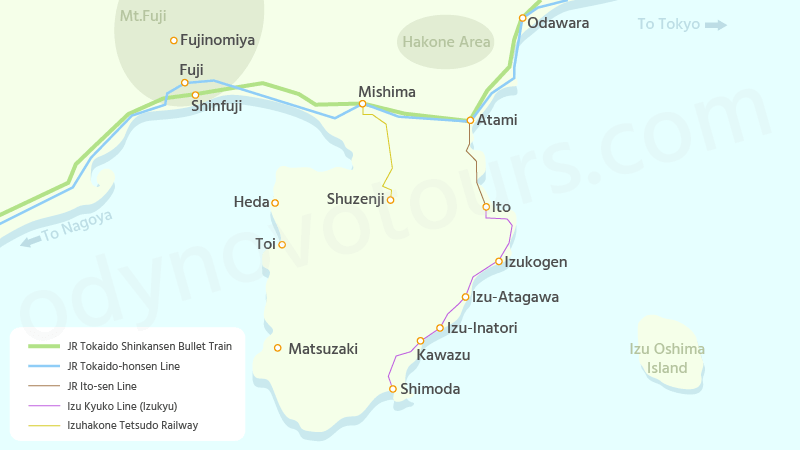 Izu Peninsula Train Lines
Is an Izu Day Trip from Tokyo Recommended
A day trip from Tokyo to the Izu Peninsula is possible, but it works best when you focus on the northern part of the peninsula, especially Atami and Mishima, thanks to their direct Shinkansen connections for your quick arrival.
From these gateways, you can easily continue south through local railways to Shuzenji or to Ito. However, traveling further south to Kawazu or Shimoda is not recommended as a day trip: you'll likely spend more time in transit than actually exploring.
If your goal is to experience the peninsula more completely, including its coastal scenery and slower pace, it's best to allocate 3 to 5 days to explore Izu.
East Coast or West Coast, Which is Better
Simply speaking, east is the common first-time option for ease and energy, and the west is more about solitude, untouched coastline, and the Fuji view.
| East Coast | West Coast | |
| Accessibility | ★★★★★ | ★★★☆☆ |
| Crowds | ★★★★☆ | ★★☆☆☆ |
| First-time Friendly | ★★★★★ | ★★☆☆☆ |
| Experience | Easy & structured | Wild & exploratory |
| Scenery | Classic Izu of dramatic cliffs, beaches, Mt Omuro & early cherry blossoms | Fuji views, sunsets, traditional fishing villages & hidden coves |
The East Coast is relatively developed compared to the West. The atmosphere is more resort-like, with seaside promenades, onsen towns, easy-to-reach viewpoints, and a wider range of accommodations and dining options. Not to mention the train connections from Tokyo to Shimoda, this side is ideal for travelers who prefer convenience and shorter travel times.
Less connected by public transport, the West Coast feels more remote, quieter, and closer to nature. It's best suited for travelers who enjoy scenic drives, slower-paced exploration, and off-the-beaten-path experiences, particularly couples, repeat visitors, or those seeking a more tranquil, nature-focused getaway.
What to Expect in the Izu Peninsula
- Traditional hot springs ryokan stays with seaside views (Atami, Kumomi)
- More tranquil and less crowded cultural experience inside the forest or along the river (Shuzenji, Toi Gold Mine)
- Dramatic coast hikes with cliffs, lava formations, and suspension bridges (Jogasaki Coast, Kawazu Seven Trail)
- A relaxing chairlift ride to the extinct volcano of Mt. Omuru, walking around the summit while capturing the distant Mt. Fuji
- Some of Japan's best beaches with a tropical feel around Shimoda (Imaihama, Shirahama, Yumigahama)
- Fresh wasabi in local dishes or even visit farms to see how it's grown in pristine environments
- Refreshing waterfall spots like Kawazu Nanadaru Waterfalls & Joren Falls
- See Capybaras soaking in hot springs at Izu Shaboten Zoo
- Early cherry blossom viewing in Kawazu and Atami as early as February
 Capybara Enjoying at the Zoo
Where to Stay in the Izu Peninsula
For most travelers, the eastern coast is the most practical and comfortable base thanks to better transport connections and a wider range of accommodations.
- Stay in Atami if you're coming from Tokyo, Hakone, or around Mount Fuji, and planning a short trip focused on the northern Izu. It's well connected by Shinkansen and works well as an easy introduction to Izu.
- Ito is a great midpoint base if you plan to continue south or explore central Izu, with good rail access to Mt Omuro and Jogasaki Cape.
- Kawazu stands out for its early cherry blossom viewing spots if you want to take your time and enjoy seasonal scenery.
- Shimoda in the south is ideal for travelers looking for a more resort-like, seaside experience, though it does require more travel time to reach.
For central exploration, focus on Shuzenji Onsen, the riverside hot spring ryokan, not very far from the Shuzenji Temple.
While on your West Coast journey, Matsuzaki and Nishi Izu are ideal bases with easy reach to plenty of hot spring resorts, as well as the famous Dogashima.
Sample Izu Itinerary for Your Reference
East Coast of Izu from Atami to Shimoda
You can take this 3-day Izu journey as a relaxing break between your Tokyo and Kyoto sightseeing, or an extension after your Hakone or Mt. Fuji sightseeing.
For early cherry blossom viewing:
- Day 1: Atami & Ito Sightseeing → Day 2: Kawazu Cherry Blossom & Nanataru Waterfall → Day 3: Shimoda
For summer beach holiday:
- Day 1: Atami Sightseeing → Day 2: Ito Coastline → Day 3: Kawazu Waterfall & Shimoda Beaches
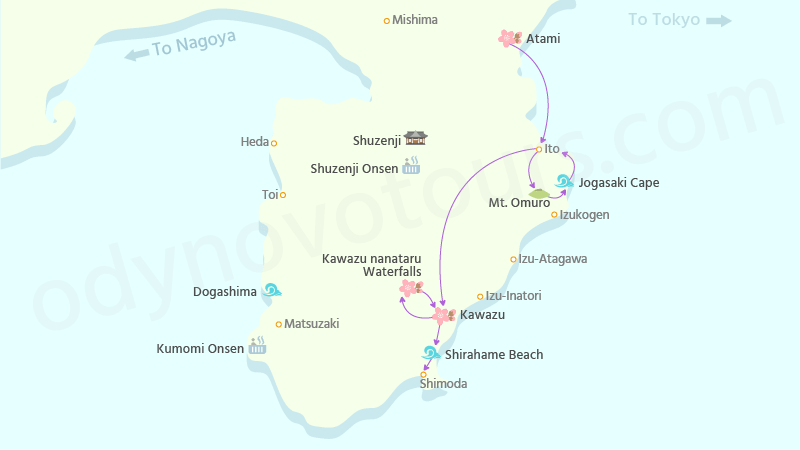 Izu Peninsula Itinerary Along the East Coast
Izu Peninsula Round Trip
Route: Atami→Ito→Kawazu→Shimoda→Matsuzaki→Toi→Mishima
For more days to explore the whole peninsula, it is recommended to follow its coastline from east to west, and make your stay or linger according to your interest. For example, make an overnight stay at Kawazu during the early spring visit, and Shimoda is more recommended for the summer holiday lingerers.
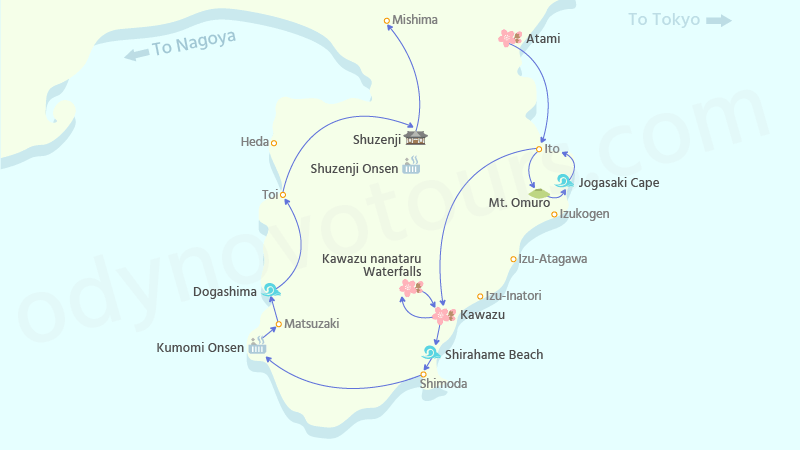 Izu Peninsula Round Trip
Recommended Tours
-
 Japan Cherry Blossom Tour
(Late Mar ~ Mid-Apr 2027)14 DaysTokyo, Mt. Fuji, Takayama, Shirakawa-go, Kanazawa, Kyoto, OsakaExplore This Tour -
Japan Family Vacation: Disneyland & Universal Studios10 DaysTokyo, Kyoto, Nara, OsakaExplore This Tour
-
-
Related Posts You May Like