Best Time to Visit the Sahara Desert
As a world-famous natural wonder, the Sahara Desert in Morocco attracts travelers with its wonderful golden dunes and the endless starry sky. Another impression many people have, of course, is its extreme heat. But what's the weather really like in the Sahara? When is the best time to visit? In this guide, you'll find all the answers and everything you need to know for a truly enjoyable desert experience.
Quick Answer on When to Visit the Sahara Desert
The overall best time would be spring (March-early May) & autumn (late September-November). The weather in the Sahara Desert during this time is at its best. Daytime temperatures are warm but not too hot, and nights remain mild. Pleasant weather means your activities are almost unlimited, and you can fully enjoy a pleasant desert tour.
This answer is for most people, but keep on reading if you want more details to get a thorough understanding and figure out the best time for you.
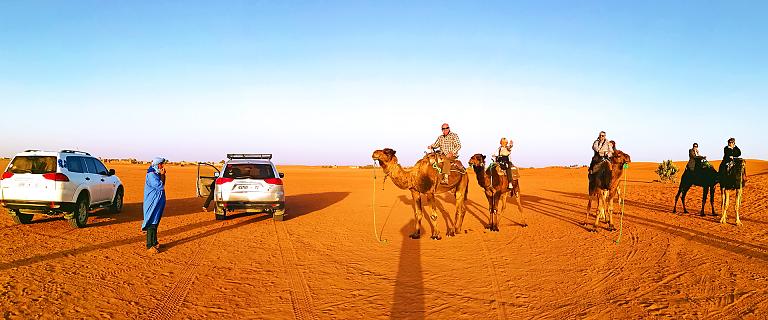
 Camel Ride in the Sahara Desert
Spring & Autumn: Ideal Travel Seasons
Exact time range: March-Early May & Late September-November
The weather of spring and autumn in the Sahara Desert is lovely. During these two seasons, the daytime temperatures are usually between 20-32°C (68-90°F). Even in days above 30°C (86°F), the weather is rather dry without stifling humidity. So you will feel at ease when visiting the Sahara Desert in these two seasons. Nights are generally balmy at around 10-18°C (50-64°F), but you may feel a bit chilly after the sun sets, so it's better to bring a light jacket to keep warm.
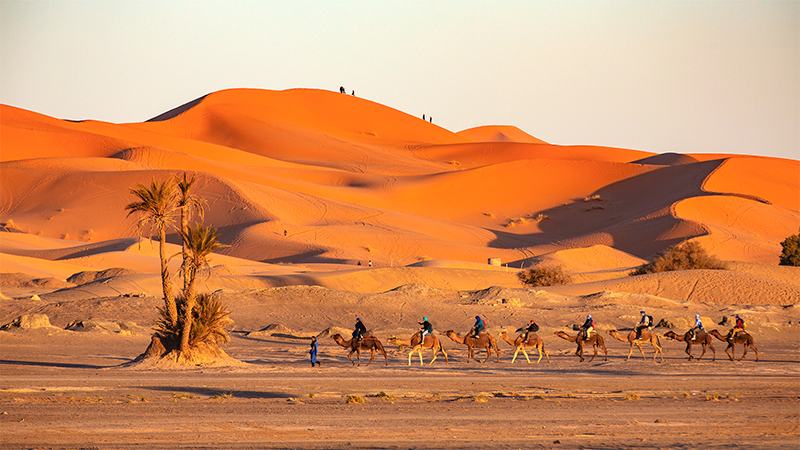
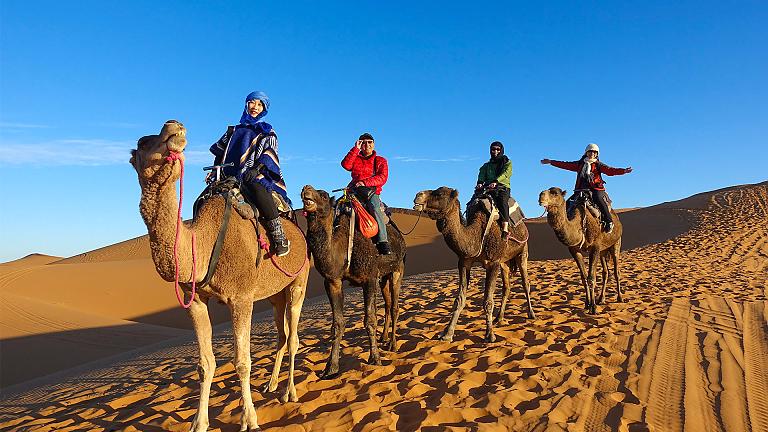
Spring and autumn hold a perfect balance of warmth and comfort for all sorts of desert activities, like sandboarding. Gliding on the soft sand between waves of dunes, you'll have a true sense of desert adventure. Led by professional guides, even first-timers can jump right in. It's also an excellent time to take a camel ride through golden dunes and watch the orange sunset, which is one of the most iconic experiences of a Sahara Desert tour. Spending a night in a desert camp would be truly unforgettable, and the mild nighttime temperatures in spring and autumn make it much more comfortable. The bedding provided by the camp is usually enough to keep you warm.
Practical Tips
Although spring and autumn are when you can enjoy great weather, there are also several things to keep in mind.
Be Prepared for Occasional Sandstorms in Spring
Sahara in spring can be windy, and occasional sandstorms occur, so it would be practical to bring a scarf to cover your face. Late May and early September are less ideal, as the rising temperatures would trouble you, around midday in particular.
Book in Advance
Widely considered as the best times for a Sahara Desert tour, spring and autumn are also the busiest seasons, so be sure to book in advance. Tourists flood in, but after all, you won't feel overcrowded in an open space like a desert. Accommodations are quite limited and fill up really quickly during the peak season, especially the luxury camps with better facilities. Make sure to book at least two months in advance.
Recommended Tour Itinerary
Winter: Prepare for Cool Days and Cold Nights
Exact time range: December-February
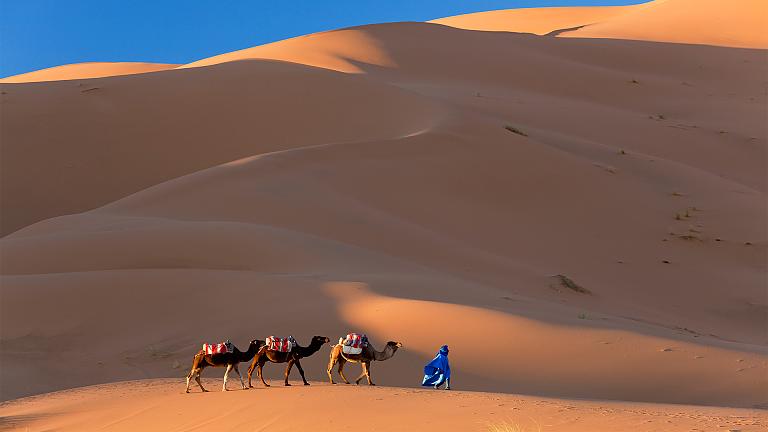
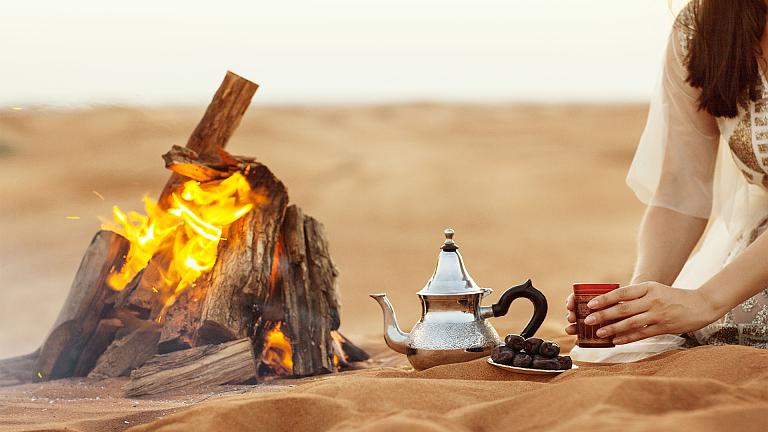
The Sahara Desert in winter is not as cold as you may imagine. Daytime stays sunny and cool at around 15-25°C (59-77°F), ideal for all kinds of outdoor activities. Temperatures drop dramatically after sunset. Nights could be freezing at 2-10°C (36-50°F), but it won't bother you much if you arrange your outdoor activities in daytime, bring enough warm clothes, and stay by a campfire at night.
Choosing luxury camps for overnight stays in winter will make the experience much better, where thick blankets and even heated tents are provided. Make sure the bedding is warm enough for cold winter nights in the desert before making a reservation.
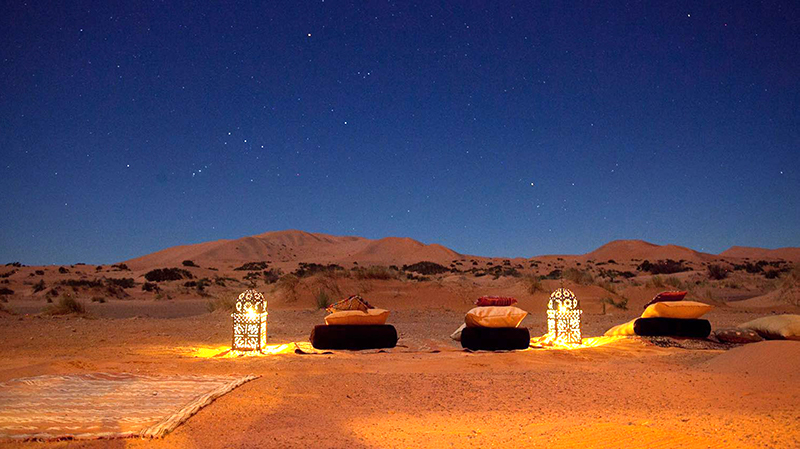
There are fewer tourists in winter, and the night becomes particularly peaceful, which is the perfect time for stargazing. In winter, the sky over the Sahara Desert becomes even clearer. Under the vast starry sky, time seems to come to a standstill. The serene feeling is something you can't find anywhere else or at any other time.
If you are visiting the Sahara Desert during Christmas or New Year's Eve, you'll feel the extra-special festive atmosphere. People gather by the campfire, singing and dancing to celebrate. This is also when you can enjoy the traditional Berber performances and experience Moroccan culture.
Recommended Tour Itinerary
Summer: Avoid the Extreme Heat
Exact time range: June-August
A Sahara Desert tour in summer is definitely an adventure. The desert reaches its peak heat during June-August. Temperatures are around 35-45°C (95-113°F) in daytime and even higher sometimes. It's hard to cope with the extreme heat, so summer is usually a time we don't recommend visiting the Sahara. Some camps are equipped with air conditioning, but only available during certain hours in summer, and the tents don’t retain cool air very well.
If summer is the only time that you are available for a desert tour, consider the Agafay Desert near Marrakech as a nice alternative. The rocky desert of Agafay is basically similar to the sand dunes in the Sahara Desert, and much more friendly to travelers. The shorter drive to Agafay and the luxury camps with air conditioning and swimming pools will greatly alleviate the discomfort caused by the heat. Limit your outdoor activities to dusk, night, and dawn, times that are relatively cooler.
Summer becomes the cheapest time to visit the Sahara Desert. But for seniors and those with kids, or who can't handle the long drive, summer is not the right time for you. Consider your physical condition carefully when planning your trip.
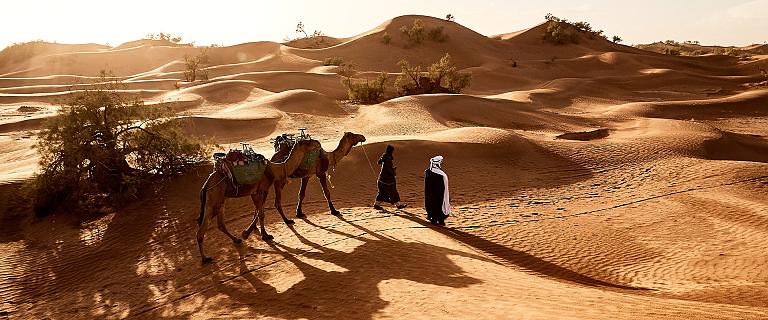
 The Sahara Desert at Night
The Most Cost-Effective Time for a Sahara Desert Tour
Seasoned travelers know: shoulder season is often the best value, basically for anywhere. In the Sahara Desert, early May and late September are when you can enjoy good weather and fair pricing. Both months sit right on the edge of the hot season. Crowds of the peak season leave, and the price falls accordingly.
Travelling to the Sahara Desert in Winter (December-February) would also be a cost-effective choice. There are few tourists at this time, and the price is also reasonable. Another important thing to notice is that tourists and prices both go up greatly when the New Year and Christmas come. Avoid visiting the Sahara Desert around this time if you would like to make the most of your budget.
Best Time for Special Events in the Sahara Desert
March to April is the golden time for you if you are seeking a unique festive vibe. The weather is delightful, and the events and festivals taking place at this time would make your tour even more wonderful.
The Marathon des Sables
The Marathon des Sables is one of the biggest events held in the Sahara. The dates of the competition vary every year but usually fall in April. Competitors need to cross 250 km of dunes and desert plateaus in 10 days. It's almost the hardest foot race in the world. Although it's extremely tough and challenging, nearly a thousand people still take part in it every year. If you are interested, you may register for the competition on their official website. Remember to check the date and submit the registration form in advance.
The International World Music Festival
The International World Music Festival of Merzouga is usually held in late March or early April. The festival transforms the quiet dunes of Merzouga into a vibrant open-air stage. Musicians from across Africa, Europe, and all around the world gather to perform in the desert. Expect to immerse yourself in a mix of traditional Berber rhythms, Gnawa music, and contemporary fusion.
The Nomads Festival
Besides international events, there are also some local festivals with a rich cultural heritage of the Sahara region. The Nomads Festival typically takes place in mid-March in M'Hamid El Ghizlane, which is the gateway to the Sahara Desert. During the festival, you can watch camel races, desert sports, and musical performances by local tribes, which is the most authentic way to join in the Nomadic lifestyle.
What to Wear & Pack
Lightweight, breathable fabrics would be a wise choice for clothing. Don't forget to bring some warm layers for cool nighttime, particularly in winter. Sun protection is also important: wear long sleeves or apply high-SPF sunscreen. Sunglasses and hats with wide rims could be very useful. Closed-toe shoes work perfectly when you are walking in the desert or doing sandboarding.
Keeping hydrated is crucial. Water is provided in most camps, but make sure to bring a reusable water bottle with you to stay hydrated.
Plan Your Sahara Desert Tour With Odynovo
A trip to the Sahara will definitely be a beautiful memory in your life, but only when you plan properly. At Odynovo, our experienced consultants craft well-rounded itineraries covering not only the Sahara Desert, but also any other Morocco highlights that interest you. We arrange every detail: air-conditioned private transportation, handpicked accommodations, and 24/7 support to take care of you every step of the way. Contact us or send us an email at [email protected] to start a memorable Sahara Desert tour.
Recommended Tours
-
 Sahara Desert Tour From Marrakech7 DaysMarrakech, Ouarzazate, Erfoud, Erg Chebbi, SkouraExplore This Tour
 -
Morocco Honeymoon Vacation14 DaysCasablanca, Fez, Erfoud, Merzouga, Dades Gorges, Ouarzazate, Marrakech, EssaouiraExplore This Tour
-
-
Grand Morocco Vacation15 DaysCasablanca, Rabat, Tangier, Chefchaouen, Fez, Erfoud, Ouarzazate, Marrakech, EssaouiraExplore This Tour
Related Posts You May Like
-
Morocco 7-Day Itineraries: 4 Travel Ideas You Can't Miss
-
How to Plan a Senior Trip to Morocco 2026
-
How to Plan a Family Trip to Morocco 2026
-
How to Plan a Trip to Morocco for First-Timers
-
Where to Stay in Morocco: 10 Best Riads You Will Love
-
Guide to Erfoud, Gateway to the Erg Chebbi Dunes in Morocco