Gion Matsuri 2027: Guide to Kyoto Parade of Floats
Towering wooden floats rolling through Kyoto's narrow streets, and the sound of taiko drums echoing under the summer heat. Gion Matsuri is a thousand-year spectacle to fill your Japan trip in July with color, music, and festa fun. From the details about each event to the best viewing spots to fulfill the celebrations, check this guide below for everything you need to know about Gion Matsuri Kyoto 2027.
- When is Gion Matsuri in Kyoto 2027
- What is Gion Matsuri
- What Highlights to Expect of Gion Matsuri
- Where to Join the Main Festival Events
- Best Floats Viewing Spots of Gion Matsuri
- More Attractions for Kyoto Summer Journey
- Where to Stay During Gion Matsuri
- Other Summer Japan Festivals You May Also Like
When is Gion Matsuri in Kyoto 2027
The Gion Matsuri will be held throughout July 2027. It is a month-long festival with main events taking place between July 14 to 17 (Saki Matsuri) and July 21 to 24 (Ato Matsuri).
For grand float processions (Yamaboko Junko), make your visit on July 17 or 24.
This centuries-old festival lights up Kyoto with parades and music, blending sacred rituals with joyful street life. Check the Gion Matsuri schedule for your reference:
| Date | Main Event | Celebration |
| Jul 1-5 | Kippuiri | Opening ritual for preparations, with prayers for safety and success |
| Jul 10 | Mikoshi Arai | Welcome portable shrines with a lantern parade and sacred water |
| Jul 10-13 | Floats Building | Float building and decorating |
| Jul 14-16 | Yoiyam Evenings | Night stalls with street food, parties, and night performances |
| Jul 17 | Yamaboko Junko | Grand parade of Yamaboko and Mikoshi from Yasaka Shrine |
| Jul 18-20 | Floats Building | Float building and decorating |
| Jul 21-23 | Yoiyam Evenings | Night stalls with street food, parties, and night performances |
| Jul 24 | Yamaboko Junko | Smaller parade of Hanagasa and Mikoshi back to Yasaka Shrine |
| Jul 28 | Mikoshi Arai | Return and purify the mikoshi with sacred water from the Kamo River |
Kyoto's Weather in July
Catching the tail of Japan's rainy season, July in Kyoto is hot and humid, with daytime highs averaging 30 to 34°C (86 to 93°F) and a high humidity above 70%. You can expect intense sunshine, occasional showers, but also warm evenings perfect for festival strolls.
Prepare well with light and breathable clothing. Linen, cotton, or moisture-wicking fabrics work best, or just follow the locals to wear yukata (summer kimono) during festival nights. Bring a foldable or mini-electric fan, a hat, and your water bottle, and wear comfortable sandals or sneakers: those games and performances along the bustling streets will make you linger.
What is Gion Matsuri
Along with Tenjin Matsuri and Kanda Matsuri, Gion Matsuri is one of Japan's Three Great Festivals, as well as one of Kyoto's most famous and longest-running summer festivals, with a dazzling display of tradition, faith, and craftsmanship that dates back over 1,100 years.
Originally held to appease the gods during an epidemic in 869, it evolved into a grand community celebration that honors the Yasaka Shrine deity, Susanoo-no-Mikoto, the protector against disease and disaster.
What Makes Gion Matsuri Special
The Gion festival has quite a long celebration lasting about a month, and the whole city becomes part of the stage, where lanterns glow, taiko drums echo, massive wooden floats process, and each neighborhood takes pride in its own float and rituals, ideal for taking an authentic look into Kyoto's deeply rooted traditions.
More Facts About the Gion Festival
- There are 34 floats during the parade, with two types: hoko (halberd, carrying halberds and spears for the purification ritual) at 11 and yama (mountain, with life-size Shinto and Buddhist deity figures) at 23.
- The iconic hoko floats can reach 25 meters tall and weigh up to 12 tons, while the smaller yama float (about 6 meters high) still needs about 20 people to carry, earning the nickname of moving art museums.
- These giant floats are assembled without nails; only traditional wooden joinery and ropes are used.
- A chosen boy serves as the divine messenger during the parade, symbolizing purity. He is carried in the wagon so that his feet never touch the ground.
- Locals say it takes an entire year of preparation for the one month of celebration.
Recommended Tour Itinerary
What Highlights to Expect of Gion Matsuri
Yamaboko Junko, the Grand Parade
The heart of Gion Matsuri is the Yamaboko Junko, a magnificent procession of 34 giant wooden floats (each representing a neighborhood) decorated with centuries-old textiles and carvings, parading through downtown Kyoto with drums and flutes: catch those favors thrown from the floats as good fortune!
| Date | Time | Display | Procession Route | |
| Saki Matsuri Parade | July 17 | 9:00 to 13:00 | 23 yama & hoko | Shijo → Kawaramachi → Oike Dori |
| Ato Matsuri Parade | July 24 | 9:30 to 11:50 | the last 11 floats | Oike → Kawaramachi → Shijo Dori |
Note: Arrive early or book a viewing seat in front of Kyoto City Hall in advance. While looking for fewer crowds for your better photo shoot, make the quieter Ato Matsuri Parade in the second half your main target. Or, let Odynovo handle your trip planning, with experienced guides for your best viewing spot reservation as well as crowd-free navigation.
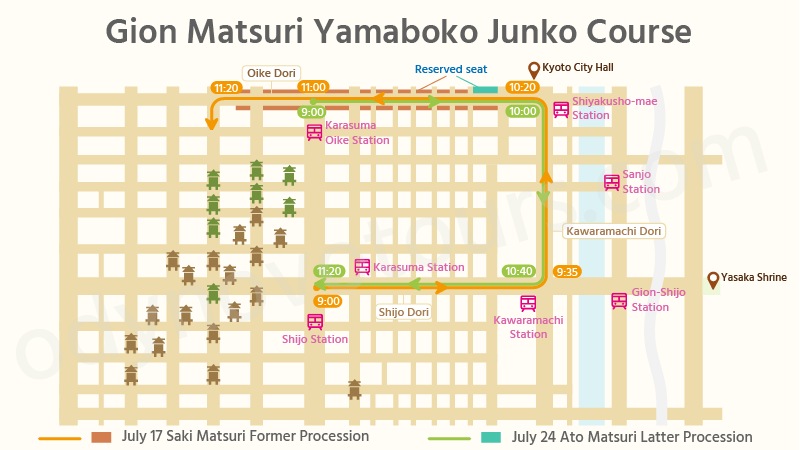 Gion Matsuri Yamaboko Junko Course Map
Mikoshi Process, Carry Portable Shrines
While the floats steal the spotlight, the Mikoshi Procession is the festival's spiritual heartbeat. On the evenings (6 pm) of July 17 and 24, after the grand parades, portable shrines (mikoshi) from (or back to) Yasaka Shrine to Otabisho are carried through Kyoto's lantern-lit streets by chanting men dressed in traditional white robes and headbands.
Each mikoshi is said to carry the spirit of the shrine's deity, Susanoo-no-Mikoto, and its passage symbolizes purification and protection for the city - a vivid reminder that Gion Matsuri is not only beautiful, but deeply sacred.
Best viewing spots: Yasaka Shrine gate, Shijo Street between Yasaka Shrine & Kawaramachi, Gion side of Shijo-Ohashi Bridge
Yoiyama Evenings, Street Festival Nights
Gion Matsuri truly comes alive from July 14 to 16 and July 21 to 23, the yoiyama evenings, a few nights before each main parade, when streets in downtown Kyoto are closed to traffic; instead, sizzling food stalls line the streets around Shijo, Karasuma, and Kawaramachi, and locals wander under lanterns in colorful yukata.
Follow the aroma of yakitori and okonomiyaki drifting through the narrow alleys, grab a kakigori or cold drink, and blend into the flow of locals dressed in colorful yukata.
You can visit those yama and hoko floats up close, admire the handwoven fabrics with thousands of paper lanterns flickering to life, or even step aboard some of them.
Where to Join the Main Events
Most Gion Matsuri events happen around Shijo-Karasuma, Kawaramachi, and Yasaka Shrine, all central Kyoto locations, and many floats are within walking distance from Shijo and Karasuma Station (about a 5-minute train ride from Kyoto Station).
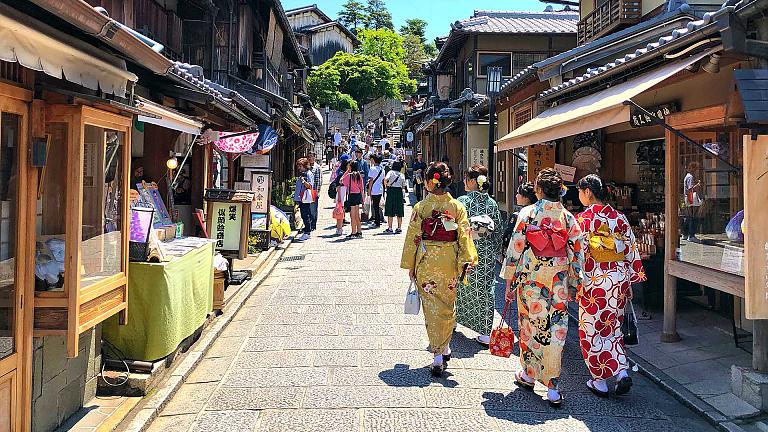
Note: though it is the "Gion" matsuri, the parade itself doesn't go through the Gion area. However, Gion is still the best place to enjoy festival snacks and yoiyama evenings, where streets around Yasaka Shrine and Hanamikoji-dōri become lantern-lit and filled with traditional music, one of the best spots for photo opportunities with Kyoto's classic backdrop.
Recommended Tour Itinerary
Best Floats Viewing Spots of Gion Matsuri
- Shijo-Karasuma Intersection: where the parade begins with lining up floats and a lively atmosphere. Arrive before 7 am for a good view. (The nearby Daimaru Kyoto opens early for the unique top-down perspective)
- Shijo-Kawaramachi Intersection: the iconic turning corner to observe the traditional Tsuji-mawashi (float turning) technique. If possible, book a second-floor café seat in advance.
- Kyoto City Hall & Karasuma Oike: offer paid viewing seats of the Gion Matsuri procession, as well as a much wider street for your comfortable viewing and better spacing for photos.
More Attractions for Kyoto Summer Journey
Along the parade way, you'll find:
- Nishiki Market: Just steps away from the main float route, this covered food street is perfect for cooling down with matcha ice cream, Kyoto pickles, or yuba (tofu skin) snacks between festival events.
- Yasaka Shrine: The spiritual heart of the festival and the best place to feel its origins. Many locals visit Yasaka Shrine after the evening Mikoshi Procession. The shrine's soft glow and gentle chants create one of the most serene moments of Gion Matsuri.
Just a short walk or bus ride from the festival streets, you'll reach some of Kyoto's most iconic landmarks:
- Kiyomizu-dera Temple: Perched above the city, this UNESCO site offers sweeping views of Kyoto's summer haze.
- Maruyama Park: Right behind Yasaka Shrine, it's a cool green escape and a popular picnic spot during the festival.
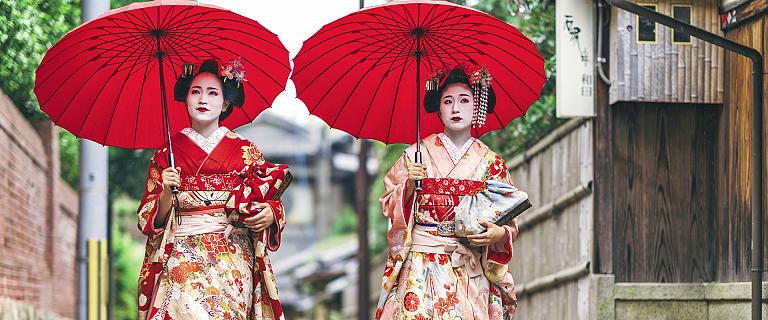
- Hanamikoji Street, Gion District: If you wander here after sunset, rest at those traditional teahouses in Gion where you might glimpse geisha and maiko walking past.
If you have extra time during the festival week, go a little farther to extend your Kyoto summer adventure:
- Arashiyama Bamboo Grove: An early-morning stroll through the misty bamboo paths is pure serenity before the day heats up. You can also visit the Hozu River or take a scenic train ride through the mountains.
- Fushimi Inari Taisha: Famous for its thousands of red torii gates, this shrine feels especially spiritual during early morning or twilight. Bring water, it's a beautiful but warm climb!
Recommended Tour Itinerary
Where to Stay During Gion Matsuri
Gion, Hanamikoji & Yasaka Shrine Area
The heart of the festival, where you'll wake up to Kyoto's old-world charm right outside your door. With narrow traditional streets, historical teahouses, lantern-lit evenings, and immediate access to the parade and evening festivities. Also, it can be lively (and busier) during the festival nights, so pick higher floors if possible.
- Recommended hotel: SOWAKA Kyoto
Central Downtown Kyoto: Shijo-Kawaramachi & Karasuma
Features modern amenities, excellent public transport links (subway, buses), wide shopping streets, and restaurants, perfect for families, groups, those who want comfort and convenience, yet still be close enough to the festival events.
- Recommended hotel: Hotel Okura Kyoto
Near Kyoto Station: Shimogyo-ku & Minami-ku
A calmer base with excellent access if arriving by Shinkansen or leaving early; more budget-friendly options, and if you prefer a little more space; less festival hustle in the immediate area, ideal for a more relaxed portion of your stay.
Note: Rooms near festival zones fill quickly. Feel free to contact us for your ideal rooms and summer Kyoto trip itinerary
More Summer Japan Festivals You May Also Like
- Obon, Japanese Ghost Festival: A mid-August festival when families honor ancestors through lanterns, dances (Bon Odori), and memorial fires, including the daimonji mountain bonfires in Kyoto.
- Tanabata, Japanese Star Festival: Based on a celestial love story, people write wishes on colorful papers and hang them on bamboo trees - it just seems like a summer Christmas in Japan.
- Aomori Nebuta Festival: Northern Japan's electrifying summer event with various paper floats, where you can watch giant illuminated warrior floats parade through the streets.
- Fireworks Festivals: From Tokyo's Sumida River Fireworks to Lake Biwa's grand show, summer is the season of night skies painted in color.
Recommended Tours
-
 Central Japan With Japanese Alps Hiking (Mid-April to Mid-November)11 DaysTokyo, Tateyama Kurobe, Kamikochi, Narai-juku, NaganoExplore This Tour
 -
Best of Hokkaido in Summer 202612 DaysSapporo, Furano, Asahikawa, Lake Akan, Obihiro, TomamuExplore This Tour
-
-
Japan Hanabi Festival Tour: Nagano Fireworks Show 20269 DaysTokyo, Nagano, Kyoto, Nara, OsakaExplore This Tour
Related Posts You May Like
-
Complete Guide to Takayama Festival in Spring & Autumn 2026
-
Japanese Geisha & Maiko: Guide on Facts & Myths
-
Top 12 Japanese Villages: Japan's Most Beautiful Towns
-
Hokkaido in Summer 2026: Weather, Best Places & Festivals
-
Guide to Japan's Rainy Season 2026
-
Guide to Japanese Temple Stay & Shukubo Lodging