Katana Guide: Japanese Sword Types & Kendo Experience Places
The Totsuka sword, used to slay the eight-headed serpent, and the Kusanagi, symbolizing imperial regalia. Like the legendary Sword in the Stone or Excalibur, the katana (Japanese swords) is deeply rooted in the history of the Land of the Rising Sun, adding a mythical allure to any trip to Japan. From tips to distinguish various sword types to the best places for samurai sword and kendo experience in Japan, read on for more to know about these finely crafted blades.
Types of Japanese Swords
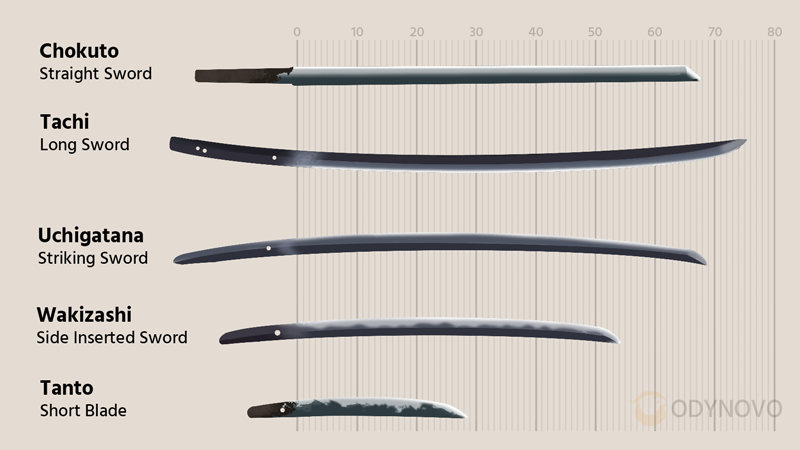
Varying in shape, length, and combat style, there are around 7 main types of Japanese swords: chokuto, tachi, uchigatana (katana), wakizashi, tanto, and tsurugi.
 Types of Japanese Swords
Chokuto - Straight Sword
The ancient sword of chokuto is often regarded as the earliest forged Japanese sword and a predecessor to the katana. It is a straight, single-edged blade used for stabbing or slashing on foot. With a blade length of around 60cm, the chokuto is gradually replaced by the curved tachi around the 10th century.
It is now more likely to be found in museums or as offerings at shrines and temples, like Shichiseiken, which is believed to ward off evil spirits.
Tachi - Long Sword
Originating from the samurai class and the cavalry warfare of feudal Japan, the tachi is a longer single-edged sword carried with the edge down, with a larger curve for more efficient cutting from horseback.
Depending on the length of the blade (usually around 70cm), there are other types of long swords, odachi (large tachi) and kodachi (small tachi).
- The kodachi, with a shorter blade of around 60cm, is very similar to the wakizashi. It is more commonly used as a ceremonial tool for prayer instead of a weapon.
- While the odachi is a kind of larger sword preferred by high-ranking samurai to show off their strength and bravery, with a blade length of more than 90cm (one of the longest blade lengths, even reaching 225cm). Samurai carrying the odachi usually need a follower to help draw it. Also, because of its delicate pattern and stunning appearance, the odachi is used as an offering to Shinto shrines.
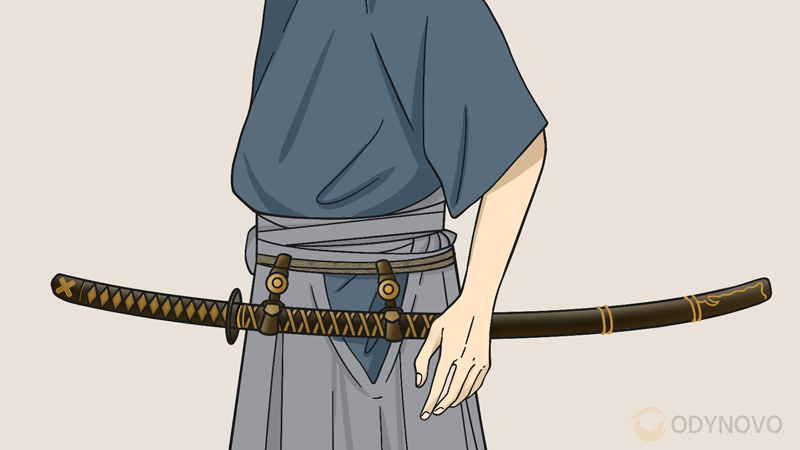 Way to Wear Tachi
Uchigatana (Katana) - Striking Sword
The katana (or uchigatana in Japanese), widely recognized as the samurai sword, is one of the most well-known Japanese sword types. It replaced the tachi in the 15th century when longer swords were shortened for close combat.
Though the uchigatana (typically 60 to 90 cm) has a curved, single-edged blade similar in length to the tachi, it is worn with the edge facing upward, allowing for a quicker draw and strike. This design contributed to the development of kenjutsu techniques like battojutsu, which focus on swiftly drawing the sword in response to sudden attacks.
Wakizashi - Side-Inserted Sword
The wakizashi is a short blade ranging from 30 to 60 cm, designed for close-quarters combat and served as a backup or auxiliary sword to the katana or tachi. Often paired with the katana, the combination of the katana and wakizashi became a symbol of the samurai authority and spirituality during the Edo period.
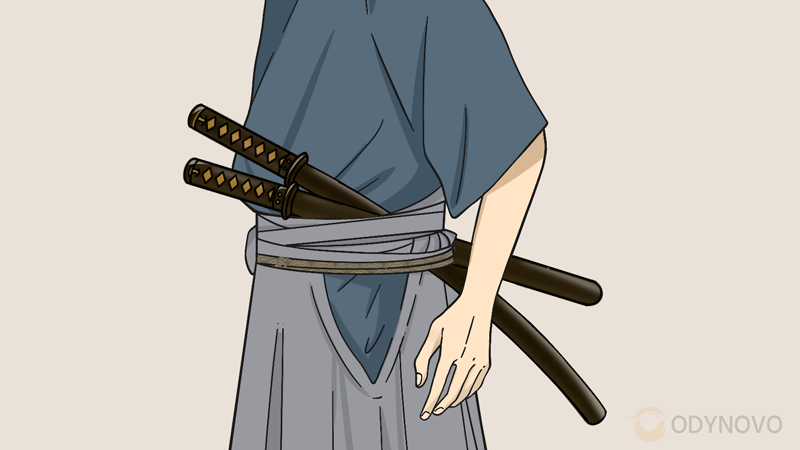 Way to Wear Uchigatana & Wakizashi
Tanto - Short Blade
Designed primarily as a stabbing weapon, the tanto has a relatively small size, from 15 to 30cm. It is also known as a kaiken (pocket sword) for its ease of concealment. Women would carry a tanto in their belt for self-defense, while samurai used to pair a tanto with their tachi, as well as the blade to cut their belly when they fell into the hands of their enemies.
Tsurugi (Ken) - Sword
Unlike most Japanese swords, the tsurugi, or ken, is a straight sword with a double-edged blade influenced by the Chinese dagger style. Used primarily as a weapon before the 10th century, it is now mainly seen as a decorative piece or offering in shrines and temples.
Best Places for Samurai & Kendo Experience
Samurai Ninja Museum Tokyo & Kyoto
Not far from Sensoji, the Samurai Ninja Museum Tokyo in Asakusa offers a range of interactive activities to explore the world of samurai and ninja. There is also another samurai ninja museum in Kyoto that you can experience, just around the Nishiki Market.
You can learn about these legendary warriors through exhibits of various armor and swords, and more excitingly, participate in hands-on experiences like katana lessons and ninja stars throwing competitions. The museum also offers specialized courses for an immersive samurai or ninja experience, such as ninja training in stealth and sword dodging, and tameshigiri - sword-cutting practice with a real Japanese sword, katana.
Recommended Tour Itinerary
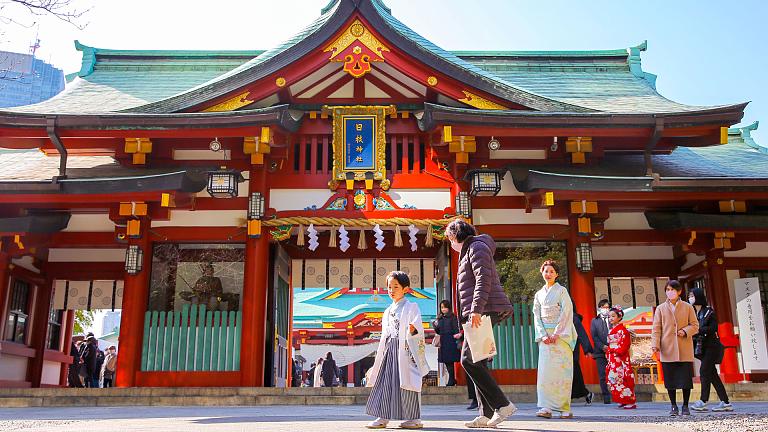
Samurai Trip, Kendo Experience Tour
Wondering for more practical experience with Japanese katana or a thrilling duel like samurai, there is also a kendo dojo (traditional Japanese gym) for your martial arts experience, with real 1v1 combat by the bamboo sword.
Follow the kendo sensei to suit up in armor and attire, grip your bamboo sword, and train in kenjutsu, just like a samurai. From mastering basic footwork to honing precise sword techniques, get ready for an upcoming duel to make some thrilling experiences on your journey.
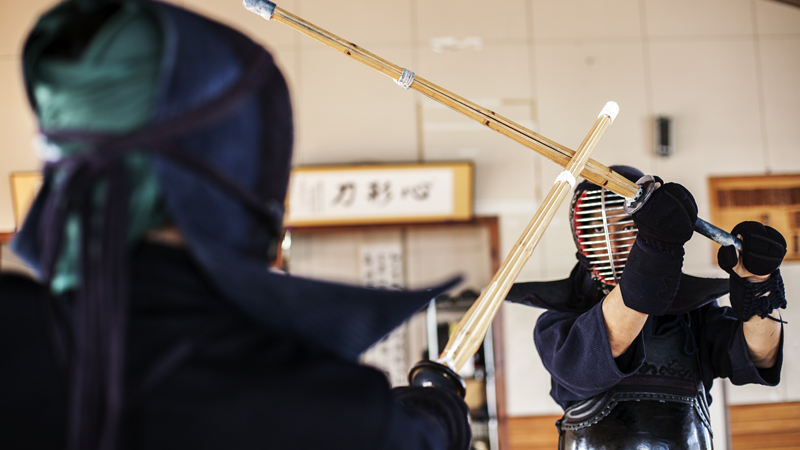 Kendo Experience at Japanese Dojo
Tokyo Samurai Kembu
Near the Ginza area, Tokyo Samurai Kembu is a local dojo offering a unique samurai experience known as kenbu, the traditional sword dance.
In addition to watching a performance by a kenbu master, you can don a kimono and learn how to handle a Japanese sword. You'll move your body and katana in sync with traditional poetry to perform the dance yourself. If you're interested in this art form, visiting this dojo offers a glimpse into a fundamental aspect of Japanese culture.
Kyoto Samurai Experience, Waraku
Another spot for an up-close experience with a real katana sword is located in central Kyoto, just a 10-minute drive from Nijo Castle.
Change into a samurai hakama, learn the correct grip, posture, and form, and enter a state of Zen meditation while wielding an authentic Japanese sword. Clear your mind, focus, and slice through rolled tatami with a single swing - a truly cool experience.
Forge Your Own Katana in Japan
Want to make your own Japanese sword from the burning furnace and melted iron? Though not the real katana with a long blade and a peg hole, with the help and instruction of a licensed swordsmith, it is not impossible to make your own mini-sized traditional-forged blade, a kogatana about 15cm long.
From the blade pattern choosing to the echoing hammer process and the final polish step, you can experience the authentic process of making Japanese swords at most workshops and sword studios in most of Japan with a booking. Yet having no idea about the reservation? Feel free to contact us to arrange all your katana and Japan experience according to your plan and itinerary.
Tenka Goken & Where to See the 5 Great Japanese Swords
Dojigiri, Slayer of Shuten-Doji
Also known as Dojigiri Yasutsuna, it is a Japanese tachi-type sword forged in the 10th to 12th centuries. Famous for its perfection and the legends of the demon slayer Minamoto Yorimitsu, who exterminates the demon of Shuten-doji with the sword.
Exhibited in: Tokyo National Museum
Mikazuki, Crescent Moon
Created between the 10th and 12th centuries, the Mikazuki is regarded as the most beautiful of the Five Great Japanese Swords, distinguished by the crescent moon-shaped tempering pattern on its blade. As a frequently exhibited item at the Tokyo National Museum, Mikazuki Munechika is the one to tell the delicacy of Japanese swords.
Exhibited in: Tokyo National Museum
Recommended Tour Itinerary

Onimaru, Demon
There is also a mysterious tale associated with the sword, where it is said to have fallen and sliced the leg of a small bowl, with the same image as the demon in its sick owner's dream. After the demon is slain in the bowl, the Hojo Tokiyori fully recovers from his illness.
However, owned by the Imperial Family, the tachi of Onimaru Kunitsuna is rarely put on public display.
Exhibited in: Imperial Family
Odenta, the Best Among Swords Forged by Denta
Alongside Onimaru and Futatsu-mei, Odenta was regarded as one of the three regalia swords of the Ashikaga clan's shoguns. This tachi is renowned for its miraculous ability to heal, having once saved a princess from a serious illness. Odenta Mitsuyo is now part of the Maeda Ikutokukai collection.
Exhibited in: Ishikawa Prefectural Museum of Art
Juzumaru, Rosary
Juzumaru Tsunetsugu is a tachi deeply connected to Buddhism, recognized by the rosary wrapped around its handle. Traditionally owned by the founder of the Nichiren sect, it was used to refute falsehoods and reveal the truth. Today, it is still housed in a temple rather than a museum.
Exhibited in: Honkoji, Hyogo
Steps to Own Your Katana
As a work of art, buying a genuine Japanese sword is not as easy as buying a kimono, matcha, and other souvenirs. An application to the local prefectural education office is quite necessary. If you just want a katana as a keepsake, the molded sword is much easier to obtain and transport.
Buy a Japanese Sword
1. Check the identification card (Tourokusho) of the Japanese sword you wish to purchase. If there is not, it is necessary to register the sword with the local Prefectural Education Board. (For example, if you bought the katana in Tokyo, then the Tokyo Education Board will be the one to register.)
2. Apply to the local Prefectural Education Board for a change of ownership within 20 days of purchasing the sword.
Bring Your Japanese Sword Home
1. Ensure that the sword you purchase is not designated as a "Protection of Cultural Properties" Japanese sword, as such swords are prohibited from leaving Japan.
2. Apply to the Agency for Cultural Affairs for an export permit (Yushutsuninteisho), which typically takes about two weeks for approval.
3. As this wait time may be too long for foreign travelers, using EMS (Express Mail Service) is a convenient option for shipping the sword to your home country.
Experience the Allure of the Japanese Sword on Your Japan Tour
It is always worth adding a katana experience to your exploration of Japan, as a work of art, with both the visual feast and the exciting hands-on trial adding to its never-ending charms. Contact us to tell us about your favorite samurai experience with Japanese swords.
Recommended Tours
-

-
Japan Hanabi Festival Tour: Nagano Fireworks Show 20269 DaysTokyo, Nagano, Kyoto, Nara, OsakaExplore This Tour
-
Best of Kyushu: From Nature to History8 DaysFukuoka, Kumamoto, Kokonoe, Yufuin, BeppuExplore This Tour
-
Japan Family Tour with Nakasendo Trail Hike12 DaysTokyo, Hakone, Nagoya, Naksendo Trail, Kyoto, Nara, OsakaExplore This Tour