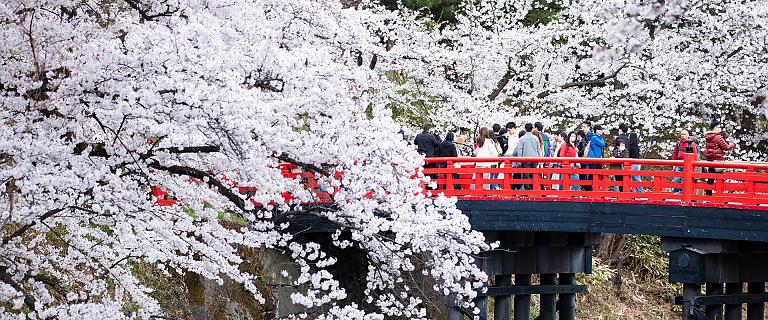
See Early Cherry Blossoms in Japan Before March 2027
Well, it is not impossible to see cherry blossoms in Japan before the famous Somei Yoshino blooms across Tokyo and Kyoto in late March and early April. With special early-blooming varieties, Atami and Kawazu are among the best options for the earliest mainland hanami trip to Japan, while Okinawa offers an even earlier option as early as January.
Is It Worth Seeing Early Cherry Blossoms in Japan
Absolutely yes, especially if you are looking for a quieter cherry blossom viewing environment, a more relaxing sightseeing pace, and a well-balanced experience between the blossom scenery and prices.
The early-blooming season usually appears from January to early March, the shoulder season when accommodation and flight prices are often lower, and popular spots feel less rushed.
Most importantly, it's no less charming: you can still catch those cherry blossom festivals blooming with earlier and deeper-colored sakura, and even combine a late-season skiing experience with that lingering winter scenery nearby.
Note: Temperatures may be on the rise, but the weather during the early cherry blossom season often comes with a lingering coolness (about 12℃, 54℉). While it's not nearly as harsh as winter, staying warm is still important when heading out for cherry blossom viewing, especially for senior and family visitors with kids.
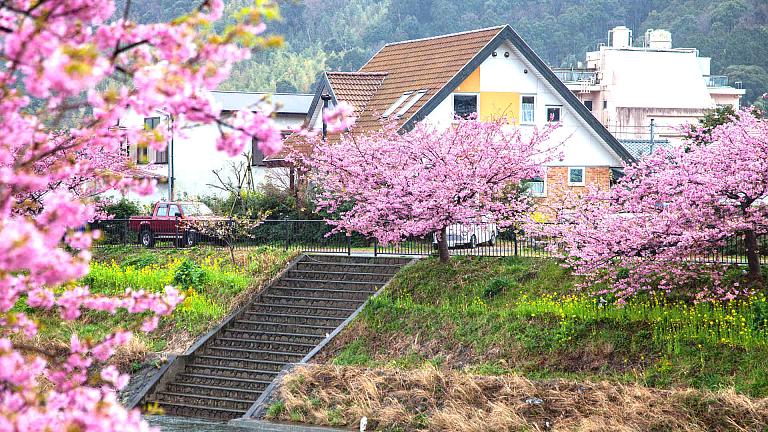
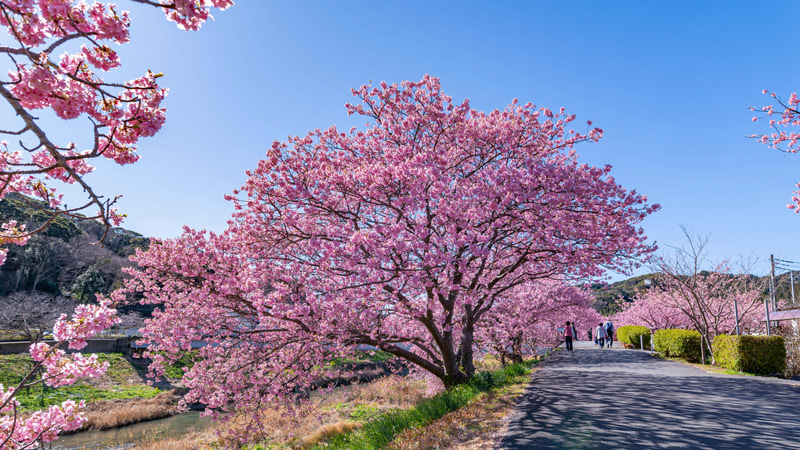 Kawazuzakura in Early February
Early Cherry Blossoms vs Peak Sakura Season
| Early Sakura Season | Main Sakura Season | |
| Timing | Jan to early Mar | Late Mar to early Apr |
| Areas | Okinawa, Atami, Izu Peninsula | Tokyo, Kyoto, Osaka, Hiroshima, Fukuoka |
| Varieties | Kawazu, Atami & Kanhizakura | Somei Yoshino |
| Color | Deeper pink | Pale pink, white |
| Crowds | Lower, yet festivals can be busy | Higher |
| Weather | Cool to mild | Mild spring |
When Can You See Japan's Early Cherry Blossoms
From January to early March, starting from the warmer southernmost Okinawa Islands, then gradually to certain cold-hardy varieties in Atami and Izu.
- January to early February: Okinawa's kanhizakura & Atamizakura
- February to early March: Kawazuzakura
- Late March onward: gradually transitions into the main Somei Yoshino season
Where to See the Early Sakura in Japan
Early Cherry Blossoms in Japan at a Glance
| If You Want to | Go to | What to Expect | Typical Blooming Peri |
| See Japan's earliest sakura | Okinawa | Subtropical scenery, beach | Mid-Jan to mid-Feb |
| See early sakura on mainland Japan | Atami | Seaside town, hot springs | Jan to mid-Feb |
| See deep-pink Kawazuzakura | Kawazu | Waterfall, festival atmosphere | Early Feb to early Mar |
| Tokyo sightseeing experience | Miura | Lively city views | Early Feb to early Mar |
| Combine cherry blossom with Mt. Fuji | Matsuda | Rapeseed flowers, Mt. Fuji | Mid-Feb to early Mar |
Okinawa
- Best Viewing Time: from late January to early February
- Best for: warm weather, adventurers
In warmer and sunny Okinawa, the Kanhizakura blooms as early as mid-January. The deep pink, bell-shaped flowers and subtropical climate create a look very different from mainland sakura. If you like, whale watching can also be combined as an extra experience during your early cherry blossom watching in Okinawa.
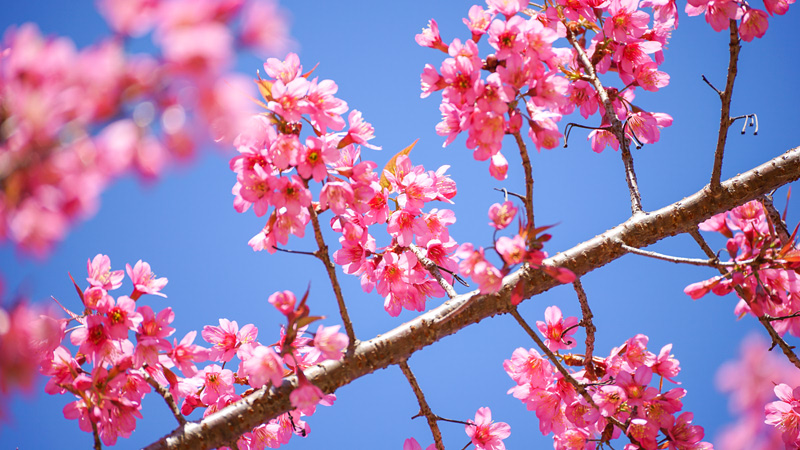 Early Cherry Blossoms in Okinawa
Atami
- Best Viewing Time: from late January to early February
- Best for: hot spring experience, couples, family & senior visitors
- Location: Shizuoka (Izu Peninsula, about a 40-minute train ride from Tokyo)
Set against a seaside hot spring town backdrop, Atami's cherry blossom viewing can be an easy combination of a local onsen stay. There is not much to worry about the early-season chill, which is more suitable for family visits or senior-friendly trips. Also, the compact scale in Atami makes the mix of ocean views and blossoms easier for a short visit from Tokyo.
Kawazu
- Best Viewing Time: from mid-February to late February
- Best for: cherry blossom festival, first-time visitors
- Location: Kamo District, Shizuoka (Izu Peninsula, about a 2-hour train ride from Tokyo)
Kawazu is one of Japan's most iconic early cherry blossom viewing spots. It is the place where the Kawazuzakura was first planted, from the central town to the Kawazu River banks, stretching about 4 kilometers to the Kawazu Seven Waterfalls. Paired with the Kawazu Cherry Blossom Festival along the banks for the best atmosphere.
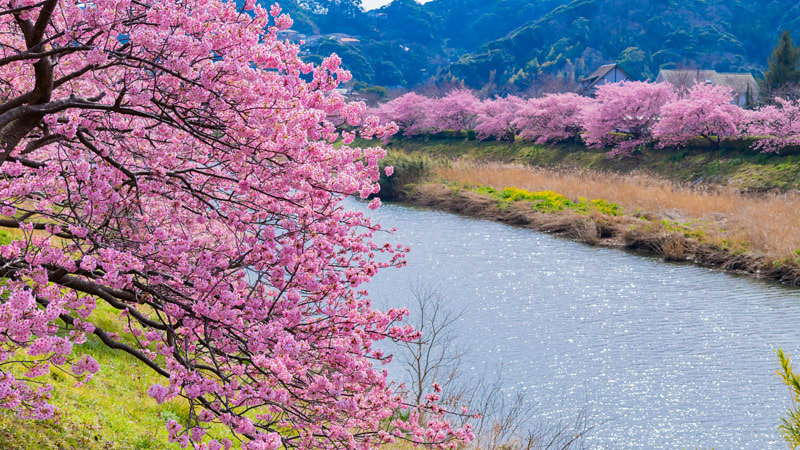 Early Cherry Blossoms in Kawazu
Miura
- Best Viewing Time: from mid-February to early March
- Best for: couples, cherry blossom festival, family
- Location: Kanagawa (Miura Peninsula, about a 1.5-hour train ride from Tokyo)
Where you can see a thousand kawazu cherry trees along the railroad from Miurakaigan Station to Komatsugaike Park, featuring a well-balanced combination of lively city views and the blooming spring blossoms, especially when standing on the overpass nearby, catching the cherry blossoms and passing trains above.
Matsuda
- Best Viewing Time: from mid-February to late February
- Best for: Mt. Fuji viewing, short hike, festival, and family visitors
- Location: about 20-30 minutes by train from Odawara Station
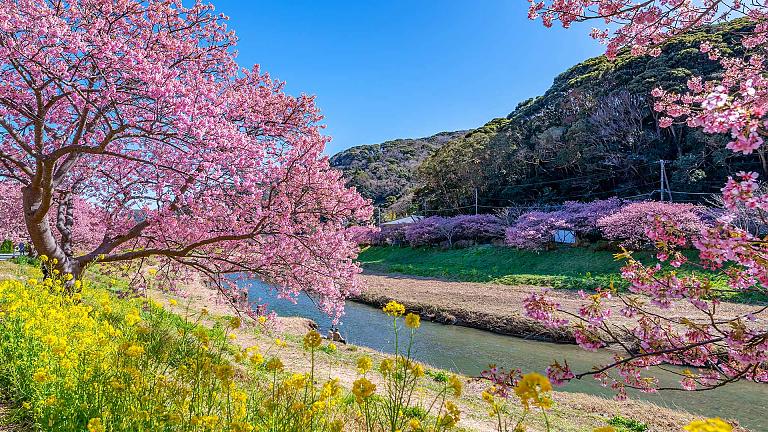
Paired with bright yellow rapeseed flowers, the spring colors in Matsuda are more than pink and white. You can take a short hike to the hillside park here, which offers panoramic views of Mount Fuji on clear days. Food stalls are bustling with fresh fruit and vegetables during the Matsuda Cherry Blossom Festival. If possible, consider a one-night stay around to capture the night sakura illumination.
Nebukawa
- Best Viewing Time: from early March to mid-March
- Best for: quiet seekers, family visitors
- Location: about 10-20 minutes by train from Odawara Station
If you are looking for somewhere quieter and less commercial, Nebukawa in Odawara offers its dramatic cliffside views overlooking the Pacific Ocean, with early-blooming Okame cherry blossoms typically appearing in late February. Nebukawa is also more recommended for family visitors with kids, with the nearby mushroom farm opening the picking experience for more spring fun.
If You Are Already Visiting Tokyo
While Tokyo's peak cherry blossom season in late March and early April may be the most memorable, it's worth noting that you can also find early-blooming Kawazu cherry blossoms at select spots around the city.
- Kyunaka River: an ideal place to catch the early sakura with one of the iconic Tokyo landmarks, Tokyo Skytree, as the perfect backdrop.
- Kiba Park: known as one of the earliest places to see, where you can find about a hundred Kawazuzakura trees along the Oyoko River.
- Shinjuku Gyoen: home to more than 60 cherry tree varieties, it is still quite admirable to capture those small but abundant early sakura species.
Add Early Cherry Blossoms to Your Japan Trip
- For a 7-day journey, consider an Atami drop by as your quick look: Tokyo → Mt. Fuji → Atami → Kyoto
- When with 10 or more days, plan a trip to the Izu Peninsula: Osaka → Kyoto → Mt. Fuji → Atami → Kawazu → Tokyo
Recommended Tour Itinerary
More FAQs About Early Cherry Blossoms Viewing
Are Early Cherry Blossoms the Same as Peak Blossoms
No. Generally, most early-blooming cherry blossom species you may see are Kawazuzakura and Kanhizakura, with deeper flower colors than the Somei Yoshino.
If your dream is pale-pink petals forming large canopies over rivers, temples, and castle grounds, the late March to early April season may be a better match.
When it comes to early cherry blossoms in Japan, Kawazuzakura is usually the most rewarding. Its trees bloom densely, creating scenes that feel closest to the famous Yoshino cherry blossoms seen during peak season.
What Do Early Sakura in Japan Look Like
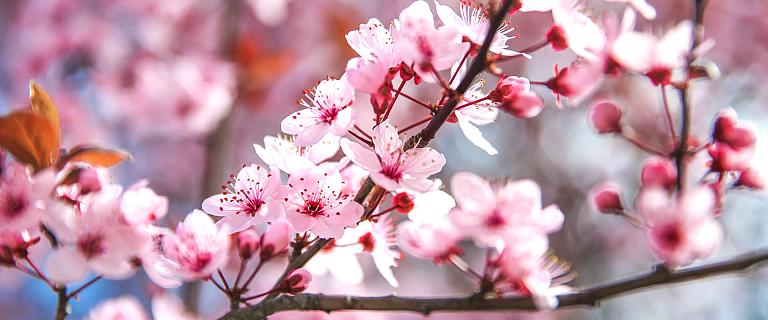
- Kawazuzakura (from early February to early March) is the most common early-blooming cherry blossom in Japan. The flowers are large, deep pink, and have larger scales for a dramatic view.
- Kanzakura (from late January to February) is a winter-blooming cherry variety, usually appearing in soft pink slightly lighter than Kawazuzakura, and often blooms while winter scenery remains.
- Kanhizakura (from January to February) is common in southern Japan, especially in Okinawa. It offers a bold, exotic look with dark pink to reddish, bell-shaped flowers that hang downward rather than opening flat.
- Atamizakura (from January to February) is a special species in Atami; it has soft and pale-pink petals and an unexpected earlier flowering period in central Japan, with a long-lasting bloom of almost one month.
Is Kawazu or Atami Better for Early Sakura Viewing
Simply put, Atami is easier to fit into a first-time Japan itinerary, especially if you're already visiting Tokyo or Mt. Fuji. Kawazu takes longer to reach, but the journey leads to a much larger concentration of early-blooming cherry trees and a dedicated cherry blossom festival.
Atami's Tokaido Shinkansen location is much easier to reach from Tokyo, and the special Atamizakura species also appear a little earlier than Kawazu's. Meanwhile, the festival atmosphere, food stalls, and illuminated cherry trees make Kawazu's visual impact rival the peak cherry blossom season.
- Pick Atami if you are looking for an earlier travel window around January, easier access from Tokyo, and a more flexible itinerary.
- Head to Kawazu if you are seeking a large-scale early cherry blossom display and a more immersive cherry blossom viewing experience.
Can I See Cherry Blossoms & Snow at the Same Time
Yes, you can. It is still possible to see both the sakura blossoms and snow during your early spring Japan tour. Snow can linger on the mountain peak till April, which means a cherry blossom view against the snow-peaked Mount Fuji is common to catch.
If you are looking for a cherry blossom tour with skiing experience, a journey between January and March will be more comfortable.
Can I Combine Early Cherry Blossoms with Tokyo & Kyoto
Yes, you can. Simply add nearby Atami and Kawazu to your itinerary. If you're looking for more destination options or wondering about luggage and transportation, feel free to contact us for carefree Japan cherry blossom tour planning.
Early Sakura Viewing Tips
- Dress for winter, not spring. Mornings and evenings can still feel cold during the early cherry blossom season in Japan. Coastal destinations such as Atami can also feel cooler because of sea breezes.
- Visit Kawazu in the morning or on weekdays if you are looking for a more tranquil and immersive experience during the festival period.
- Explore Kawazu further to Mine Onsen, where the crowds generally thin out as you move farther from the station.
- Stay after sunset for the night illumination since early cherry blossoms can look very different under evening lights.
Recommended Tours
-
 Japan Cherry Blossom Tour
(Late Mar ~ Mid-Apr 2027)14 DaysTokyo, Mt. Fuji, Takayama, Shirakawa-go, Kanazawa, Kyoto, OsakaExplore This Tour -
Tohoku & Hokkaido Cherry Blossom Journey 2027
(Late April – Early May)15 DaysSendai, Morioka, Aomori, Hakodate, Lake Toya, Noboribetsu, Sapporo, OtaruExplore This Tour -
Best Japan Cherry Blossom Tour With Mt. Fuji 20278 DaysTokyo, Mt. Fuji, Kyoto, Nara, OsakaExplore This Tour
-
Japan Golden Route With Cherry Blossom 202710 DaysTokyo, Mt. Fuji, Kyoto, Nara, OsakaExplore This Tour
Related Posts You May Like
-
Japanese Cherry Blossom Viewing Guide 2027
-
Japan Cherry Blossom (Sakura) Forecast Map 2027
-
How to Plan a Japan Sakura (Cherry Blossom) Tour 2027
-
Japan in April 2027: How to Travel Smart in the High Season
-
Traveling Japan During Golden Week (2027): Is It Worth It?
-
Hokkaido in Spring 2027: Ski With Cherry Blossoms