South Korea Weather in July 2027: Good to Travel or Not
Is it worth visiting South Korea in July? July is mid-summer in Korea, catching the monsoon season with rising temperatures and humidity levels, hardly sounding like the ideal time for travel, at least at first. It may not be the most pleasant month for sightseeing, but it is when beaches, nightlife, and festivals balance the crowds and value. With a flexible itinerary and a slower pace, a summer holiday in South Korea in July can still be rewarding.
South Korea Weather in July
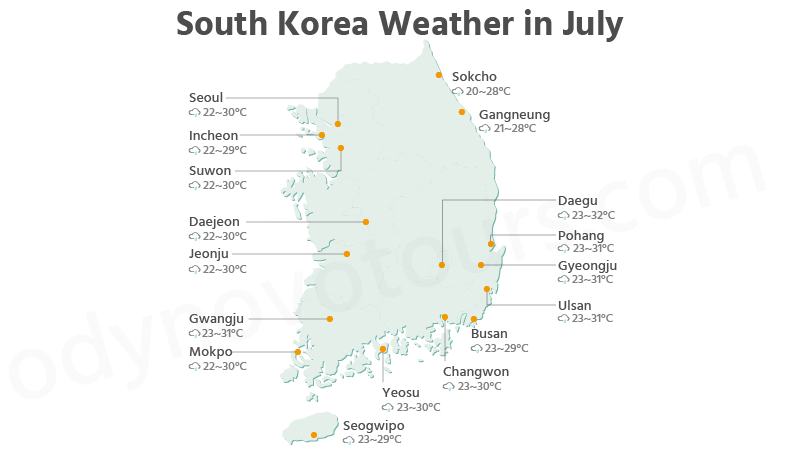
The weather in South Korea in July is hot and humid, with an average temperature usually above 20℃ (68℉). The daily average highs can close to 30℃ (86℉), while paired with the high humidity, it can feel like over 34℃ (93℉) at midday during your Korean trip in July, especially during the noon and afternoon.
Right in the middle of the monsoon season, July is also considered the rainiest month in Korea. Most of the heavier rain falls over central inland cities like Seoul. Along the southern coast, such as Busan and Jeju, rainy days are more frequent but lighter, and thanks to refreshing sea breezes, coastal temperatures feel far less oppressive than inland.
| Temperature in July | Rainy Days | Humidity | |
| Seoul | 20 to 27℃ (68 to 81℉) | about 13 days | 80% |
| Busan | 22 to 29℃ (72 to 84℉) | about 15 days | 88% |
| Jeju Island | 25 to 28℃ (78 to 82℉) | about 12 days | 89% |
- The temperature in Seoul in July is lower. However, as an inland city with high humidity, the weather in Seoul feels sweeter.
- Busan in July has more rainy days, but light, making the beach holiday still possible and enjoyable in Busan.
- Jeju Island's weather is a little bit higher due to its southern location, yet with less rain and more frequent breezes for your comfortable trip.
 South Korea Weather in July
When is the Rainy Season in South Korea
South Korea's rainy season (Jangma) is between late June and mid July, sometimes lasting till late July. Compared to the shower in June, short but heavy rainfalls are more concentrated in July. Umbrellas are necessary almost daily during your July trip to South Korea.
Is July the Hottest Month in Korea
No. You can expect hot weather in July, but the hottest month in Korea is August, the peak summer month with about 3 to 4℃ higher than July, and the feeling temperature can reach close to 38℃, 100℉.
How Humid is South Korea in July
Most of the places have a higher humidity level above 80% in July, which is the wettest month in South Korea.
What Does the Weather Feel Like in Korea in July
While not as challenging as August, July's weather in South Korea can make you feel wet: the higher temperatures and humidity break a sweat more easily, while the increased chance of rain often leaves everything around you feeling damp.
Air becomes much heavier in July, and urban areas usually feel sticky. The overwhelming sky goes better after the heavy downpours, while with the direct sunlight follows, the steaming streets feel like walking into a sauna.
What to Wear in South Korea in July
Breathable clothing like T-shirts, short pants, skirts, and sandals that allow your skin to breathe easily and cool down. Quick-drying fabrics are top recommended. If you can, pack a light sun jacket. It doubles as a thin extra layer, and you'll be glad to have it in heavily air-conditioned places.
Is July a Good Time to Visit Korea
Simply speaking, July is not a common good time for every traveler to visit South Korea, but planning a leisurely South Korea summer holiday in July is not impossible.
A July trip to South Korea requires more preparation to accommodate the rainy-day itinerary. The sweaty, humid weather conditions are still tolerable, but may not be that comfortable for younger kids and older members.
However, things go differently if you are looking for Korean beach fun and nightlife. Compared to June and August, there are still many benefits you can take advantage of in July: it is the shoulder season with increasing sea temperatures, night markets, street concerts, and coastal events, while the gatherings of crowds are not at their peak, making July one of the best times to visit the Korean coastline.
- July is more suitable for beach lovers and visitors looking for water activities and nightlife
- A South Korean family tour in July is more ideal for families with teens
Flexible the itinerary, make backups, and slow down your pace, you can still enjoy your summer holiday in South Korea in July with some technique, or let Odynovo be your reliable tour operator to manage all the itinerary, with the private delivery service to avoid most of the rainy day trouble.
 South Korea in July
How to Enjoy a Trip in Korea in July
- Try to do your city or outdoor activities and sightseeing in the morning before the warming noon and the high chance of a rainy afternoon. You wouldn't want to climb the slippery steps at Gyeongbokgung Palace, and Bukchon Hanok Village is also more tranquil in the early morning.
- If you can, save your energy for the cooler temperatures in late afternoon: take a city walk for food, chase the sunset after the rain, or stay out a little for a later evening tour, hopping between bars and night markets.
- When the rain clears and the sun comes out, especially on bright, sunny days, it's often best not to rush outside. The lingering moisture and rising temperatures can create a steamy feel. Waiting two to three hours after the rain can make things much more comfortable.
- Add indoor activities to your itinerary or let them be your backup when catching the rain. Instead of museums, some themed cafes and restaurants with air conditioning are also good options for rest and shelter. For those indoor experiences with a longer time to spend, Lotte World is a popular indoor theme park in July, or consider a traditional tea ceremony, a kimchi cooking class, or a relaxing K-beauty massage from head to shoulder. Feel free to contact us to make the most of your time and experience.
- Southern coastal cities, like Busan, Jeju Island, and Ulsan, are relatively dry for your Korean summer Holiday. Other places to go with fewer rainfalls also include the east of Gangwon and the Gyeongsang coastal area.
- Extra T-shirts and socks are a must, as well as bringing an umbrella (clear umbrellas work best), sunglasses, sunscreen, a portable fan, and some insect repellent.
Top Things to Do in South Korea in July
Enjoy the Beach & Sea
July is one of the peak beach seasons in South Korea, with warm sea temperatures and a lively summer atmosphere for water sports, especially on the south and east coasts.
Haeundae Beach (Busan) is well-organized with showers, lockers, cafés, and summer events, great for first-time visitors to enjoy a cozy beach day. However, as the most popular beach in Korea, it gets extremely busy on weekends and late afternoons. Arrive early, before 10 am, for a calmer experience.
While looking for surfers, Songjeong Beach (Busan) is a favorite for beginners and is less crowded than Haeundae. For visitors with kids, Hamdeok Beach (Jeju Island) has shallow, turquoise water and sandy shores, ideal for families and casual swimming.
Note:
While bikinis are common at beaches, they may attract attention in South Korea. Many Korean women wear cover-ups or rash guards, and blending in can feel more comfortable during your beach vacation.
Recommended Tour Itinerary
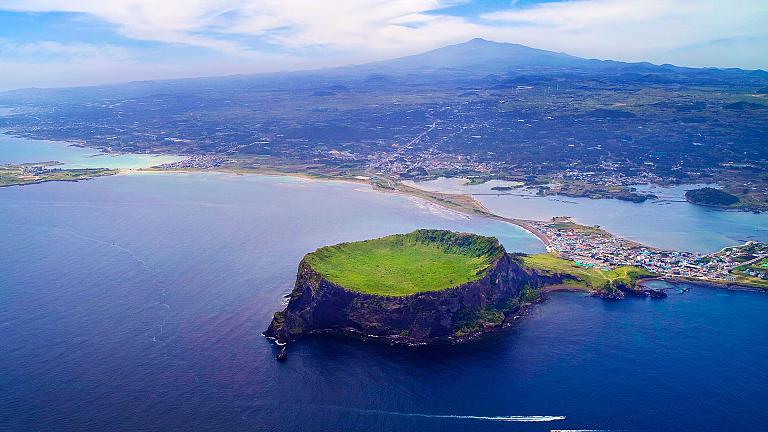
Through the Waterfall, Valley & River
When city temperatures rise, Koreans head to shaded valleys and waterfalls to cool off naturally, one of the most local July experiences.
Bukhansan National Park is easily accessible when visiting Seoul, perfect for a half-day trip, an escape from the city to walk along the flowing streams. On Jeju Island, Cheonjiyeon and Jeongbang Waterfalls, surrounded by lush greenery, return to their powerful summer flow in July.
For more leisure options, board the cruise on the Han River at sunset with the lit-up skyline, soft drinks, music, and breezes. While for family travel, Hangang River parks like Yeouido and Ttukseom offer shallow areas for kids to play.
Note:
A long-time hike or walk is not the top recommendation in Korea in July. Slow down your pace, and replenishing water promptly is the key to the outdoors. Local Koreans often dip their feet in streams to relax (check the posted signs first). Pack a towel and opt for shoes that are easy to slip on and off.
Catch the Night Time Light Up
Night sightseeing is one of the most enjoyable ways to explore Korea without the daytime heat in July, and the lively Seoul and cozy Busan are the most popular destinations.
Apart from the colorful Banpo Rainbow Bridge Fountain with synchronized water and music, some ancient palaces (like Gyeongbokgung & Changdeokgung) also offer their night admissions in soft, mood-setting lights.
Seokchon Lake Park is also recommended for your night stroll, when the lit-up right match its blooming lotus flowers.
When in Busan, joining the Busan Yacht Night Cruise is worthwhile to admire those far beyond the skyline: drone light show, fireworks, and those stunning reflections.
Note:
Aim for 8 to 10 pm when temperatures drop, and lighting is at its best. Palace night visits require advance booking. Tripods may be restricted to most heritage sites, while selfie sticks are fine.
Recommended Tour Itinerary
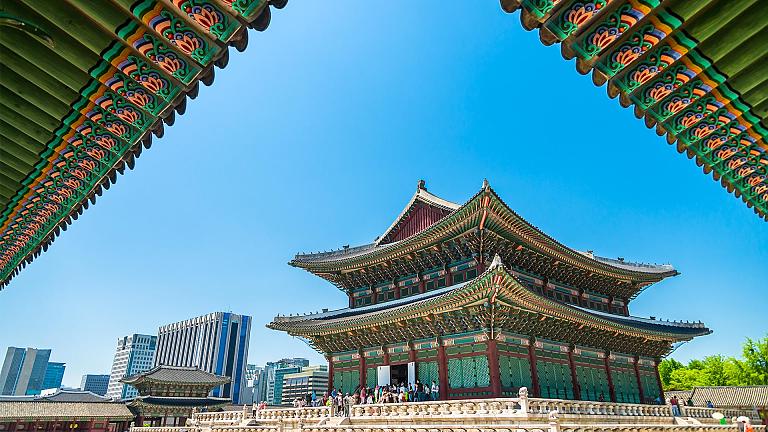
Join the Bar Hopping
Warm nights and a social drinking culture make July ideal for experiencing Korea's vibrant nightlife. The international Hongdae is usually the easiest one to navigate the Korean bars with their youthful, lively atmosphere to drink and dance. Or head to Itaewon, where English-friendly menus are common if the leisure music and rooftop lounges are what you are looking for.
Note:
- Sharing drinks is part of Korean social culture, but pace yourself since locals can drink heavily.
- Casual is fine, but flip-flops and beachwear may feel out of place at night.
- Subways stop around midnight; taxis are plentiful but can be slower on weekends.
Korean Travel Cost & Crowd in July
July in South Korea is still considered a shoulder season for travel. While visitor numbers and hotel rates do rise compared to June (about 10 to 15% ), they remain well below the peak levels seen in August (10 to 20%).
Crowds tend to increase from mid to late July as local school holidays begin, largely in southern coastal regions such as Busan and Jeju. Although travel costs rise accordingly, the overall level of crowding is still under control, and prices remain within a reasonable range.
Top Korean Festival in July
Boryeong Mud Festival: Korea's most hands-on summer festival occurs in July at Daecheon Beach, where you jump straight into giant mud pools, slide down muddy slopes, and join playful mud battles by the beach. The mineral-rich mud is said to be good for the skin, but the real draw is the carefree atmosphere, from expect live music to beach parties.
Daegu Chimac Festival: Chimac, short for chicken and beer, where you can sample countless fried chicken styles paired with cold Korean beer while enjoying live performances and outdoor parties. The festival is social, easygoing, and very welcoming to foreigners to join locals for a relaxed, flavorful summer night.
Buyeo Seodong Lotus Festival: Set around scenic Buyeo Seodong Park (Gungnamji Pond), this festival celebrates lotus blooms in a calmer, more cultural summer experience in July. You can stroll through blooming lotus fields, take evening walks under soft lantern light, and enjoy traditional performances. It's ideal for travelers seeking a slower pace, photography opportunities, and a glimpse of Korea's poetic side, far from large crowds and city heat.
Sinchon Water Gun Festival: Features a massive water fight in late July in Seoul, which turns the streets of Sinchon into a giant outdoor water playground. Just joining thousands of participants in friendly water fights and expect to get completely soaked. You can also find family-friendly zones with giant water slides for fun.
Recommended Tours
-

-
South Korea Family Tour: Lotte World, Haeundae & More12 DaysSeoul, Busan, Jeju IslandExplore This Tour
-
-
Related Posts You May Like
-
Top Korean Festivals to Experience in 2026/2027
-
South Korea in June 2027: Early Summer Weather With Low Rain
-
An Ultimate Guide for Summer in South Korea 2026
-
Spring in Korea: Warm Weather & Flower Festivals Bloom
-
Autumn in Korea: Experience the Best Fall Views
-
South Korea Temple Stay Guide for First Timers