Best Time to Visit South Korea in 2026: Monthly Guide
In general, the best time to visit South Korea is during the spring and autumn, since the other two seasons may be too hot or too cold. However, each month in South Korea provides different scenery, activities, and events for you to experience. You may enjoy Korea's beach holiday in summer, and there are also ski resorts to spend your Christmas or New Year. So check this guide to South Korea and find out the best time for your suitable trip to South Korea.
Best Time to Visit South Korea
- Spring and autumn are the best seasons for comfortable sightseeing weather: relatively mild, comfortable, with less chance of rain and less humidity
- Late March and early April are the best times for cherry blossoms, while the peak autumn leaves season runs from late October to early November.
- Snow falls from December to February. Focus on January and February to enjoy the best ski season in Korea.
- Late June and Mid-July are the monsoon season in Korea, which can sometimes last into late July.
- Skip July & August if the beach holiday is not your target; these are usually the peak domestic tourist season, especially along the coastline.
- September is the preferred time if you are looking for beach time in Korea.
- Consider May and June when seeking the weather, travel cost, and crowd balance.
Weather in South Korea
Korea in spring (March to May): with mild and gradually warming temperatures ranging from 5 to 20℃ (41 to 68℉), it is a dry season with occasional fine dust.
Korea in Summer (June to August): hot (25 to 30℃, 77 to 86℉), humid, and rainy, with a monsoon season bringing heavy showers and lush greenery. Slightly influenced by the typhoon season.
Korea in Autumn (September to November): cool, dry, and widely considered the most pleasant season (15 to 21℃, 59 to 70 ℉), featuring clear skies and vibrant fall foliage.
Korea in Winter (December to February): cold and dry, with temperatures often below freezing (-5 to 5℃, 23 to 41℉), with common snowfall in the northern mountainous area, and crisp, clear days.
South Korea Weather by Month & Top Things
January: Winter Activities & Palace With Snow
January is the coldest and snowiest month in South Korea, with countrywide frosty temperatures ranging from -6 to 2℃ (21 to 36℉), and colder nighttime temperatures drop to -12℃ (10℉). Also, you may feel colder than expected during your January trip to Korea.
It is not a common perfect time to visit South Korea, but the best time to enjoy a ski vacation with snow-covered sledding hills and winter events in northern Korea.
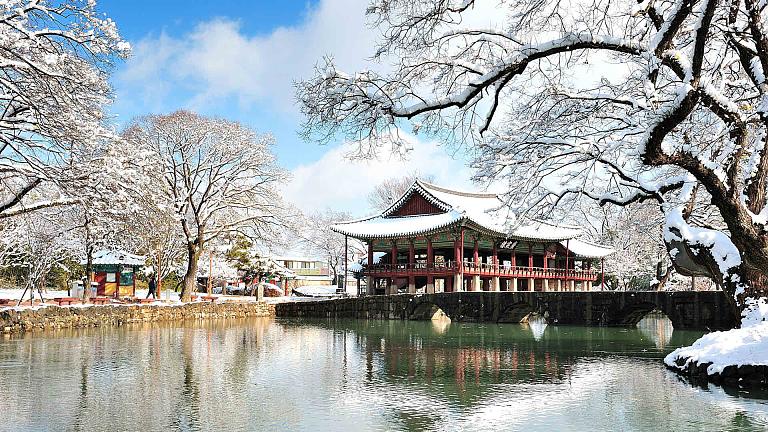
If you can bear the cold, just take advantage of this low tourist season, visit popular attractions without crowds, capture those exquisite palaces with white snow, and enjoy the country at more comfortable prices.
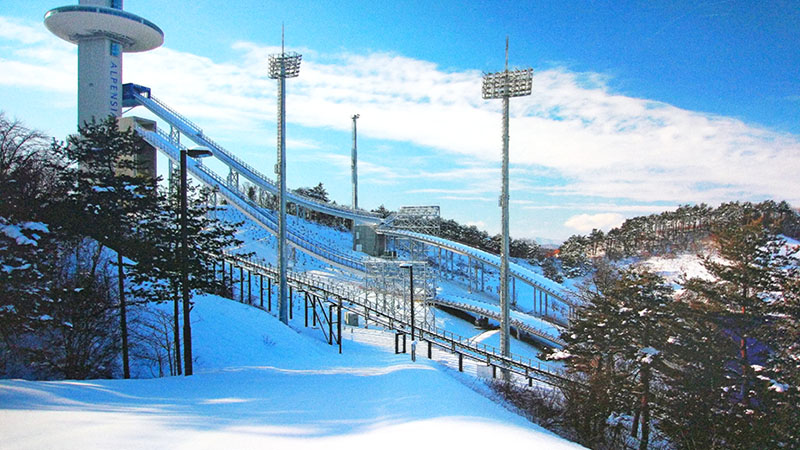 Ski Resort
February: Nami Island and Fire Festival
The weather in February in Korea is still cold and snowy. With average temperatures (-5 to 10℃, 23 to 50℉) slightly higher than in January, you can still have a chance to see Seoul in the snow or continue the ski holiday.
Nami Island is a perfect place for lovers to visit on Valentine's Day. It is a half-moon-shaped island located just 2 hours away from Seoul. You can admire the unique winter view of Nami Island along its tree-lined lanes.
The Korean New Year (Seollal) is generally celebrated in January or February. It is better to avoid visiting South Korea during this time because lots of restaurants and shops might be closed for this public holiday.
Related Articles
Top Korean Festivals to Experience in 2026/2027March: Hiking in Spring Flowers
The weather in South Korea starts turning warm in March (0 to 13℃; 32 to 55℉), and springtime flowers are starting to bloom. Though it is still colder in the mountainous area, March in South Korea is a dry month suitable for outdoor activities to find some clues about spring.
You can capture cherry blossoms blooming in some warm southern areas first in the second half of March, paired with azaleas and forsythia as your perfect background.
Why not visit some national parks on a spring hike during your March trip to South Korea? Jirisan, Hallasan, and Seoraksan National Park are some perfect places for exploring flora and fauna.
Recommended Tour Itinerary
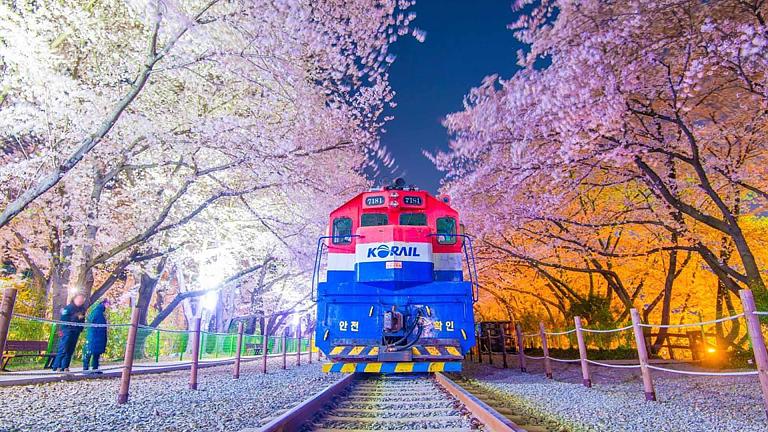
April: Cherry Blossoms Bloom
April in South Korea is pleasant and comfortable. With warm temperatures (10 to 20℃, 50 to 68℉) around the whole country, you can see cherry blossoms are in full bloom in most places in South Korea this month. Meanwhile, the weather in April might be a little humid because of the spring rain, which is showers and won't last too long.
It is time to explore the pink cherry blossoms blooming all around Seoul, Busan, and Jinhae. Compared to cherry blossoms in Japan, Korean pink blossom viewing is more modern and vibrant. Enjoy some light music from the concert of the cherry blossom festival, picnic under the cherry trees, and take a sip of coffee while watching the pink rain. You won't miss this feast of flowers.
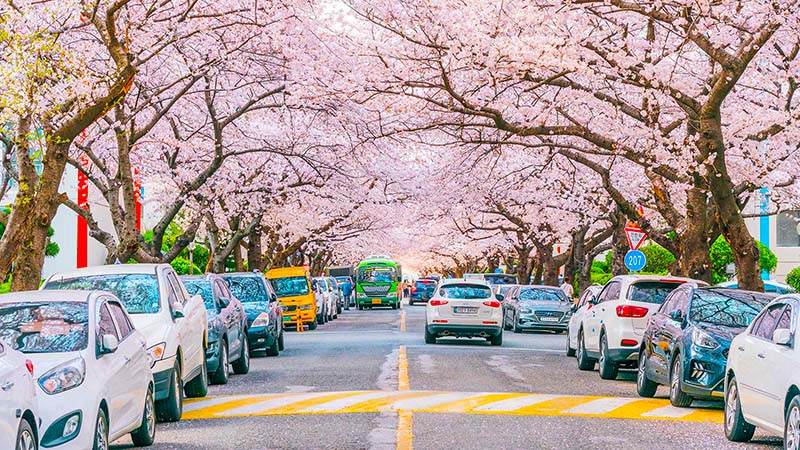 Cherry Blossoms in Korea
May: Enjoy Festivals in Spring
In May, temperatures in Korea range from 14 to 25℃ (57 to 77℉), with a slightly humid increase yet still mild and pleasant enough for going hiking, camping, and glamping in its refreshing green.
There are also many interesting festivals in South Korea in May for you to attend. Not only for Buddhists, but the Busan Lotus Lantern Festival is also a festival where everyone can enjoy the delicate lotus lanterns displayed. You can also explore the local craft culture at the Icheon Ceramics Festivals in the first week of May. Try to make ceramic items on your own.
June: Taste Street Foods & Explore Palaces
June is a quiet month compared to the past few spring months. It is the shoulder season connecting spring and summer, remaining a relatively stable average temperature from 19 to 28℃ (66 to 82℉). In the first few weeks, the temperature might be down to 20℃ at night, suitable for walking and shopping after dinner. However, prepare your rain gear well since the monsoon season usually comes in the second half.
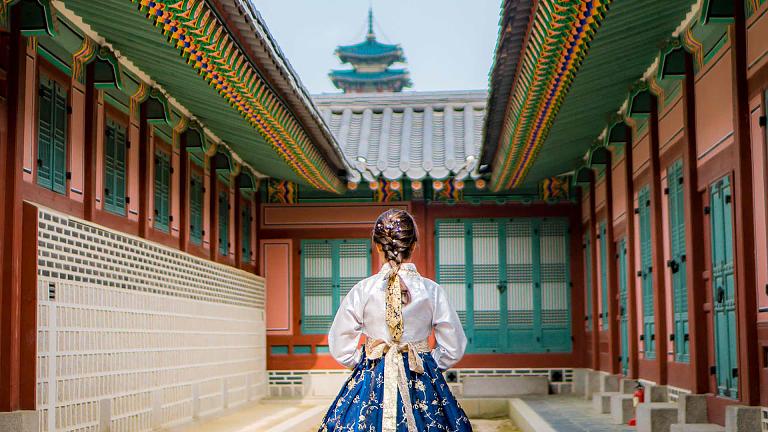
Many street food vendors have started selling seasonal dishes after sunset, ideal for wandering around the streets to discover some exotic tastes like naengmyeon (cold noodle dishes) and bingsu (shaved ice dessert). For palace sightseeing, you can enter the main palaces in Seoul for free if you are wearing a hanbok.
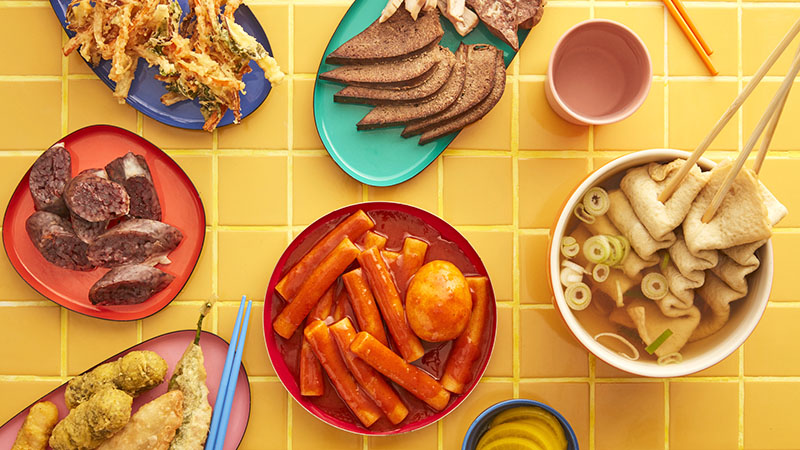 Street Foods
July: Mud Festival & Beach Holiday
Summer in South Korea comes exactly in July. It is the monsoon season of Korea, with sticky air, more rainfall, and high temperatures around 25℃ (77℉), and daytime highs can hit 30℃ (86℉) and even higher after mid-July.
The weather in July in Korea usually feels more sweat due to the high humidity, so making your way along the coastline is a good idea to enjoy the summer holidays: plan an island-hopping tour, walk on the soft white sand beach, and relax in a seaside resort. Or join the Boryeong Mud Festival at Daecheon Beach, an interesting event to try mud skiing, mud swimming, face painting, music, and dance competitions.
Recommended Tour Itinerary
August: Dolphin Spotting and Water Activities
August is the hottest month in South Korea. There are more sunny and cloudy days in August compared to July, and paired with summer's high humidity, the heat feels more intense. The average daily temperatures in August can reach up to 35℃ (95℉) at noon.
In this peak summer season, it is time to enjoy most water activities in South Korea. Apart from scuba diving, surfing, and kayaking, joining a cruise for dolphin watching around Jeju Island is also recommended. If you are interested, why not join a Haenyeo (women divers who harvest marine life) experience to understand more about the sea culture in Jeju Island?
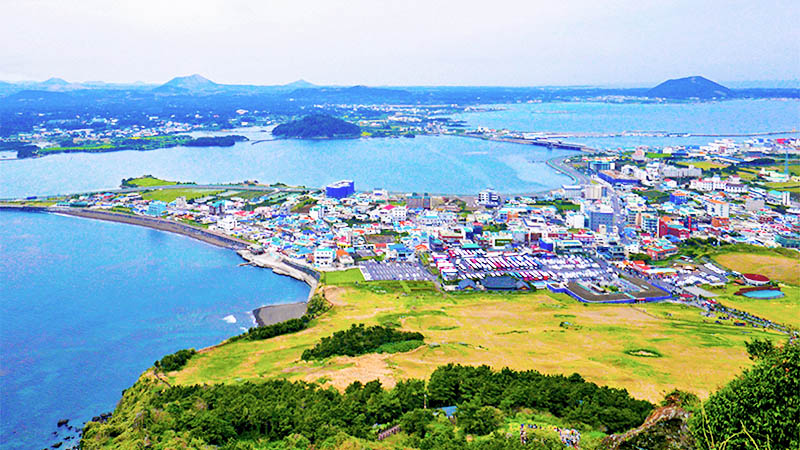 Jeju island
September: Palace Starlight Tour & Firefly Watching
The heat and humidity begin to dwindle in September in South Korea. The weather in September is back to the comfort zone from 20 to 25℃ (68 to 77℉). It is the time when summer crowds fade, but the seawater is still warm: taking advantage of the shoulder season at the beach is always recommended, especially with the quiet atmosphere.
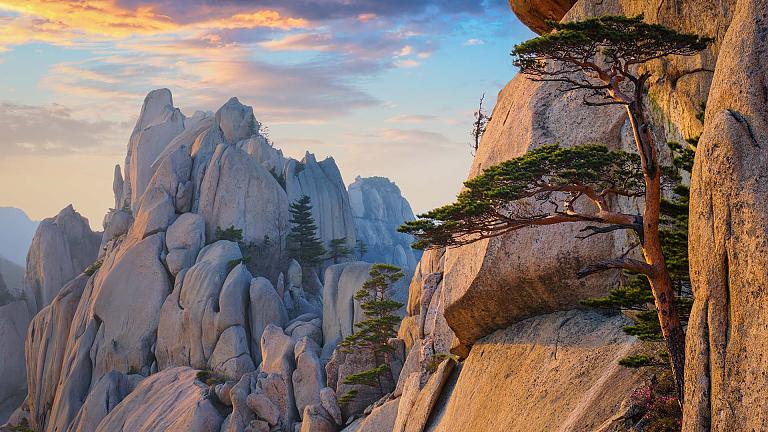
As the first Autumn month, the early fall foliage season comes in late September. So, head to Seoraksan National Park for a leisurely hike if you want to capture the changing colors.
September also offers one of the chances to see the brilliantly lit Gyeongbokgung at night, best for a hanbok sightseeing while taking some photos.
October: Autumn Leaves
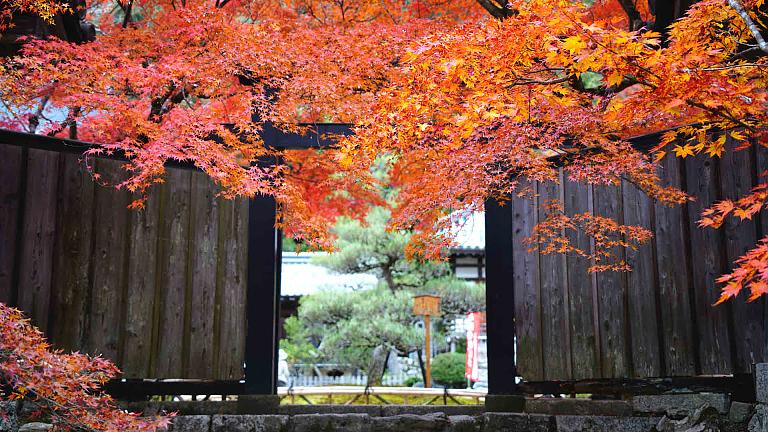
Though the daytime temperatures are still mild with the sunny days in October (around 20℃, 68℉), there will be a quick drop in the rural and mountainous areas at night (10℃, 50℉), making October one of the best times to see fall foliage in northern Korea.
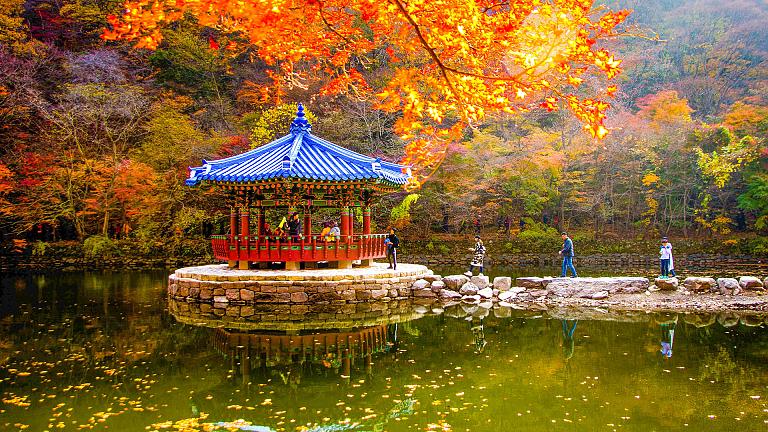
There is no doubt that it is the best time to walk and hike in this cool October. N Seoul Tower, Seoul Forest Park, and the ancient palaces are some of the best spots to see fall foliage in Seoul. Naejangsan, Seoraksan, Jirisan, Bukhansan, Odaesan, Gayasan, and Hallasan are some national parks perfect for indulging in the autumn atmosphere.
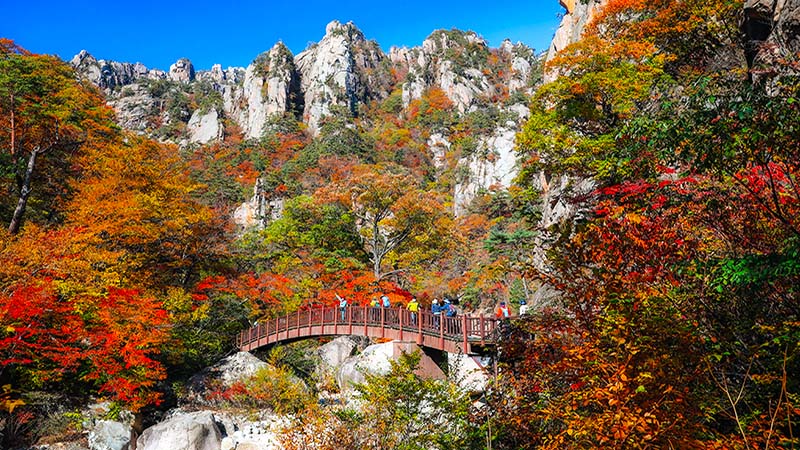 Autumn Leaves at Seoraksan
November: Chrysanthemum & Foodie Tour
After the fall foliage peaks in the first half, November is usually a shoulder month in South Korea. The weather in November is starting to be chilly and will transition to winter in the last few weeks, when you can expect a lower temperature from 3 to 12℃ (37 to 54℉).
It will be comfortable to walk around outside with just a sweatshirt and jeans in the first two weeks, while packing well during your late November trip to Korea, especially at night.
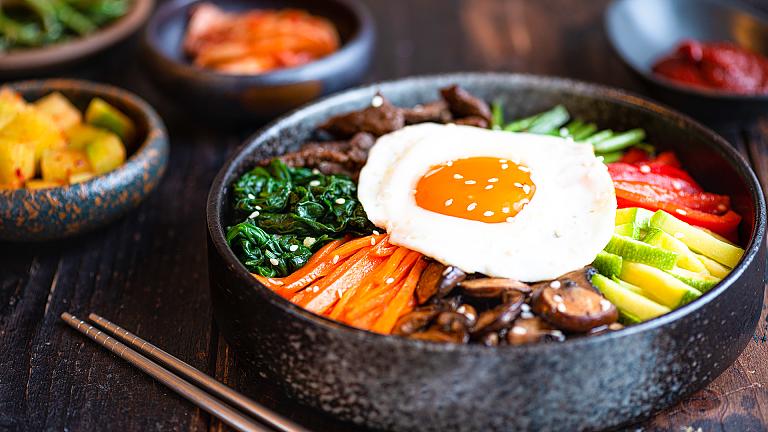
Apart from the autumn leaves, chrysanthemums are also blooming this month. And in these chilly days, it is also a perfect time to try some hot and steamy food in Korea. Korean Barbeque with Soju is one of the perfect collocations in winter. And don't miss the army stew (a Korean-type hot pot), tteokbokki (stir-fried sticky rice cakes), and grilled gopchang (cow bowel).
Recommended Tour Itinerary
December: Christmas in Korea
December is a busy time in Seoul! With a vibrant festive atmosphere, the first snow of the year will fall this month as usual. The temperature in daytime is hovering between -3℃ to 2℃, with occasional snowfall.
Christmas is an important festival in South Korea. You can experience a Korean-style Christmas in December. Including beautiful Christmas trees and other cute decorations. Pay attention when strolling on the street, you may encounter trees wearing cute and colorful sweaters.
You can plan a tour of the skiing resort in December, it is also a perfect time to pick strawberries. Moreover, it is also popular for ice fishing at the end of December if it is cold enough.
Tips for Planning a Perfect Trip to South Korea
Plan Your Itinerary Based on Interests and Budget
Planning your South Korea tour? Check some of our best-selling itineraries; each can be customized depending on your preference. Just feel free to contact us.
• For a classic tour: 9-Day Classic South Korea With Jeju Island. This 9-day classic tour includes highlights of Seoul, traditional cultural exploration of Andong and Gyeongju, local experiences of Busan, and leisure days in Jeju Island.
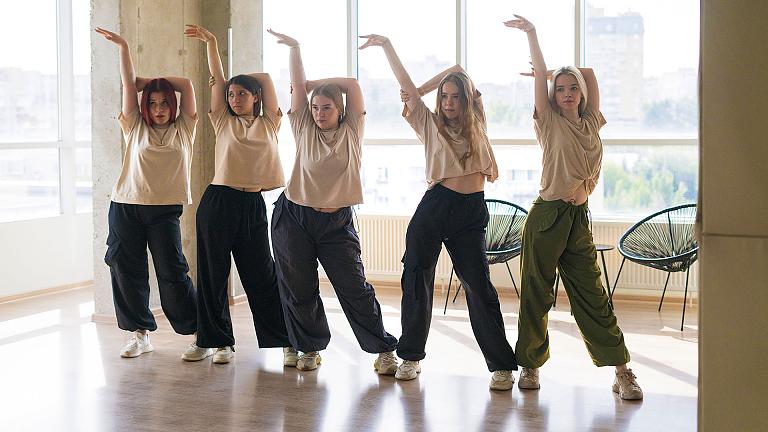
• For a family tour: 9-Day South Korea Family Tour With Korean Wave. This tour offers traditional cultural attractions in Gyeongju and Busan, explores the vibrant Seoul Gangnam district, attends a K-Pop dancing class, and explores the latest fashion trends of the Korean Wave.
• For a multiple-country tour: 12-Day Journey From South Korea to Japan. From South Korea to Japan, this is the most popular itinerary for those who are interested in Asian cultures. From Seoul to Gyeongju to see the ancient and modern dimensions of South Korea. Explore Kyoto and Tokyo to encounter the most "Japanese" Japan.
Check Visa Requirements
Most international travelers need a Visa to visit South Korea. For US citizens, you can travel to South Korea with a passport valid for at least 3 months. Usually, an electronic travel authorization (K-ETA) is required to enter South Korea. However, US citizens are exempt from this requirement until December 31, 2026. Check the latest information before your travel.
Pack Smartly
Remember to check the exact weather during your stay in South Korea before packing your suitcase. Make sure to bring your sunglasses, rain gear if needed, comfortable shoes if you plan to hike or walk a lot, and other essential things. Do not forget to bring some basic medications and your daily pills, and ask your doctor for advice before you leave. South Korea uses an F-type plug that operates a 220V supply voltage and 60Hz. Remember to check if it is needed to take an adapter and converter.
Recommended Tours
-
 Classic South Korea With Jeju Island10 DaysSeoul, Andong, Gyeongju, Busan, Jeju IslandExplore This Tour
 -
South Korea Family Tour: Lotte World, Haeundae & More12 DaysSeoul, Busan, Jeju IslandExplore This Tour
-
-
Related Posts You May Like
-
How to Plan a Honeymoon Tour in South Korea
-
Top Things to Do in South Korea by Season
-
Tips and Suggestions for Traveling to South Korea
-
How to Plan a Trip to South Korea & Japan: Tour Idea for 12 Days
-
South Korean Currency (KRW) Guide: Exchange Rates, Usage & Tips
-
Incheon Airport Comprehensive Guide: Food, Transit & More