How to Plan a Japan Sakura (Cherry Blossom) Tour 2027
Planning a cherry blossom trip to Japan but not sure when to go, where to visit, or how to fit everything into your itinerary? Start by considering your travel window and what you want to see in Japan, then use the sakura forecast to select the most suitable destinations and adjust your itinerary as the season approaches.
This guide walks you through each step, covers how to choose your dates, decide how many days to spend, select where to go and stay, combine destinations, and adapt your plans as the forecast develops.
When to Go: Choose Your Travel Window
Japan's cherry blossom season spans several months from January to May. If you're still deciding when to go, don't worry about finding one perfect date. Choose a travel window that works best for you:
- Want the classic Tokyo & Kyoto experience with peak cherry blossoms? Late March to early April is when their expected viewing periods overlap.
- Looking for a better Japanese spring atmosphere? Mid- to late March offers a relatively tranquil environment for a sakura hanami, photography, and flowery picnic.
- Want to match sakura with your first-time trip to Japan? Prioritize the overlap between your Golden Route and the expected bloom window.
- Want to maximize your chances of seeing blossoms? Consider a longer trip through March or April.
- Want fewer crowds? Pick edges of the main viewing period, like early blossoms in February or the end of the season in late April.
- Have fixed vacation dates? Then let your available dates determine which region you target. Check the latest cherry blossom forecast for destination-specific dates below, or just feel free to share your travel date or preference with us.
Match Your Itinerary to the Sakura Forecast
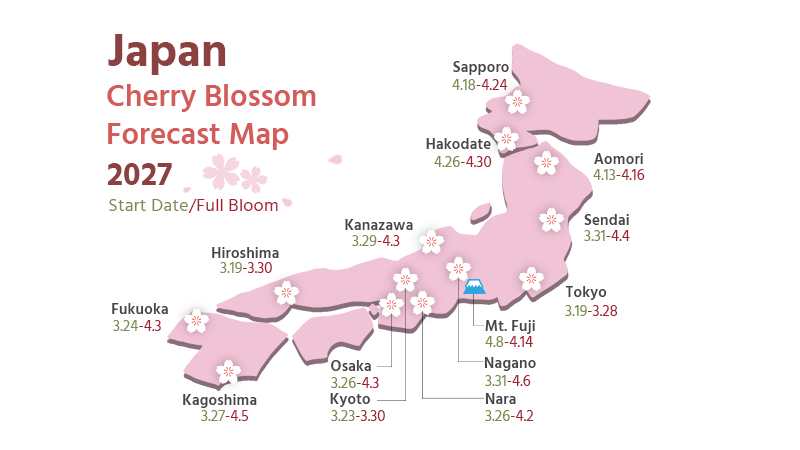 Japan Cherry Blossom Forecast Map 2027
How Many Days to Go
Around 10 days is a good starting point for a first cherry blossom trip to Japan, giving you enough time to combine Japan's Golden Route destinations from Tokyo to Kyoto and Osaka, and also include nearby cherry blossom spots like Mt. Fuji and Nara.
Generally speaking, a longer trip gives you more flexibility during this popular sakura season: instead of rushing between crowded cities to catch a single short viewing window, you can build in time to visit different areas and adjust your sightseeing as conditions change.
Choose How Many Cities to Visit
For a comfortable cherry blossom journey, it is recommended to spend at least 2 to 3 days in each city, so:
- If you have 7 days, 2 cities like Tokyo and Kyoto, or Osaka and Kyoto, would be enough.
- When there are about 10 days, time to consider a journey with 2 to 3 cities as your basis.
- For a 14-day itinerary, a combination of about 4 destinations with more culture to experience is also possible.
Where to Go for Cherry Blossoms
While looking for the best destinations for cherry blossom viewing, use your travel window to narrow down your target region, then choose 2 to 3 strategic bases to stay in.
- Winter holiday from January to February: Okinawa & Naha in the southern islands
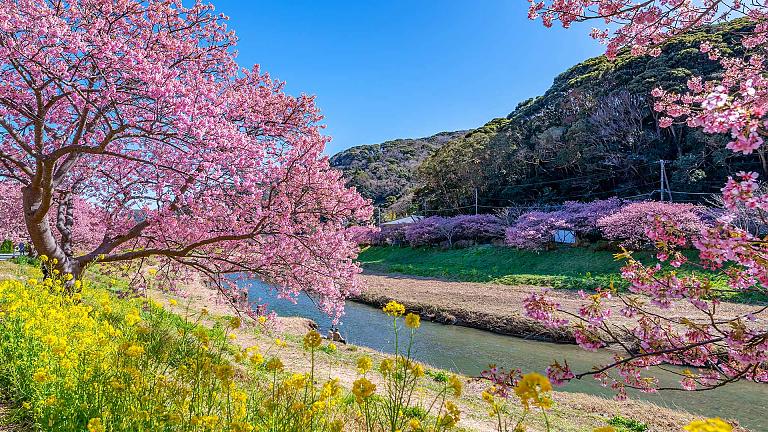
- Early season travel from February to mid-March: Izu Peninsula (Kawazu, Atami)
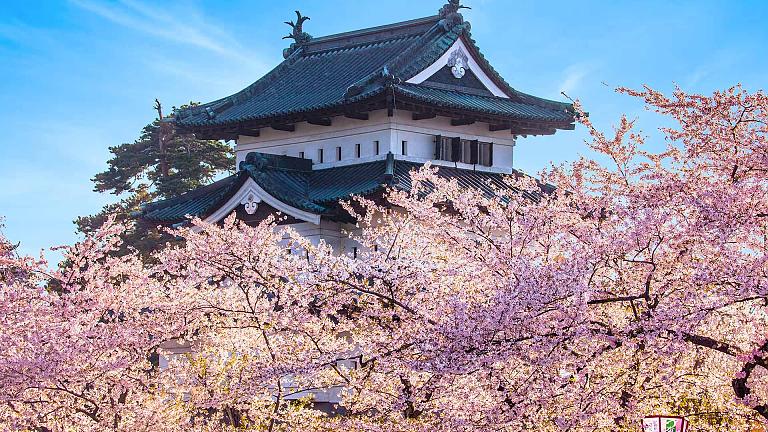
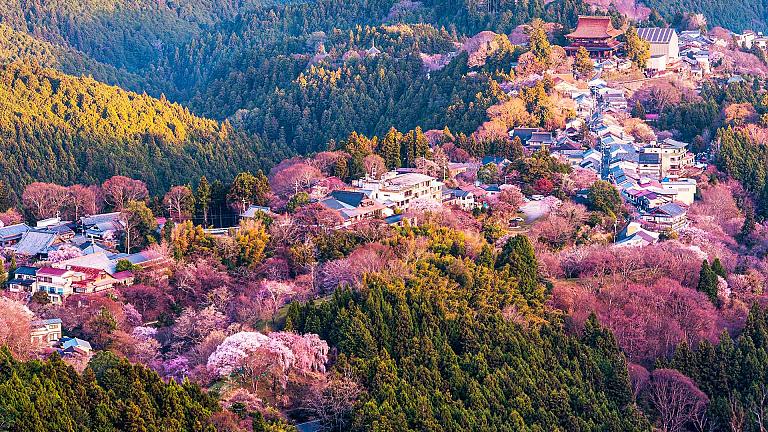
- Peak season trip from late March to early April: central Japan (Tokyo, Kyoto, Osaka, Hiroshima & Fukuoka)
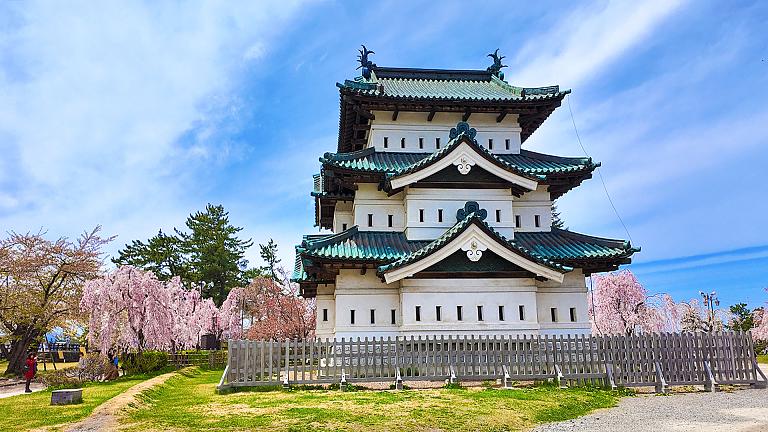
- Late season journey from mid- to late April: Tohoku region (Sendai, Hirosaki, Kakunodate, Aomori)
- End of the season from late April to early May: Hokkaido (Sapporo, Hakodate)
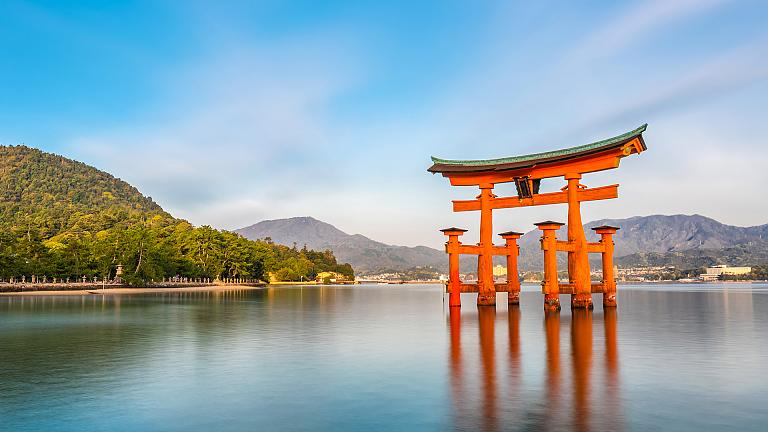
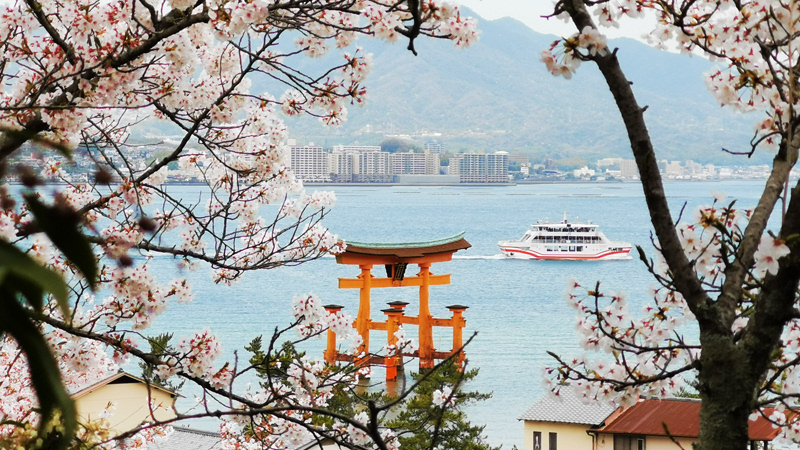 Floating Itsukushima Shrine with Cherry Blossoms
How to Combine Them into a Cherry Blossom Itinerary
Start With a Region, Not Individual Sakura Spots
Here's something you may not need to worry too much about: planning your entire itinerary around cherry blossom spots.
Actually, you don't have to chase cherry blossoms at every famous viewing spot. They are simply part of everyday scenery in Japan, appearing along streets, in parks, around temples, and throughout the cities you visit: you'll have plenty of opportunities to enjoy the blossoms along the way.
Instead, start by choosing the cities and regions you want to explore. From there, simply add a few cherry blossom spots along your route, plus any must-see hanami locations you particularly want to visit. However, keep the list short. Think of them less as a checklist and more as a seasonal backdrop, one that naturally accompanies your journey through Japan in spring.
Cross Regions Only When Your Trip is Long Enough
Generally speaking, it is recommended to focus on a single region for your first trip (for example, the most popular central Japan with Tokyo, Kyoto, and Osaka), and cross-region travel is an option for longer trips, especially if you are looking for a sakura-chasing tour from south to north: you will need time to match their different blooming period.
You can combine central Japan with the Izu Peninsula; as the blossoms begin to fade in Izu, they are just coming into bloom in Tokyo and Kyoto. Or follow the Tohoku Shinkansen northward to Sendai, Morioka, or even Aomori.
Also, only add another region or destination if the experience itself is worth the additional travel time, not simply to collect more cherry blossom spots. Consider how much time it takes to get there and whether it fits naturally into your route. Well, if you do have a spot to add to your itinerary, please feel free to contact us to create the route that suits you.
Recommended Tour Itinerary
Choose Your Overnight Bases
For an ideal base, cities with major Shinkansen (bullet train) stations are always the top option, and if possible, stay around the stations. For example, a hotel around Tokyo or Shinjuku station allows convenient access to most attractions, as well as day trips to Yokohama & Mount Fuji for further exploration.
As for stopovers, a one-night stay in Hakone for mt. Fuji and volcanic landscape viewing is a popular choice, and a Kanazawa overnight is also the top choice when visiting Takayama or Shirakawa-go.
However, not every destination needs to become a hotel change. Changing hotels every night is rarely worthwhile just to follow individual cherry blossom spots.
Leave Room for Flexibility
While making your itinerary, it is necessary to leave one or two flexible periods rather than assigning every day to a specific cherry blossom spot. Some of the best travel moments are the ones you didn't plan for.
Don't be afraid to leave a little breathing room in your schedule. Unpredictable weather, busy transportation, and changing cherry blossom conditions can all call for a little flexibility. And if you stumble upon a local festival or celebration that you'd like to enjoy a little longer, having some extra time in your schedule gives you the freedom to stay and soak it all in without worrying about falling behind.
Choose Transportation That Keeps the Route Simple
First of all, it should be noted that neither trains nor private cars can completely escape peak cherry blossom season crowds. Keeping your transport simple is key to enjoying the bloom rather than managing transfers, parking, and logistics.
For major cities such as Tokyo and Kyoto, trains and subways are often the most practical way to travel between central attractions. And high-speed trains (Shinkansen) are ideal for connecting primary destinations, like Tokyo to Kyoto, Kyoto to Osaka.
While you are traveling with family or a multi-generational group, a private car is still the best transfer with flexibility: handling luggage, point-to-point travel to minimize walking, or a quick move to another when the viewing spot is too crowded.
Sample Japan Cherry Blossom Itineraries
7-day cherry blossom tour for quick check: Tokyo → Kyoto → Tokyo
10-day classic sakura trip for first-time visitors: Tokyo → Mt. Fuji → Kyoto → Nara → Osaka
14-day cherry blossom journey in depth: Tokyo → Mt. Fuji → Kanazawa → Takayama → Shirakawa-go → Kyoto → Nara → Osaka
15-day sakura chasing tour through northern Japan: Tokyo → Sendai → Morioka → Aomori → Hakodate → Noboribetsu → Sapporo
Recommended Tour Itinerary
(Late Mar ~ Mid-Apr 2027)
(Late March – Mid-April)
(Late April – Early May)
How to Adjust Your Sakura Itinerary
Build in Floating Days: Always leave 1 to 2 days in your itinerary without rigid bookings. For example, keep these days open for day trips to wherever the bloom is currently at its peak.
If the Season is Early: Pivot your base day trips to higher elevations or cooler nearby regions (e.g., heading from Tokyo to Karuizawa or Hakone via Shinkansen). While on a private tour with us, our team monitors real-time bloom updates daily. If city parks start fading, your driver and guide can reroute your day trip to peak-bloom locations in surrounding valleys or mountainous areas without transit hassle.
If the Season is Late: Focus on early-blooming varieties (like Kawazu-sakura) or pivot to cultural and culinary experiences. Before you fly, as official forecasts solidify, we review your route with you to adjust city sequences or day tours if necessary. We utilize deep local expertise to guide you to hidden, micro-climate spots and private gardens where early blossoms appear first.
If You Miss Peak Bloom: Different varieties and regions bloom at different times. Apart from Tohoku and Hokkaido with late-blooming sakura, spots like Kyoto's Ninnaji Temple or Osaka Mint Bureau offer spectacular late-season species like Yae-sakura (multi-layered petals) that bloom 1 to 2 weeks later than standard cherries. There may still be good alternatives depending on your travel dates and route. Please feel free to contact us.
More FAQs to Plan Your Sakura Trip to Japan
Is 7 Days Enough to Visit Tokyo & Kyoto
Yes. 7 days can be enough for a first cherry blossom trip combining Tokyo and Kyoto, especially if you focus on a few key experiences rather than trying to see everything. Around 3 to 4 days in each city, including some room to adjust the order and travel between them.
If you prefer, a private itinerary can help you make better use of your time by coordinating the route, reservations, and daily sightseeing around your priorities. With less time managing logistics and more time enjoying the season instead.
How Far in Advance Should I Book a Japan Cherry Blossom Trip
Starting around 9 months ahead is a good idea if you want more choice of hotels and travel dates, particularly around peak bloom in Tokyo and Kyoto.
Earlier planning simply gives you more options: transport-convenient hotels, rooms with private hot spring, ryokan with western dinners and bed, or the seats of popular restaurants.
If you're arranging a private tour, it also gives your travel specialist more flexibility to build the itinerary around your preferred dates, hotels, and destinations. Already planning closer to the season? Don't worry, we can still explore the available options with you.
How to Avoid Crowds
Generally, we recommend traveling outside peak times, or letting your experienced local guide take care of the timing and route adjustments for you. Avoid the busiest areas, create a more relaxed sightseeing route, and uncover lesser-known cherry blossom spots away from the usual tourist crowds.
Recommended Tours
-

-
Highlights of Japan: Kyoto, Tokyo & Hiroshima10 DaysOsaka, Hiroshima, Miyajima, Kyoto, Tokyo, Mt. FujiExplore This Tour
-
-
Japan Cherry Blossom Tour With Takayama Festival
(Early – Mid-April)14 DaysOsaka, Kyoto, Takayama, TokyoExplore This Tour
Related Posts You May Like
-
Best Cherry Blossom Spots for Tokyo Hanami 2027
-
Best Places to See Cherry Blossoms (Sakura) in Japan 2027
-
Best Spots to See Cherry Blossoms (Sakura) in Kyoto 2027
-
Japanese Cherry Blossom Viewing Guide 2027
-
7-Day Cherry Blossom Itineraries in Japan: Top 3 Ideas
-
10-Day Cherry Blossom Itineraries in Japan: 4 Best Options