Korea in February 2027: Weather & Winter Travel Tips
If you are planning to experience South Korea in winter, February is one of the best months to consider. The country is still covered in winter scenery, especially in mountainous areas, while temperatures are generally milder than in January. Outside the Lunar New Year holiday period, February is also considered a quieter travel season, with fewer crowds and more affordable hotel prices. Overall, it offers a good balance between winter experiences, comfort, and cost. In this guide, you will find useful information about South Korea’s February weather, the best things to do, and what to expect when planning your trip.
South Korea Weather in February
February is the last month of winter in Korea, when the intense chill begins to feel a little softer.
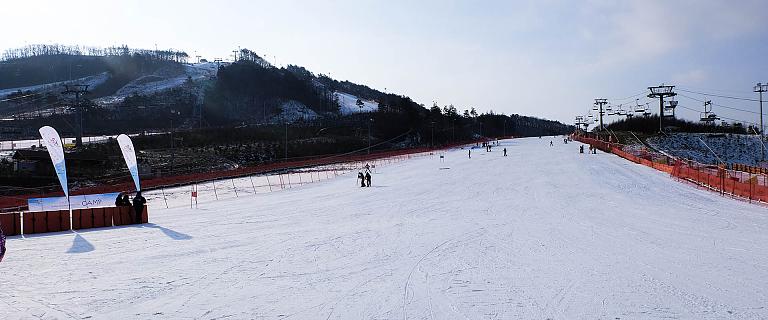
Similar to January, February is typically cold, dry, and windy, with occasional rain or snow. Temperatures remain cold, although they are generally milder than in January. Snow remains common in mountainous areas, especially in Gangwon Province, where ski resorts are still open with generally good snow conditions.
Daylight hours gradually increase in February, and afternoons can feel slightly milder, especially toward the end of the month.
| Destination | Average High | Average Low | Rainy Days |
| Seoul | 5℃ (41℉) | -5℃ (23℉) | about 3 days |
| Busan | 10℃ (50℉) | -1℃ (30℉) | about 6 days |
| Jeju Island | 10℃ (50℉) | 4℃ (39℉) | about 10 days |
- February weather in Seoul is cold and often windy, with nights and mornings remaining below freezing.
- Busan is milder than Seoul, and snow is uncommon, although cold and windy days are still possible.
- In Jeju, snow is still possible at higher elevations on Hallasan, while the coastal areas are generally much milder.
- Gangwon Province remains cold and snowy in February, especially in mountainous areas. Pyeongchang is a popular ski destination, with good snow conditions typically continuing through the month.
 South Korea Weather in February
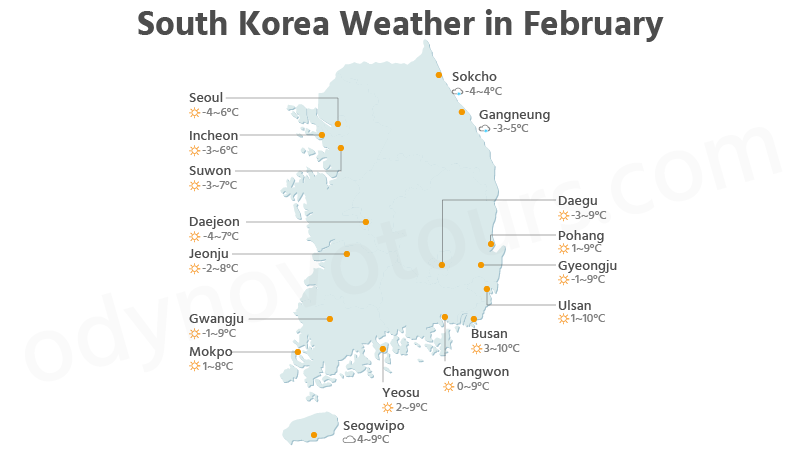 South Korea Weather in February
Things to Do in South Korea in February
Try Jjimjilbang after Sightseeing
During February's cold weather, nothing is better than a warm indoor Jjimjilbang escape after long sightseeing days. Enjoy moving between heated sauna rooms and hot baths under the large Korean bathhouses, and relax like locals with traditional snacks from baked eggs to sweet rice drinks; it is more than a wellness experience but also an everyday part of Korean life.
Stay at the Temple
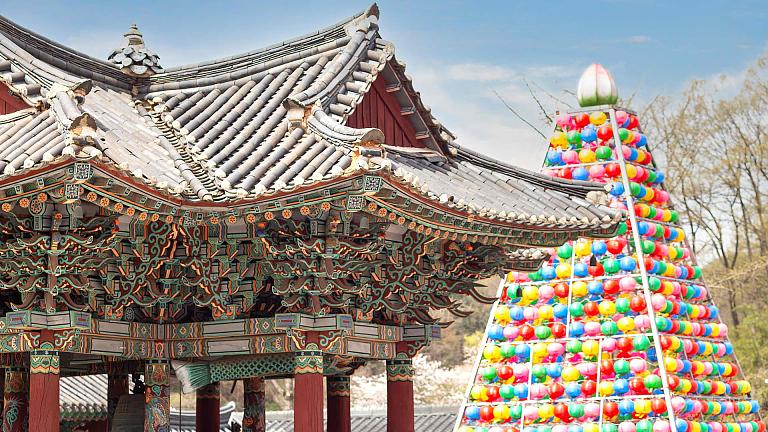
The quieter winter landscapes and colder air in February create a calmer, more reflective environment for a temple stay experience in South Korea. Stay overnight at snow-covered Buddhist temples, participate in meditation, tea ceremonies, chanting, and simple monastic meals in silence; it is one of the best times to experience a slower pace of life away from the cities.
Plum Viewing in Southern Korea
While February is still winter, it also marks the beginning of Korea's first signs of spring through plum blossoms. In warmer Busan and Jeju regions, plum trees begin blooming earlier than cherry blossoms, offering delicate white and pink flowers against still-cool winter scenery.
K-beauty Experience
More than an escape from the winter climate, February also makes an ideal time to explore Korea's well-known K-beauty and skincare culture. Visit skincare shops for your skin analysis, relax at head and face spas, or even a hair styling with idol-like makeup for your Instagram. If you prefer, areas like Myeongdong are filled with cosmetic stores offering masks, moisturizers, and winter skincare products specifically designed for dry seasonal conditions.
Celebrate the New Year in Korea in February
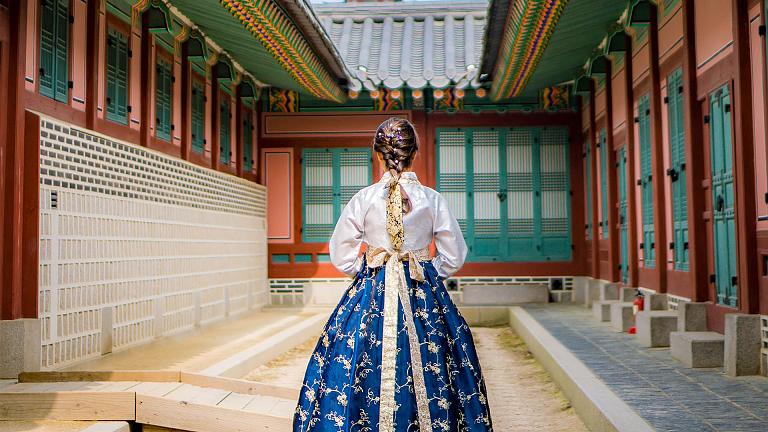
The Korean New Year Seollal is celebrated in February this year (usually falls in January or February, depending on the lunar calendar). You may notice people wearing hanbok (traditional Korean clothing), gift sets filling department stores, and the traditional eating of tteokguk (rice cake soup) for the Korean New Year.
Gyeongbokgung Palace and Namsangol Hanok Village sometimes host traditional performances, folk games, and other cultural activities during the holiday. Visiting South Korea around Seollal offers a chance to experience Korean traditions and celebrations firsthand.
Recommended Tour Itinerary

FAQ
December, January & February: Which is Better
December is the most festive winter month, January delivers the full Korean winter experience and is busiest for ski travel, while February often offers the best balance between winter experiences, comfort, and value.
| December | January | February | |
| Outdoor Comfort | ★★★★☆ | ★★☆☆☆ | ★★★☆☆ |
| Winter Scenery | ★★★☆☆ | ★★★★★ | ★★★★★ |
| Ski Conditions | ★★★☆☆ | ★★★★★ | ★★★★☆ |
| Holiday Atmosphere | ★★★★★ | ★★☆☆☆ | ★★★☆☆ |
| Crowds in the City | ★★★★☆ | ★★☆☆☆ | ★★★☆☆ |
| Hotel Cost | ★★★☆☆ | ★★☆☆☆ | ★★☆☆☆ |
- For Christmas, New Year & city atmosphere: December
- For ski-focused trips: January
- For balanced winter sightseeing & better value travel: February
Is February Still a Good Time to Ski in South Korea?
February is slightly warmer than January, making it a comfortable time to spend more time outdoors. It is particularly suitable for leisure skiers and beginners who want to enjoy a relaxed day on the slopes.
In Gangwon Province, ski resorts generally continue to have good snow conditions throughout February. Toward the end of the month, lower-altitude slopes can become slightly softer or wetter during warmer afternoons. However, conditions generally remain good at most of the major ski resorts.
Recommended ski resorts include Yongpyong Ski Resort, Phoenix Pyeongchang Ski Resort, and Vivaldi Park Ski World.
What to Wear in South Korea in February?
Warm layers and good protection from the wind are still essential when traveling in South Korea in February. Sunny afternoons can feel slightly milder, so it is best to dress in layers that you can easily add or remove. This is also useful when moving between heated indoor spaces and the colder outdoors.
If you plan to visit snowy areas, ski resorts, or places where sidewalks may be icy, choose warm, comfortable shoes with good insulation and traction.
Is Everything Open During the Korean New Year?
Most major hotels and shopping centers in Seoul and Busan remain open during the Korean Lunar New Year holiday, although some businesses may operate on reduced hours. Local restaurants and shops may close for part of the holiday, and some tourist attractions may also have adjusted opening hours.
Traffic can also be particularly heavy on the first and last days of the holiday as people travel to visit family. Hotel prices may rise during this period as well. If you are planning to travel around Lunar New Year, it is worth checking opening hours and making restaurant and transportation arrangements in advance.
How to Celebrate Valentine's Day in South Korea in February?
Beyond the classic box of chocolates, couples can enjoy Seoul's evening skyline from N Seoul Tower and leave a love lock as a memento of their trip. A romantic dinner at a restaurant with panoramic views is another way to enjoy Korean cuisine while taking in the city's lights.
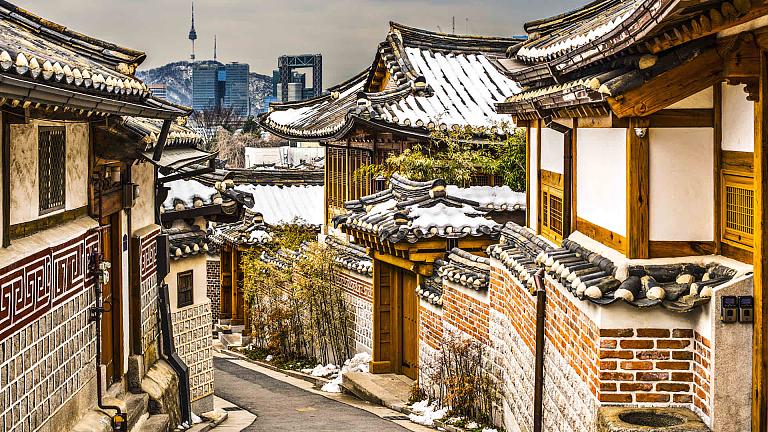
For a more local atmosphere, take an evening stroll through the narrow streets of Ikseon-dong, where traditional hanok houses have been transformed into cozy cafés, restaurants, and small shops. Around Valentine's Day, many cafés and bakeries also offer seasonal desserts and drinks, making it a nice time to enjoy Seoul's café culture together.
Recommended Tours
-

-
-
South Korea Family Tour: Lotte World, Haeundae & More12 DaysSeoul, Busan, Jeju IslandExplore This Tour
-
Related Posts You May Like