Jemaa el-Fna Square in Marrakech: Where, What to Do & Tips
On social media, you may see many tourists say that visiting Jemaa el-Fna Square is a must when coming to Marrakech, but few of them tell you how to explore this bustling World Heritage Site. Follow the crowd or explore accompanied by a guide? Which performances are worth stopping for, and which invitations should you politely decline? Visit here during the day or at night? Don't let confusion reduce your enthusiasm. The article will answer all questions and help you start a smooth Morocco journey.
- Why Visit Jemaa el-Fna Square in Marrakech
- Where Is Jemaa el-Fna Located in Marrakesh
- Day vs Night at Jemaa el-Fna Square
- Best Time to Visit Jemaa el-Fnaa
- What to Do in Jemaa el-Fna Square
- From Jemaa el-Fna to the Souks
- What to Visit Within Walking Distance
- Practical Tips & FAQs for First-Time Visitors
- Experiencing Jemaa el-Fna With a Local Guide
- More Than a Square
Why Visit Jemaa el-Fna Square in Marrakech
Jemaa el-Fnaa Square is far from being an ordinary market. It is an open-air theater because everyone is an audience member and will become part of this vivid drama at any time.
Listed by UNESCO as cultural heritage, it has been the heart of Marrakech for thousands of years. To understand the vitality of Marrakech and even Moroccan culture, it is the irreplaceable gateway. Here you'll discover its soul: during the day, it is a daily life scene filled with spice vendors and tattoo artists. While it completely transforms into a fantastical feast of performers and music at night.
Where Is Jemaa el-Fna Located in Marrakesh
Jemaa el-Fna Square is located in the center of Marrakech, serving as the entrance and heart of the Medina. It's adjacent to the Koutoubia Mosque and connected to various souks (open-air markets). You can walk a few minutes from accommodations within the Medina. From Marrakech Menara Airport, it takes about 20 minutes, approximately 30 minutes during peak periods.
Day vs Night at Jemaa el-Fna Square
Jemaa el-Fnaa is the "Square that Never Sleeps." You can find its true magic in different scenes and experiences from day to night.
Daytime at Jemaa el-Fna: A Traditional and Quiet Market
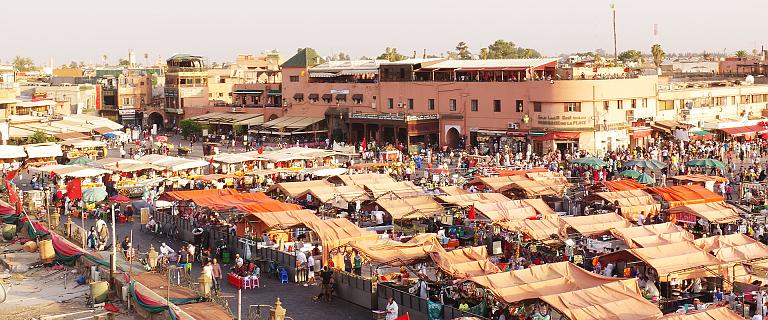
During the day, the square is relatively quiet, and you might even think it's just an ordinary market. Juice stalls, spice stalls, and herb stalls open for business one after another. You can experience real local life at a slow pace. What you definitely shouldn't miss is drinking a freshly squeezed orange juice to start a sweet day.
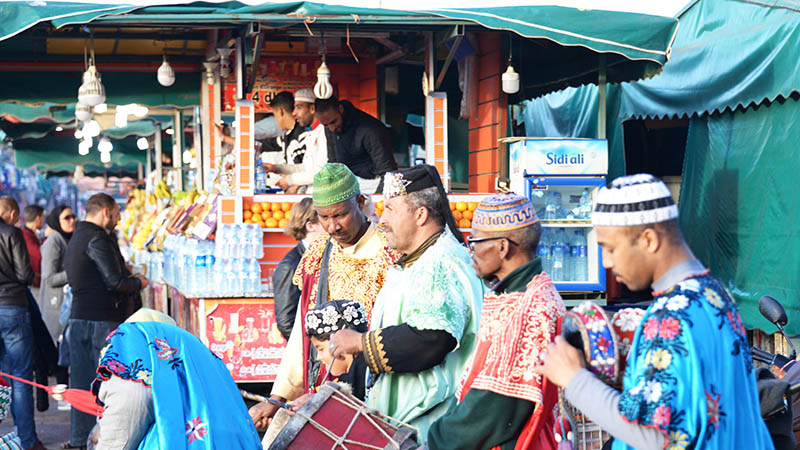 Jemaa el-Fna Square During the Day
Night at Jemaa el-Fna: A Lively Theater and Revelry
As the sun sets, the square gradually transforms from an open market into a bustling open-air theater. It is the most captivating moment, and also the reason why most travelers highly recommend visiting at night. You will see various street performances by storytellers, snake charmers, drummers, and dancers. While rows of food stalls under the colored lights look especially enticing, you can savor traditional Moroccan food ranging from tagine to mint tea.
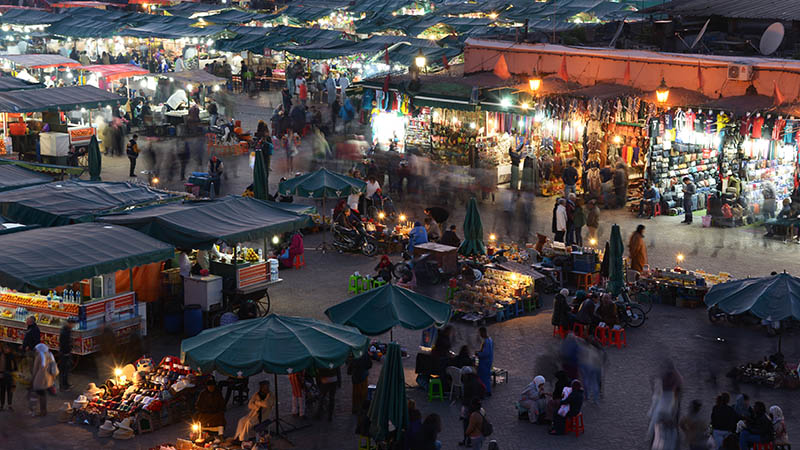 Jemaa el-Fna Square at Night
Best Time to Visit Jemaa el-Fnaa
The best time to visit Jemaa el-Fnaa Square is from dusk to evening. For first-time visitors, I suggest you remember 3 time periods. Most stalls open around 9:30 AM, which is an early time to enjoy a relatively quiet shopping experience. Before 4 PM, order a cup of mint tea or coffee and sit at a terrace café, where you'll admire the most iconic scene of Marrakech: the sunset, the panoramic view of the square, and the distant Koutoubia Mosque. After 9 PM, you can often get great deals at the souks, as vendors are eager to finish work and usually close at 10 PM. I once bought my favorite pottery at a very reasonable price during this time, which was a pleasant surprise!
Recommended Tour Itinerary
What to Do in Jemaa el-Fna Square
Rooftop Views Over the Square
The rooftop cafes offer the best views to see the panoramic view of the square. Grand Balcon Café Glacier is the most classic viewing platform.
The real scenery requires patience until the sun sets. Sitting down on the terrace with a cup of mint tea, I saw the setting sun dye the sky orange and purple, then thousands of gas lamps in the square lit up. At that moment, I felt that the entire Marrakech was breathing. It was alive! However, remember to arrive at the viewing platform by at least 4 PM to ensure you get a suitable viewing spot, as it is very popular and often crowded.
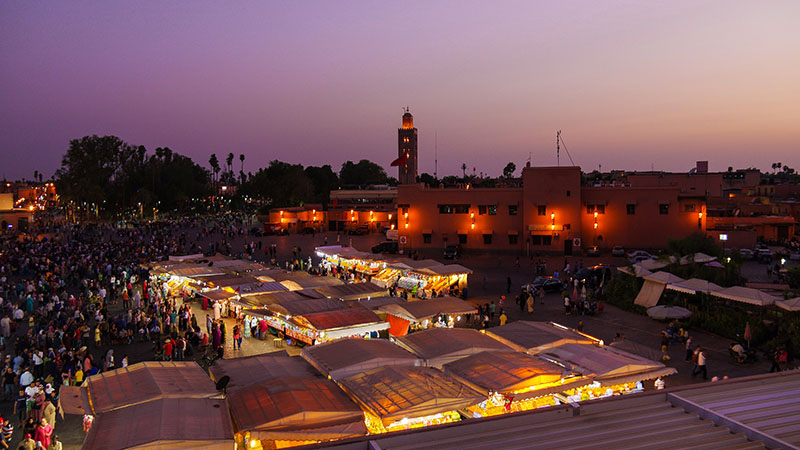 Panoramic View of the Square From the Rooftop Perspective
Street Performances & Evening Entertainment
From daytime to night at Jemaa el-Fna Square, various street performances are simultaneously. What fascinates me most are the storytellers, who tell ancient legends in Arabic and with rich body language. Even though I don't understand, I can still soak in the passionate atmosphere.
Before I came here, I had been eager to try henna tattooing with natural dye mehndi. If you meet some street touts, politely decline them. They may approach you, saying "free trial", but then you need to pay. Fortunately, I found a small shop called Henna Art Cafe. While sipping sweet mint tea, I enjoyably watched as the tattoo artist drew intricate patterns on my hand.
Taste Marrakech Street Food
Try to visit between 11 AM and 2 PM or after dusk, when there are a large number of stalls for you to choose from.
My first meal starts with a cup of freshly squeezed orange juice that only costs 4 dirhams. That's so sweet and easily affordable. Also, there is a simple trick: observe where most locals gather like me. The stalls No. 44 and No. 100 will not disappoint you. The vendors were very enthusiastic, and I tasted excellent tagine and Harira soup.
Recommended Tour Itinerary
From Jemaa el-Fna to the Souks
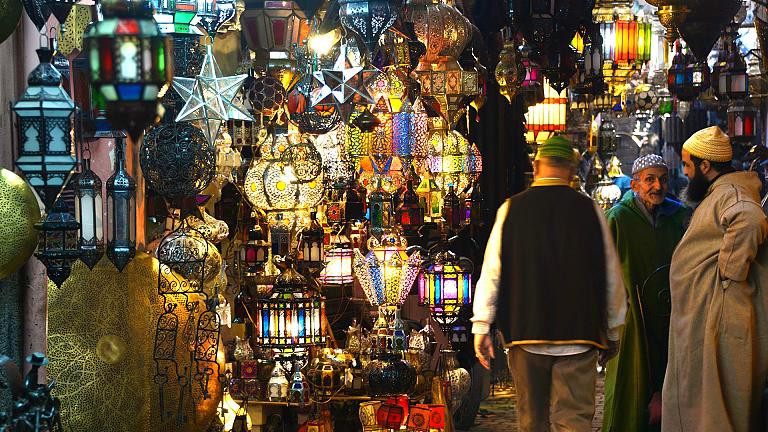
Souk is the traditional open-air market in Morocco, which is worth visiting to know local life. Jemaa el-Fna Square is the core gateway to the souks of the medina in Marrakesh. Most of them are closely clustered on the north and northeast sides of the square.
The Souk Semmarine is located in the main alley that extends directly north from the square. It mainly gathers textiles, pottery, lamps, and jewelry, which is the starting point to experience the markets.
Not long after reaching the Souk Semmarine, you can turn left (northeast of the square). Souk el Attarine is renowned for its gleaming metal handicrafts, filled with copper lanterns and traditional ornaments. Souk Cherratin, next to it, mainly provides leather tools.
If you turn right, you'll see the blacksmith market Souk Haddadine and the carpenter market Souk Chouari. Recommended things to buy here range from exquisite Mosaic lamp holders to practical tools and furniture.
 From Jemaa el-Fna Square to the Souks
What to Visit Within Walking Distance
Around Jemaa el-Fna square, there are many attractions that are suitable for concentrated visits in one day.
The Koutoubia Mosque is located on the west of the square, just a 3 to 5-minute walk. Non-Muslims are not allowed to enter, but you can walk around its beautiful garden courtyard.
The Bahia Palace sits in the southeast. You can walk about 15 minutes to admire the exquisite plaster carvings and Mosaic tiles.
The Badi Palace is about a 10-minute walk to the south. It is the remaining site, offering you an excellent spot to see the distant Atlas Mountains.
The Saadien Tombs are hidden deep in the alley in the south, about a 10-minute walk. The luxurious decoration showcases the wealth and craftsmanship of the Saadi Dynasty.
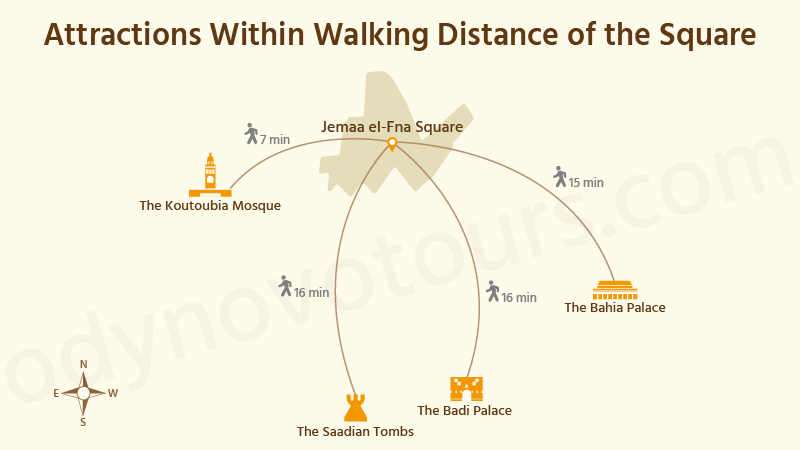 Attractions Within Walking Distance of the Square
Practical Tips & FAQs for First-Time Visitors
Try to Bargain
There are no standard prices for goods in Jemaa el-Fna Square. You can start bargaining from about one-third of the seller's quote. A timely joke can bring you closer. If the final price is not to your liking, just say "No, thanks" and leave with a smile.
Dress Comfortably and Appropriately
Exploring the uneven ground of the square and its surrounding areas is not very easy. Wearing comfortable shoes can reduce your fatigue, and dressing conservatively to respect the local culture.
Get Permission Before Taking Photos
Do not take pictures of vendors, performers, or their animals without permission, as most shop owners will be very concerned. You can politely ask them and take the photo after they agree.
Pay More Attention to Safety at Night
After nightfall, the flow of people in the square reaches its peak. You'd better use a bag with a zipper, put valuable items in the inner layer, or try to carry as few items as possible. Female tourists are advised to travel in groups.
Respect Prayer Time
During the daily five prayers in Marrakech, many shops will be temporarily closed, and the radio will sound the call. Locals might go to the mosque or worship on the spot. Don't worry. You can pause your shopping and keep quiet.
Experiencing Jemaa el-Fna With a Local Guide
To be honest, on your first visit to Jemaa el-Fna, it's almost impossible to easily visit all the souks or explore them in an organized manner. Because it's like a huge maze, often very crowded, especially in the evening.
If you don't like the feeling of being lost, a professional local guide is essential, who will take you to accurately explore different markets, tell you where to have the best view, and how to politely avoid distractions. Due to their convenient and close distance, I highly recommend visiting more attractions mentioned above. The guide can also add more attractions to your itinerary and easily experience a day trip to Marrakech.
More Than a Square
As I left Marrakech, the scents of spices and the sounds of drums still lingered in my mind. I suddenly realized that Jemaa el-Fna square would not become a still image in my album, but rather a memory full of sound and warmth, to accompany me for a long time. For me, it was the most unforgettable part of my trip to Morocco: real, vivid, and full of vitality.
If you also want to experience this unique atmosphere, please contact Odynovo. We can take you deep into Morocco.
Recommended Tours
-

-
Sahara Desert Tour From Marrakech7 DaysMarrakech, Ouarzazate, Erfoud, Erg Chebbi, SkouraExplore This Tour
-
Morocco Cultural and Jewish Heritage10 DaysCasablanca, Rabat, Chefchaouen, Meknes, Fez, Ifrane, Marrakech, EssaouiraExplore This Tour
-
Discover Egypt and Morocco15 DaysEgypt: Cairo, Aswan, Edfu, Luxor; Morocco: Casablanca, Rabat, Fez, Meknes, MarrakechExplore This Tour
Related Posts You May Like
-
How to Plan a Trip to Morocco for First-Timers
-
How to Plan a Family Trip to Morocco 2026
-
Morocco in January 2027: Weather, Must-Dos in New Year & Winter
-
Christmas in Morocco 2026: New Year Vacation Planning & Tips
-
Film Locations in Morocco: Must-Visit & Must-Dos Like Movies
-
Egypt vs Morocco: Where to Go Next