Is Egypt Safe to Visit Right Now?
If you've been following the news or browsing travel forums lately, you may be wondering whether now is still a good time to visit Egypt.
It's a reasonable question. With ongoing tensions in parts of the Middle East, many travelers are unsure what those headlines actually mean for a trip to Egypt.
In this guide, we'll look at the latest travel advisories, what the current situation is like on the ground, which areas are commonly included in tourist itineraries, and a few practical tips to help you make an informed decision.
- What Government Say About Egypt
- Will Middle East Situation Affect Your Trip
- What Is Travel to Egypt Really Like Now
- Egypt's Classic Tourist Route (Safe Areas)
- Which Areas Are Suggested to Avoid
- Is Egypt Safe for Solo Female Travelers
- Safety Tips for First-Time Visitors to Egypt
- Still Unsure? Here's Our Advice
What Government Travel Advisories Say About Egypt
After checking the latest travel advisories from the US, UK, Canada, Australia, and several European countries, you'll notice a common pattern: they are not saying "Don't Go."
Instead, the advisories focus on specific border regions and remote desert areas that are well outside Egypt's main tourist circuit.
In general, they encourage travelers to stay on the established tourist route, avoid restricted border areas, keep up with local developments, and exercise the same level of caution they would when visiting many other international destinations.
| Country | Current Advisory | What It Means for Travelers |
| United States | Level 2 - Exercise Increased Caution | Major tourist destinations like Cairo, Giza, Luxor, Aswan, Hurghada, and Sharm El Sheikh remain open and widely visited. |
| United Kingdom | Exercise Increased Caution | Popular tourist areas are considered accessible, while specific restricted zones are clearly identified. |
| EU / Schengen Countries | Partial Travel Warning | Travelers are advised to stay alert, but Egypt's main tourism circuit continues to operate normally. |
| Canada | Exercise a High Degree of Caution | Standard tourist routes remain active; border and remote desert areas should be avoided. |
| Australia & New Zealand | Level 2 - Exercise Increased Caution | Main tourist destinations remain open, with additional safety awareness recommended for solo travelers, especially women. |
How the Current Middle East Situation May Affect Your Trip?
This is understandably the question many travelers are asking. While the conflict is not taking place in Egypt, it may still have some indirect effects on travel, particularly if you're flying through other parts of the Middle East.
Depending on your departure city and airline, some international flights may be rerouted, rescheduled, or occasionally canceled.
Although these disruptions don't necessarily affect travel within Egypt, they can affect your journey to and from the country. This is one reason many travelers choose to book with a tour operator that can help rearrange plans if needed.
As one of our guests shared after unexpected flight cancellations:
"She was responsive and helpful when we could not get to Cairo on time (all flights were cancelled in Middle East this March). We would not have had such a great time if we did it on our own."
— Marina Novak, after flight disruptions in March, 2026
If possible, it may be worth choosing a route that connects through Europe rather than through a Middle Eastern hub, especially if you want to reduce the chance of schedule changes or transit disruptions. If your itinerary does include a connection in the Gulf or another Middle Eastern hub, it's worth checking your airline's latest updates before departure.
Once you're in Egypt, however, travel within the country's main tourism areas has remained largely unchanged. Attractions, hotels, Nile cruises, domestic flights, and restaurants continue to operate normally, and most travelers complete their itineraries without disruption.
As with any international trip, situations can change. Before you travel, it's always a good idea to check the latest government travel advice and airline updates. If you're traveling with a tour operator, they can also help you adjust your plans should circumstances change.
What Is Travel to Egypt Really Like Now?
Based on feedback from many of our recent travelers, visiting Egypt right now feels surprisingly normal, just with fewer crowds in some places. Hotels, Nile cruises, domestic flights, restaurants, and tourist attractions are all operating as usual.
Even during the period when Cairo had reduced nighttime lighting after 9 pm, restaurants along the Nile and hotels continued operating normally. Today, Cairo is fully back to its lively evenings.
Another thing our clients frequently mention is the visible security around tourist areas. Security checks are common, and you'll often see police officers at airports, major attractions, and museums. While this can feel unusual at first, many travelers say it gives them added peace of mind during the trip.
Feedback from recent travelers reflects a similar experience. One guest who visited Egypt during the regional tensions shared:
"Needless to say... a thoroughly enjoyable experience and not a hint of trouble regarding the Iran war!"
— Tony P., traveled to Egypt on March, 2026
Of course, every trip is different, but comments like this suggest that many visitors find daily travel in Egypt's main tourist destinations feels much more normal than they expected.
Which Areas Are Included in Egypt's Classic Tourist Route?
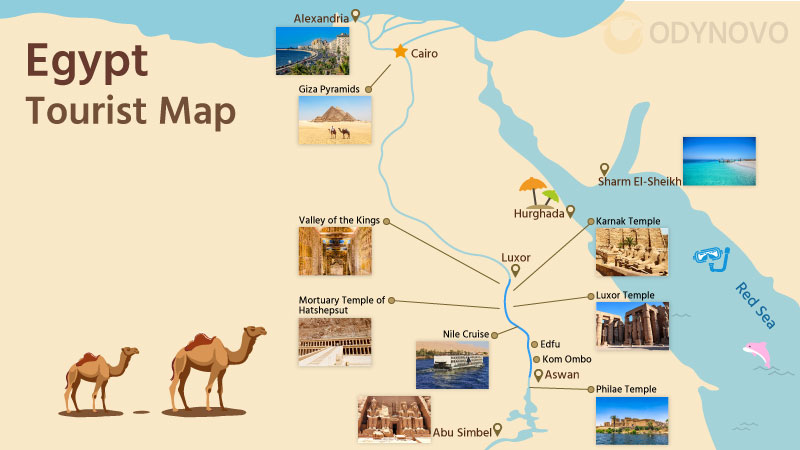 Tourist Attractions Map of Egypt
Cairo & Giza
Home to the Pyramids of Giza, the Grand Egyptian Museum, and centuries of Islamic history, Cairo is where most journeys begin. The city is busy and energetic, but it's also well prepared for international visitors, with established sightseeing routes and plenty of transportation options.
Luxor & Aswan
These two cities are the heart of ancient Egypt. Most travelers split their time between iconic temples, royal tombs, and a Nile cruise connecting the two. Tourism plays an important role in the local economy, and visitors are a familiar part of daily life.
Hurghada & Sharm El Sheikh
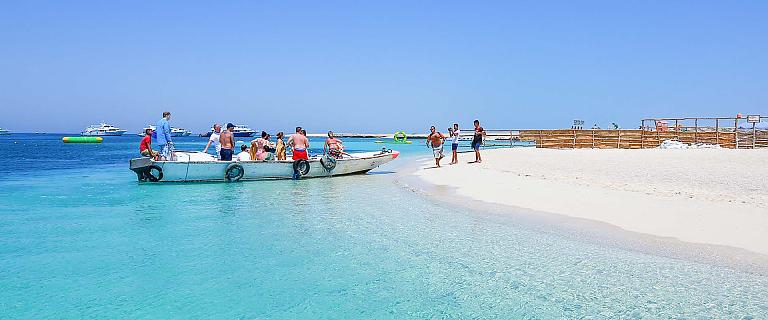
For travelers looking to relax after sightseeing, the Red Sea resorts offer a completely different experience. Beach resorts, snorkeling, diving, and family-friendly hotels make them popular extensions to a classic Egypt itinerary.
For most visitors, these destinations make up the entire trip and are all located well away from the areas commonly mentioned in foreign travel advisories.
Recommended Tour Itinerary
Which Areas Are Suggested to Avoid?
The areas most foreign governments advise against visiting are concentrated in a few remote regions, including Northern Sinai (except for flights directly into Sharm El Sheikh), border areas near Libya, and some isolated desert areas close to Sudan.
These advisories are mainly related to security concerns or limited infrastructure in those regions, rather than conditions across Egypt as a whole. In fact, these areas are hundreds of miles from the country's main tourist destinations.
Unless you're planning an expedition into remote parts of the country, it's very unlikely your itinerary will take you anywhere near them.
Is Egypt Safe for Solo Female Travelers?
Many women travel to Egypt on their own each year, although it can require a little more awareness than some other destinations.
The most common challenge isn't violent crime but unwanted attention. You may receive comments, friendly greetings, or persistent sales pitches, particularly around busy tourist sites. While this can feel uncomfortable, it's generally more of a cultural adjustment than a personal safety issue.
Dressing modestly in local neighborhoods, using reputable transportation, and avoiding walking alone late at night in unfamiliar areas can make your experience much more comfortable.
Many solo travelers also find that having a private guide or driver allows them to explore more confidently while gaining a deeper understanding of local culture.
Related Articles
How to Explore Egypt as Women TravelersSafety Tips for First-Time Visitors to Egypt
Most trips to Egypt go smoothly, and a few simple habits can make your experience even more comfortable.
- Keep your valuables secure in crowded places.
- Use licensed taxis, ride-hailing apps, or pre-arranged private transfers.
- Politely but firmly decline persistent vendors if you're not interested.
- Carry small bills for tipping and everyday purchases.
- Drink bottled water and stay hydrated, especially during warmer months.
- Dress respectfully when visiting mosques and traditional neighborhoods.
Good preparation isn't just about staying safe. It's also about understanding local customs and knowing what to expect. If it's your first trip to Egypt, take a look at our guide on the things not to do in Egypt. It shares practical tips to help you avoid common mistakes and travel with more confidence.
Related Articles
List of What to Pack for Traveling to EgyptStill Unsure? Here's Our Advice
If the current situation in the Middle East still makes you feel uneasy, that's completely understandable. Travel is a personal decision, and there's nothing wrong with waiting until you feel more comfortable.
But if Egypt has been on your bucket list and you're thinking about going, don't let the headlines be your only source of information. Look at the latest travel advisories, stay updated on your flight, and choose a travel style that gives you flexibility and support along the way.
That's where a tailor-made private trip with Odynovo can make a real difference. Instead of navigating unexpected changes on your own, you'll have a dedicated travel consultant and local team ready to help if plans need to be adjusted. From monitoring flight changes to rearranging transfers or sightseeing schedules, we're there to make the journey as smooth as possible.
No one can predict how situations may evolve, but traveling with experienced local support can give you one less thing to worry about. So, you can focus on enjoying the history, culture, and landscapes that make Egypt such a wonderful destination.
Recommended Tours
-
 Essential Egypt With Abu Simbel9 DaysCairo, Luxor, Edfu, Kom Ombo, Aswan, Abu SimbelExplore This Tour
 -
Cairo, Alexandria, Luxor & Hurghada12 DaysCairo, Alexandria, Aswan, Kom Ombo, Edfu, Luxor, HurghadaExplore This Tour
-
-
Related Posts You May Like