China Travel Tips for First-Timers 2026: Visa, Internet & More
Planning your first trip to China? Find the essentials and tips to prepare for your China tour in this guide, including visas, transportation, accommodation, payments, internet access, and getting around. Know what to expect before you go, and enjoy your trip with peace of mind.
Essential Travel Documents
Passport
Before your trip, check that:
- Your passport is valid for at least six months beyond your planned return date.
- Your passport has no souvenir stamps or other unofficial markings.
- Keep a digital copy of your passport somewhere secure, such as on your phone or in cloud storage.
Important:
Souvenir stamps, attraction stamps, or other unofficial markings on a passport can sometimes lead to additional checks or entry disruption. We have seen this cause entry issues for one of our guests before, so it is best to keep your passport unchanged except for official markings.
If your passport already has one, do not try to erase, scratch out, cover, or otherwise alter it yourself. Contact your passport-issuing authority for advice, and inform your travel consultant before your trip. We can help you understand what to do next.
Visa
We recommend you start checking China's visa policy about three months in advance. If your nationality is not on the visa-exempt list and your trip doesn't qualify for the 240-hour visa-free transit, allow enough time for the application process. Around one month before departure is a reasonable starting point, but processing times can vary by location.
Not sure whether you need a visa? Check China's latest visa and visa-free transit requirements before starting your application.
Recommended Tour Itinerary

Itinerary
Whether you're traveling independently or on a tour, save an electronic copy of your itinerary before departure. Include your accommodation details, travel schedule, and arrival and departure flight information.
A printed copy is also useful as a backup, particularly on arrival day when you may not yet have mobile data or a reliable internet connection.
Travel Insurance
Travel insurance can help reduce financial losses caused by unforeseen events during your trip, such as flight delays or cancellations, lost or damaged luggage, sudden illness, or accidental injuries. It is recommended to purchase it in advance and choose an insurance company based in your own country.
China Arrival Card
For your smooth entry, we recommend completing the online arrival card on the National Immigration Administration website about 48 to 72 hours before arrival, once your flight and first hotel details are final. It can also be completed upon arrival using the facilities or paper form available at the port of entry.
Recommended Tour Itinerary

Power & Charging Essentials
Power Adapter
China generally uses 220V / 50Hz electricity. Power sockets are type A, with two flat pins, and type I, with three flat pins.
Power Bank
For domestic flights in China, your power bank needs to have a clearly visible 3C (China Compulsory Certification) mark and a capacity of no more than 20,000 mAh. Keep it in your carry-on bag and make sure it is easy to access during security checks.
A simple alternative is to buy a compliant power bank after arriving in China. If you would rather have one ready before your first domestic flight, feel free to contact your travel consultant. We can help prepare a compliant one for you in advance.
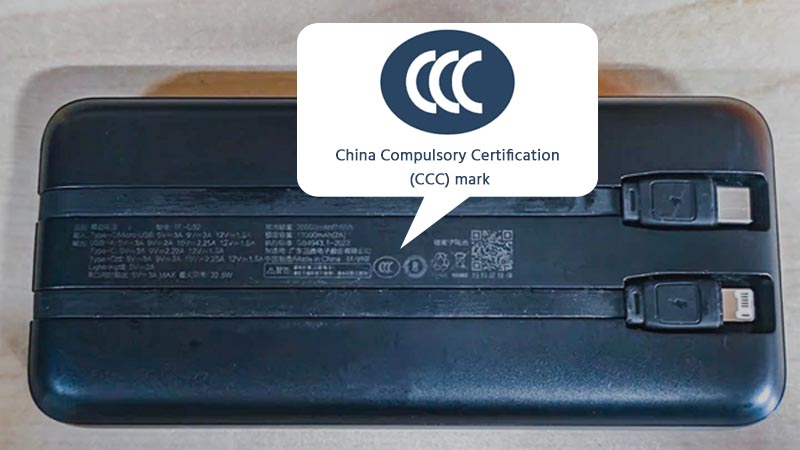 Power Bank WIth 3C Mark
Internet Access
China has different internet restrictions from many Western countries. You have several ways to get mobile data in China, and an eSIM is usually the most convenient option for most short-term journeys.
| Option | Best for | Set up | Calls |
| eSIM | Short stays | Easy | Usually data only |
| International Roaming | Maximum convenience | Very easy | Yes |
| Local SIM + VPN | Longer stays | More involved | Yes |
eSIM
- Advantages: No physical SIM card needs to be removed or replaced, with a reasonable price and sufficient connection speed, and it can usually be purchased and activated online before departure.
- Things to consider: Phone calls may not be available, and your phone must support eSIM and be unlocked for use with another carrier. Check in advance which websites and apps are supported by the eSIM provider.
International Roaming
- Advantages: No SIM replacement or additional setup. You can keep your existing phone number, particularly convenient if you need regular calls or SMS.
- Things to consider: The cost can be more expensive (approximately three times) than a travel eSIM or local SIM.
Local SIM + VPN
- Advantages: It can provide reliable local mobile data and a more stable connection, affordable rates, and allows you to make and receive calls.
- Things to consider: You'll need to replace your physical SIM and set up the additional connectivity service, and you may also need a suitable VPN or other connectivity solution for international services access.
Recommended Tour Itinerary

Payment in China
Mobile payment is the easiest way to pay in China, and a combination of a physical bank card and a small amount of cash gives you useful backup options if one method doesn't work.
Alipay & WeChat: They can be used for many everyday payments, including restaurants, shops, transportation, and other travel expenses. Download before your trip and set them up with a compatible international bank card.
Card: International credit cards such as Visa and Mastercard are accepted at many major hotels, shopping malls, and larger businesses, but smaller local establishments may rely mainly on mobile payments. Check your bank's overseas transaction policy before departure and make sure your card is enabled for international use.
Cash: Cash is more useful as a backup in China today, which can be helpful in villages or mountains where digital payment is unavailable. We recommend exchanging a small amount of Chinese yuan (RMB) at banks or authorized exchange counters when you arrive in China, or withdrawing RMB from a compatible ATM.
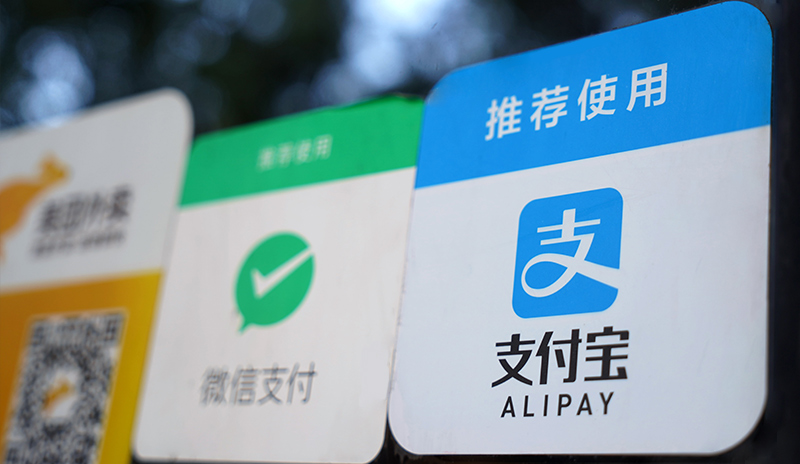 Chinese AliPay and WeChat Payment
How to Get Around China
Plane
For long-distance travel (Beijing to Harbin, or Beijing to Guilin), flying can save time. Arrive at the airport about 2 hours before departure for domestic flights, allowing extra time if you need to check luggage or are unfamiliar with the airport. If you're traveling with Odynovo, your guide can assist with airport procedures, while your travel team can help with online check-in and seat selection when available.
Bullet Train (High-Speed Train)
For journeys of less than about 5 hours (Shanghai to Hangzhou, Guangzhou to Hong Kong), we generally recommend considering China's high-speed trains instead of flying. They connect most major cities and offer relatively simple boarding procedures. You usually only need to arrive at the station around 40 to 60 minutes before departure, and you can leave the station directly after arrival without waiting for checked luggage.
Advantages of the bullet train:
- It is less likely to experience delays or cancellations due to bad weather.
- The seats are wider and more comfortable than those on an airplane.
- Stations are often closer to city centers than airports.
Recommended Tour Itinerary

Private Car with Driver
If you're looking for a more comfortable and worry-free trip, a private car is particularly useful for airport or train-station transfers and multi-stop sightseeing. With Odynovo, we'll arrange a private driver for door-to-door transfers. Your guide and driver can handle the logistics, while the itinerary can be adjusted around your pace and needs.
DiDi
During your self-guided journey, DiDi (works similarly to Uber) is usually more convenient than hailing a taxi on the street. You can enter your destination and pickup point in the app, and you can also book through the Alipay and WeChat mini-programs.
When using DiDi, choose a pickup point where the car can stop safely rather than directly in a busy intersection or crowded roadside. If you're unsure, the app may suggest a nearby pickup location.
Metro
The metro is an economical and efficient way to explore major cities such as Beijing, Shanghai, Xi'an, Guangzhou, and Chengdu, especially during busy hours when road traffic can be heavy. Major stations generally have English signs and station names. You can usually buy a ticket at the station or use a metro transport code through Alipay, which is more convenient.
Bus
We recommend using the bus to experience local life with your guide. We don't recommend using it independently, as most stops may have information only in Chinese, and announcements are often also in Chinese. In this case, you'll need to use a navigation app and pay close attention to when you need to get off.
Hotels & Accommodation
Check-in & Check-out Times
Most hotels in China have check-in around 2:00 to 3:00 PM and check-out around 12:00 PM. Early check-in may be possible if your room is ready, but this depends on the hotel and may involve an additional fee.
If you arrive before your room is ready, you can usually ask the hotel to store your luggage until check-in.
How to Check in
Bring your passport when checking in. All guests staying in the room may need to present their passports for registration, so have everyone's documents ready at reception.
If you're traveling with Odynovo, your guide will assist with the hotel check-in process.
Deposit
According to hotel policies, some establishments may require a deposit. Cash deposits are generally returned at check-out. If you pay by card, it may take your bank 7 to 14 days to process the refund. Odynovo travel advisors will inform you in advance which hotels require a deposit.
The deposit may cover incidental charges such as minibar purchases, laundry, or damage to the room. These charges can be deducted directly from your deposit upon checkout. It also serves as a guarantee for the hotel. If any item in the room is damaged during your stay, the hotel may deduct the cost of repairs from your deposit.
Eating in China
Ordering at a Restaurant
Except in Western restaurants, most menus are in Chinese. QR-code menus are also common. You can use a translation app to translate them by taking a photo. Communication can still be limited at local restaurants, so use gestures or a translation app for help.
Food Allergies & Intolerances
Chinese restaurants generally don't list allergens for every dish, so if you have a food allergy or intolerance, a Chinese allergy card on your phone can be particularly helpful.
If you have a gluten allergy, you can save the following image to your phone and show it to the waiter. Many traditional Chinese soy sauces contain wheat, so travelers with gluten intolerance or celiac disease should check carefully before consuming soy sauce.
Vegetarian, Vegan & Halal Options
For vegetarians and vegans, vegetarian dishes are widely available, but some dishes may contain egg, dairy, lard, or other animal-based ingredients. If you follow a strict vegan diet, clearly explain what you cannot eat. If you travel with Odynovo, our guide will ask you about your dietary restrictions in advance and will communicate them to the restaurant so they can prepare suitable options.
If you need halal food, halal restaurants can be found in most cities, but options are more limited in smaller towns and less-touristed areas. With Odynovo, we'll gather information on halal restaurants in each city, so you don't have to worry about searching for them.
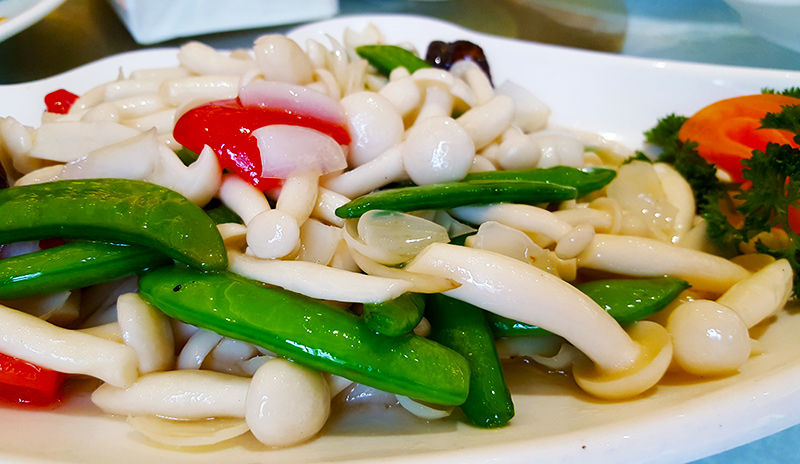 Chinese Cuisine for Vegetarians
Habit of Drinking Hot Water
At many Chinese restaurants, the first drink you're offered is hot water or tea rather than ice water. Cold water is not typically served, and some restaurants may not have cold water available. If you prefer something cold, ask for bottled water or another cold drink.
Health & Hygiene
Before You Travel
Medical check-up: A medical examination is generally not required before traveling to China. If you have a chronic condition, take regular medication, or have other health concerns, consult your doctor before a long trip. Bring enough medication for your trip along with relevant medical records.
Vaccines: No specific vaccinations are generally required for foreign travelers entering China. Make sure your routine vaccinations are up to date according to the recommendations in your home country.
If You Need Medical Care
If you become unwell during your trip, hospitals are available in major cities, while clinics and pharmacies can be useful for minor problems. Bring your passport when seeking medical care. It's advisable to keep your medical records, receipts, and other relevant documents if you plan to claim medical expenses through travel insurance.
English-speaking staff may be available at larger hospitals, but English is not guaranteed. A translation app can help if communication is difficult.
If you're traveling with Odynovo and require medical attention, your guide can help you find appropriate medical care, accompany you to the hospital when needed, and assist with registration and communication. Furthermore, your travel advisor can adjust the rest of your itinerary to accommodate your health condition.
Bathrooms
Squat toilets can still be found in some public restrooms, particularly in more basic facilities, although Western-style toilets are widely available in hotels, airports, major train stations, and shopping malls.
It's a good idea to carry a small pack of toilet paper or tissues, as public restrooms may not always have a reliable supply.
Tap water
For most travelers, bottled or filtered water is the safer choice for drinking. Avoid drinking tap water unless it is clearly marked as potable.
It's advisable to carry a water bottle when you go out. Water dispensers are usually available at major tourist attractions and on high-speed trains where you can refill your bottle. If you're traveling with Odynovo, your guide will provide you with bottled water each day.
Social Customs
Tips
Tipping is not mandatory in China. However, if you are satisfied with the service you received, you can tip voluntarily. Guides and drivers usually welcome tips and appreciate the gesture. It is not considered disrespectful.
Greetings
A simple "nǐ hǎo" (hello), smile, nod, or handshake is usually enough when meeting someone. Unlike in some Western cultures, hugging or cheek-kissing is not generally expected when meeting for the first time. If someone doesn't initiate physical contact, you can take it as a local custom and not as a sign of coldness.
Photos & Local Curiosity
Some locals, especially children and younger people, may be curious about foreign visitors and may look at you for a few moments or even ask to take a photo with you. You can politely accept or decline, whichever you feel comfortable with.
If you'd like to take a photo of someone, ask for permission first. Avoid photographing military facilities or other restricted areas, and follow any posted signs.
Smoking
Smoking is generally prohibited or restricted in many indoor public places, although enforcement can vary. Follow local signs and use designated smoking areas where available.
Travel with Peace of Mind with Odynovo
A first trip to China may come with a few unfamiliar details. If you'd prefer more support along the way, Odynovo private tours include local guides, private transportation, and assistance with the practical details of your trip. Our travel team can also monitor your itinerary and help with unexpected changes during your journey, so you can spend more time enjoying China and less time figuring out the logistics.
This article is also available in Spanish: Consejos antes de viajar a China por primera vez
Recommended Tours
-
 China's Wonders: Chongqing, Pandas & Avatar Mountains8 DaysChengdu, Chongqing, ZhangjiajieExplore This Tour
-
Essence of China: From Hong Kong to Beijing12 DaysHong Kong, Guilin, Xi'an, BeijingExplore This Tour
-
First Time China Trip: Beijing, Xi'an, Guilin & Shanghai10 DaysBeijing, Xi'an, Guilin, ShanghaiExplore This Tour
-
China Discovery Tour: Golden Triangle with Nanjing10 DaysShanghai, Nanjing, Xi'an, BeijingExplore This Tour




Related Posts You May Like
-
China Tourist Visa Application Guide in 2026: Requirements & Steps
-
China in 10 Days: Best Itineraries for First-Time Visitors
-
2 Weeks in China: In-Depth Itineraries for 14-Day Tours
-
12 Days in China: From Top Cities to Silk Road Hidden Gems
-
13 Days in China: Best 4 Itinerary Ideas
-
1 Week in China: 4 Itineraries to Discover the Highlights in 7 Days