
Cambodia offers plenty to explore, whether you want to visit Angkor Wat and Siem Reap, experience Phnom Penh, or spend time in the countryside. If you are planning a longer Southeast Asia trip, Cambodia can also be combined with Vietnam, Thailand, or other nearby destinations in one itinerary, allowing you to experience several countries in a single journey. Our private tailor-made tours give you the flexibility to choose the destinations and experiences that interest you, with an itinerary planned around your schedule, preferred pace, and the places you want to include.
Popular Cambodia & Beyond Tours
-

-
-
Ultimate Cambodia: Culture & Beach11 DaysSiem Reap, Sihanoukville, Koh Rong, Phnom PenhExplore This Tour
-
Vietnam and Cambodia Highlights13 DaysVietnam: Hanoi, Halong Bay, Da Nang, Hoi An, Ho Chi Minh City, Mekong Delta; Cambodia: Siem ReapExplore This Tour
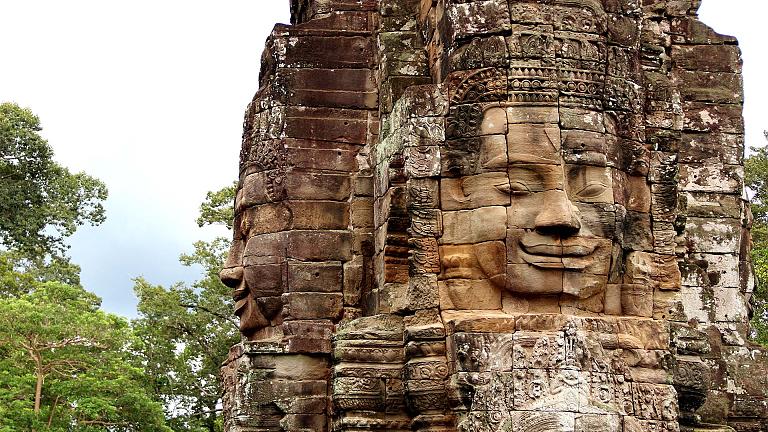
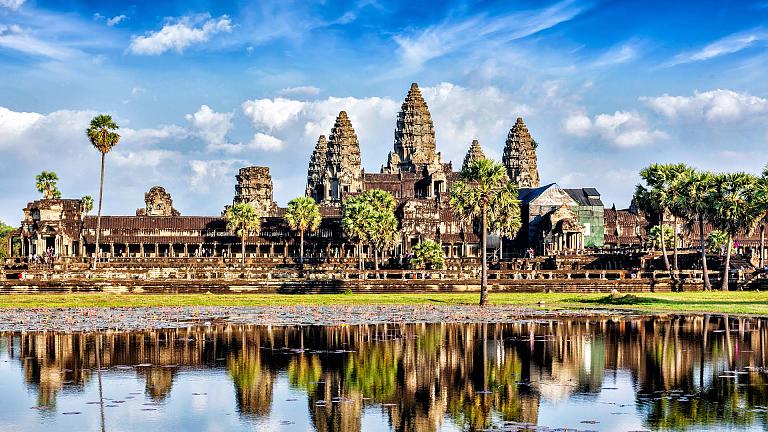
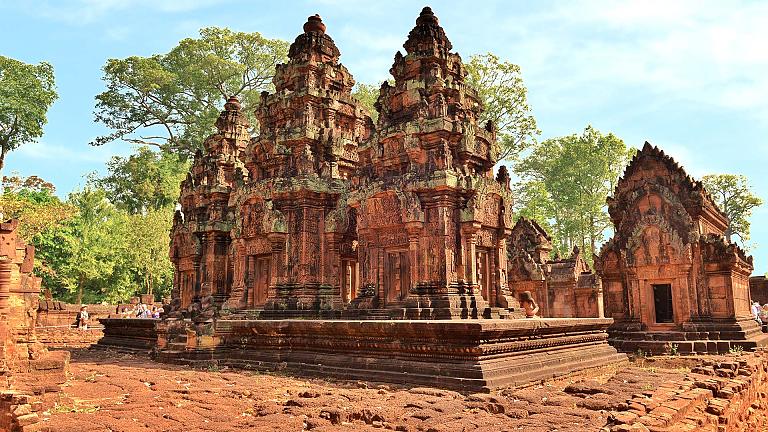
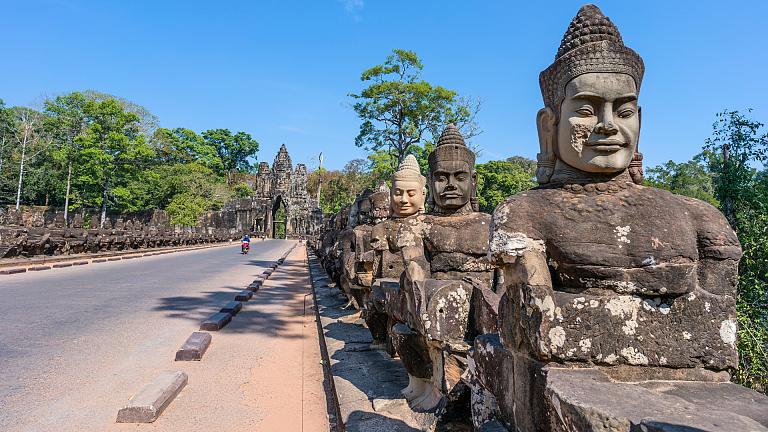
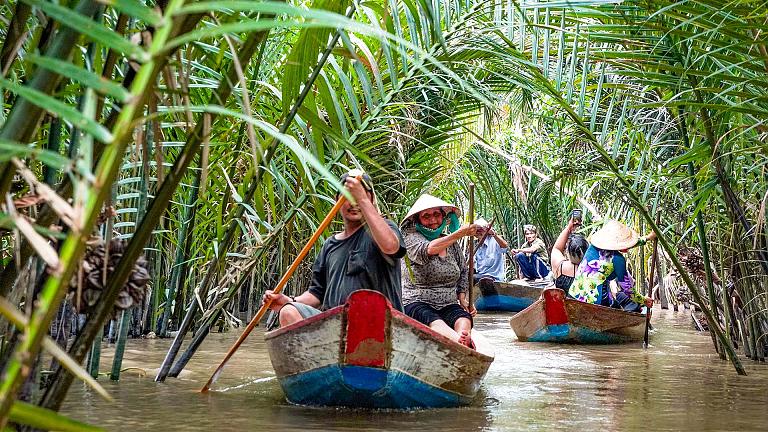
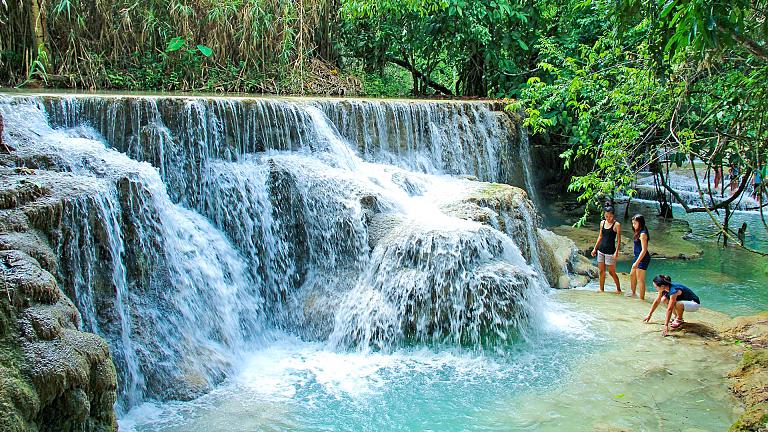
Experience Cambodia Beyond Angkor
Discover Angkor beyond the usual temple visit, and see another side of Cambodia through Tonle Sap, the Mekong, local culture, and lesser-known historic sites.
-
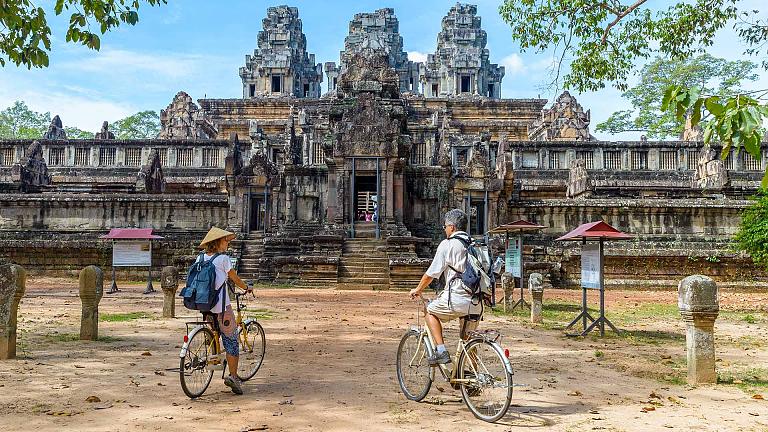
Angkor Temple-Hopping by BicycleView It on Tour
Cycle between Angkor’s ancient temples and see iconic ruins, hidden corners, and jungle-lined paths while enjoying a more active way to explore the historic complex.
-
Cruise the Mekong RiverView It on Tour
Cruise along the Mekong through Cambodia and Vietnam, passing riverside villages, floating markets, and everyday life along one of Southeast Asia’s great waterways.
-
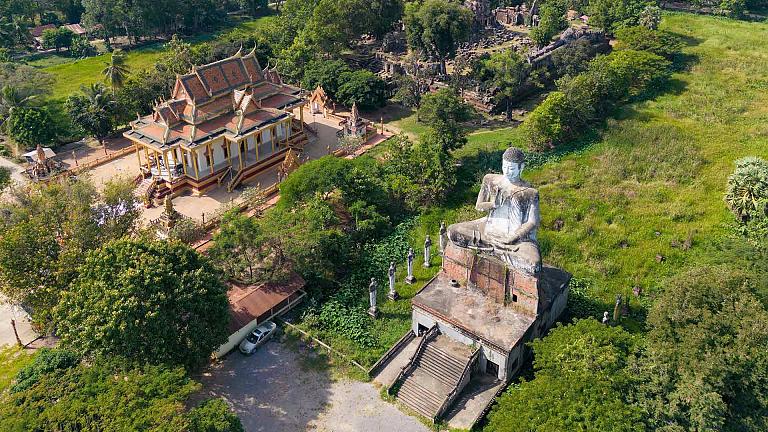
Explore Wat Ek Phnom TempleView It on Tour
Discover one of Battambang’s notable Angkor-era sites, where the weathered ruins of an 11th-century temple stand beside a modern Buddhist pagoda.
-
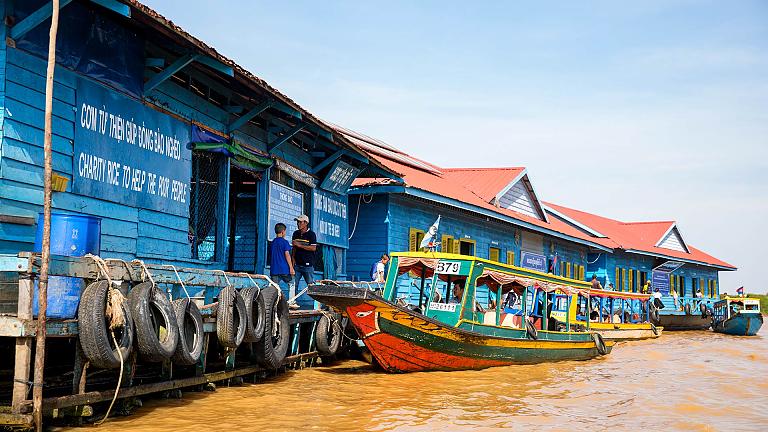
Tonle Sap Lake Boat TripView It on Tour
Boat across Tonle Sap, Cambodia’s vast freshwater lake, and see how floating villages and stilted homes adapt to the lake’s dramatic seasonal changes.
-
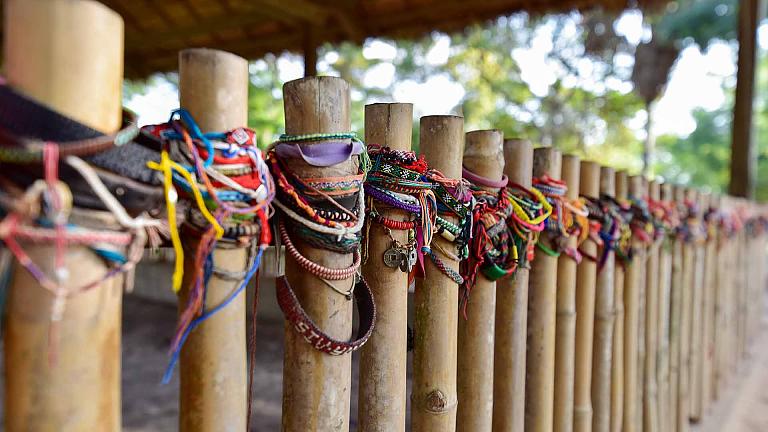
Visit the Killing FieldsView It on Tour
Visit the Killing Fields of Choeung Ek and explore the memorial grounds while learning about Cambodia’s history under the Khmer Rouge.
Customize Your Own Trip
Please share your travel ideas with us below and one of our travel experts will contact you within 24 hours. Prefer to speak to an expert directly? Call us at +1 347 2227702 or +61 434 853 368.
What Our Clients Say
Explore the latest verified reviews of Odynovo's travel services on Tripadvisor, Google, Trustpilot, Product Review and more trusted platforms.
Cambodia Travel FAQs
-
For a comfortable first trip to Cambodia, 4 - 6 days is a good range. It is best to focus on Siem Reap and Angkor, giving yourself enough time to explore the temples without making the itinerary feel too packed. You can spend one- or two-days visiting Angkor while leaving time for a countryside experience, a break at your hotel during the warmer hours, or a free afternoon to enjoy Siem Reap at your own pace.
With 6 - 10 days, you can see more of Cambodia by adding Phnom Penh or another destination to your Siem Reap stay. This gives you a chance to experience different sides of the country, from the temples and local communities around Siem Reap to the food, culture, and history of Phnom Penh. You can also include Tonle Sap or a coastal destination if these match your interests.
If you have 10 days or more, you can take a deeper look at Cambodian life and include experiences that are harder to fit into a shorter itinerary. Along with the main sights, you might join a Khmer cooking class, visit local villages and markets, meet local artisans, or spend more time in the countryside. The extra days also make it easier to avoid back-to-back sightseeing and enjoy the journey at a more comfortable pace.
-
Yes. Cambodia is often included in a longer Southeast Asia trip because of its convenient regional connections and proximity to popular destinations in Thailand, Vietnam, Laos, and beyond. This makes it a practical addition for long-haul travelers from North America, Australia, and other international markets.
If you just want to visit the main highlights of the Angkor Complex, a 4–6-day trip is usually enough to explore Siem Reap and Angkor at a comfortable pace.
For a multi-country Southeast Asia itinerary, Cambodia can be easily combined with neighboring countries, with Thailand and Vietnam among the most popular combinations. Common routes include Siem Reap with Bangkok or Ho Chi Minh City, while Laos, Singapore, and other Southeast Asian destinations can also be added depending on your interests and available time.
Some popular multi-country combinations include:
-
11 Days: Thailand + Cambodia
Recommended route: Bangkok → Chiang Mai → Phuket → Siem Reap (Angkor Wat)
-
13 Days: Vietnam + Cambodia
Recommended route: Hanoi → Halong Bay → Hoi An → Ho Chi Minh City → Siem Reap (Angkor Wat)
-
15 Days: Thailand + Cambodia + Vietnam
Recommended route: Bangkok → Siem Reap → Ho Chi Minh City → Hoi An → Hanoi → Halong Bay
-
11 Days: Thailand + Cambodia
-
For most first-time visitors, the best way to experience Cambodia is to start with Siem Reap and Angkor Wat, then add other destinations depending on your available time and interests.
- If you have 4 - 6 days, focus on Siem Reap and Angkor.
- If you have 6 - 8 days, add Phnom Penh for Cambodia’s history and culture.
- With 8 - 10 days or more, you can include experiences such as Tonle Sap Lake, Battambang, or Koh Rong for a more complete journey.
Unlike some larger Southeast Asian countries, Cambodia is relatively easy to explore with a well-planned route. Most travelers combine a few key destinations rather than trying to cover the entire country.
Suggested Cambodia Itineraries for First-Time Visitors
4 - 6 Days: Siem Reap + Angkor
Focus on Cambodia’s most iconic experience: Angkor Wat and the surrounding temples. You can also add Tonle Sap Lake or a countryside experience if time allows.
Recommended for: First-time visitors with limited vacation time in Cambodia
6 - 8 Days: Siem Reap + Phnom Penh
Combine Angkor’s ancient temples with Phnom Penh’s royal heritage, museums, and modern city life.
Recommended for: Travelers who want a complete introduction to Cambodia
8 - 10 Days: Siem Reap + Tonle Sap + Phnom Penh
This route allows more time for Cambodia’s waterways, communities, and cultural experiences while still covering the country’s main highlights.
Recommended for: Travelers who prefer a more relaxed pace
10 - 14 Days: Siem Reap + Battambang + Phnom Penh + Koh Rong
Combine temples, history, countryside, and beaches in one itinerary. This option gives enough time to travel comfortably without rushing between destinations.
Recommended for: Longer vacations, and travelers who want a deeper experience
-
Siem Reap | The essential first stop for Angkor Wat
Must-Visit Rating: 5/5
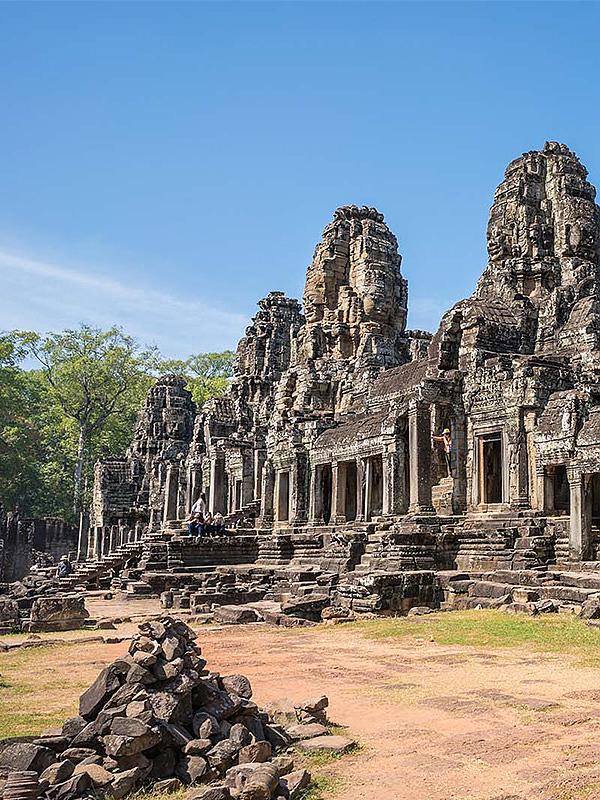
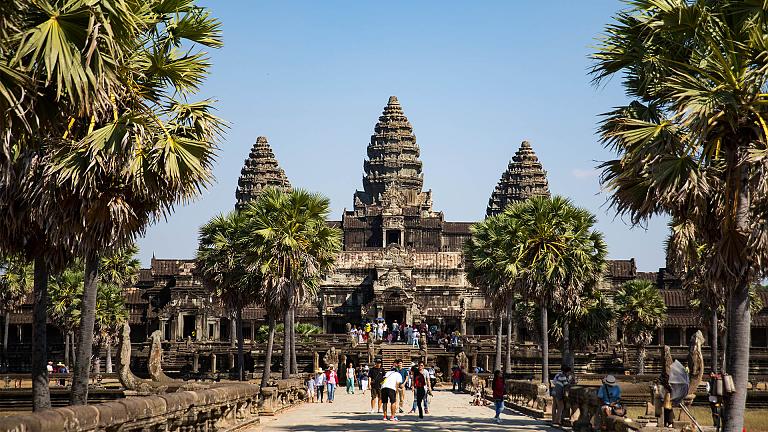
For most travelers, Siem Reap is the best place to begin a Cambodia trip. The city is the gateway to Angkor, home to some of the world’s most impressive ancient temples, including Angkor Wat, Angkor Thom, Bayon, Ta Prohm, and Banteay Srei.
A comfortable first visit usually needs 2 - 3 days to explore Angkor, allowing enough time to see the major temples without rushing. Beyond the main temple circuit, travelers can explore jungle-covered ruins such as Beng Mealea, visit Phnom Kulen’s waterfalls and sacred sites, or experience the countryside around Siem Reap.
Siem Reap is also one of Cambodia’s easiest destinations for travelers because attractions are relatively close together and itineraries can be adjusted around different travel styles. Families, senior travelers, and private groups can arrange a slower pace with shorter walking distances and more flexible sightseeing times.
Phnom Penh | Add history and modern Cambodia
Must-Visit Rating: 4.5/5
Phnom Penh shows a different side of Cambodia beyond ancient temples. As the country’s capital, it combines royal heritage, Buddhist traditions, local life, and Cambodia’s more recent history.
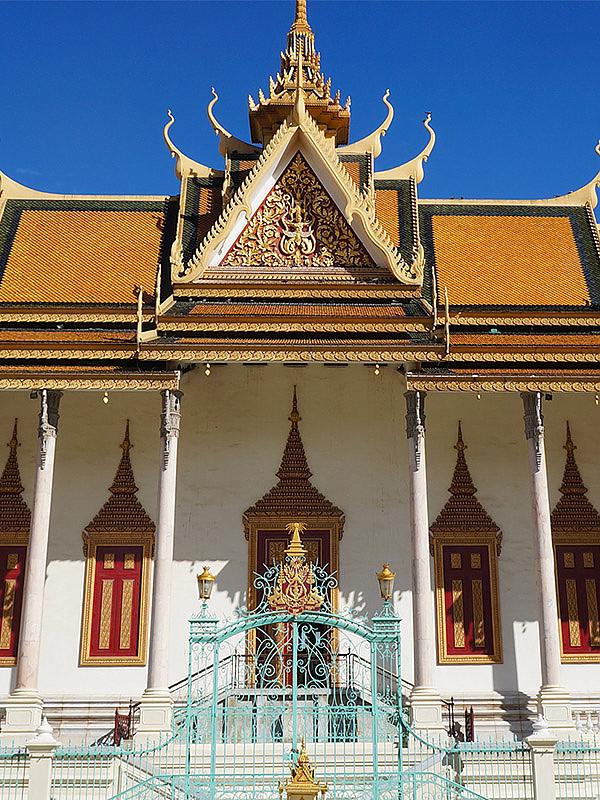
Highlights include the Royal Palace, Silver Pagoda, National Museum, and Wat Phnom. Travelers can also visit important historical sites connected to the Khmer Rouge period, including Tuol Sleng Genocide Museum and the Killing Fields, which provide important context for understanding Cambodia today.
Many first-time visitors choose to add Phnom Penh after Siem Reap because the two destinations offer a more complete picture of Cambodia, one representing the country’s ancient civilization, the other its modern identity.
Tonle Sap Lake | Experience Cambodia’s water-based life
Must-Visit Rating: 4/5
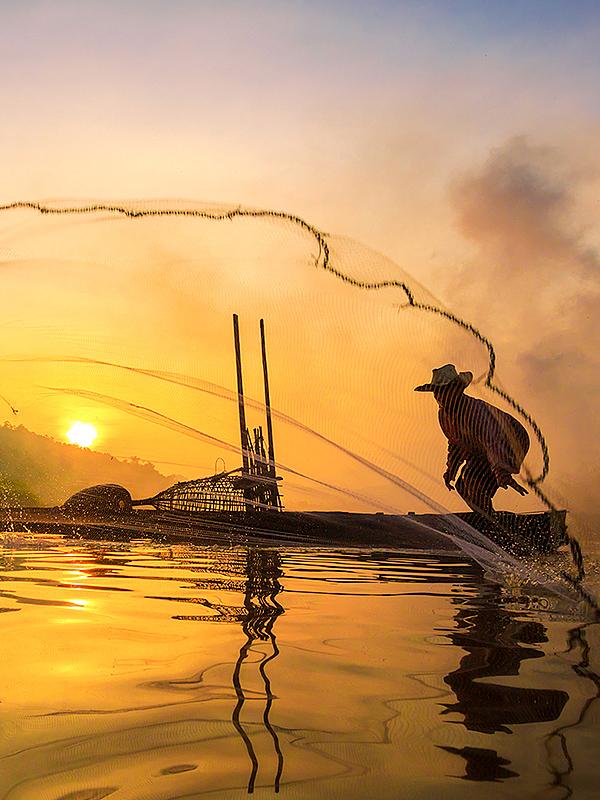
Tonle Sap Lake offers a different perspective on Cambodia, where communities have adapted their daily lives around the water. A boat experience can take travelers through floating villages, local communities, and waterways where homes, schools, and markets are connected to the lake.
Beyond a short sightseeing stop, travelers who spend more time around Tonle Sap can discover local crafts, traditional fishing communities, and natural areas such as Prek Toal, known for its birdlife.
Tonle Sap is usually added as an experience rather than a standalone destination. It works especially well for travelers who want to see everyday Cambodia beyond temples and major cities.
Koh Rong | Cambodia’s island escape
Must-Visit Rating: 3.5/5
If you want to slow down after temple exploration, Koh Rong offers Cambodia’s most relaxing beach experience. The island is known for clear water, sandy beaches, and a quieter atmosphere compared with many popular Southeast Asian beach destinations.
Most travelers go directly to Koh Rong rather than spending much time in Sihanoukville. The island works best as an extension to a longer Cambodia itinerary, giving travelers a few days to relax after cultural sightseeing.
A Koh Rong stay is especially suitable for travelers who prefer a balanced trip with both exploration and downtime.
Battambang | Discover a quieter side of Cambodia
Must-Visit Rating: 3/5
Battambang offers a more local and less-visited side of Cambodia. Compared with Siem Reap and Phnom Penh, the city has a slower pace, with colonial architecture, countryside landscapes, historic temples, and traditional experiences.
Highlights include Wat Ek Phnom, Phnom Banan, local villages, and the famous bat caves where thousands of bats fly out at sunset. Battambang is not usually a must-see for a first short trip, but it is a rewarding addition for travelers who want to explore beyond Cambodia’s main highlights.
-
No. Angkor Wat is Cambodia’s most famous attraction, but it is only one part of the experience. Cambodia can also offer local communities, countryside landscapes, cultural experiences, beaches, and a deeper look at the country’s history.
Local life and countryside: Beyond the temples, Cambodia’s countryside offers opportunities to see traditional villages, local markets, farming communities, and everyday life away from major tourist sites.
Life around Tonle Sap Lake: Tonle Sap shows a different side of Cambodia, where communities have adapted their lives around the water. Boat experiences allow travelers to see floating villages and understand local lifestyles.
Cambodia’s modern history and culture: Phnom Penh adds another layer to the journey, with royal heritage, museums, Buddhist traditions, and important historical sites that help travelers understand Cambodia today.
Time to slow down: After cultural exploration, destinations such as Koh Rong allow travelers to relax by the beach and enjoy a slower pace.
For travelers planning a longer Southeast Asia journey, Cambodia can also be combined with neighboring countries such as Thailand, Vietnam, or Laos. Many travelers spend several days exploring Angkor before continuing to another destination, creating a more varied trip with different cultures, landscapes, and experiences.
Whether you focus on Angkor, explore more of Cambodia, or combine it with another country depends on your travel time, interests, and preferred pace. A shorter trip can focus on Cambodia’s highlights, while a longer journey allows more time for local experiences, relaxation, and deeper exploration.
-
A private Cambodia tour with Odynovo includes the key services needed for a comfortable and flexible journey. Instead of following a fixed group schedule, you travel with your own guide, vehicle, and driver, with the itinerary planned around your interests, travel pace, and group needs.
Your tour can include airport transfers, private transportation, local guides, sightseeing arrangements, and carefully selected accommodations based on your preferences. Beyond these services, the main advantage of a private tour is having an itinerary designed around the way you want to experience Cambodia.
This is especially valuable when exploring the Angkor complex, which includes temples from different periods with different architectural styles and historical backgrounds. For first-time visitors, it can be difficult to know how Angkor Wat, Angkor Thom, Bayon, Ta Prohm, and other sites differ, or which ones are most suitable for your interests. A local expert can help create a route based on what you want from the experience, whether you are interested in history, architecture, photography, or simply seeing the highlights at a comfortable pace.
A private itinerary also gives you control over how much time you spend at each site. You may choose to spend longer at Angkor Wat to understand its history and enjoy the sunrise, take more time at Bayon to appreciate its stone faces, or shorten visits to smaller sites if you prefer a lighter schedule. For families and multi-generational groups, the itinerary can also be adjusted with more breaks, less walking, and a pace that works for everyone.
-
Visitors must obtain a visa to Cambodia except for visa-exempted countries (Brunei, Indonesia, Laos, Malaysia, Philippines, Seychelles, Singapore, Thailand, Vietnam). A tourist visa allows a single entry, 3-month validity, and a maximum stay of 30 days. Most nationalities can obtain a tourist e-visa or visa on arrival(VOA).
Travelers can get a Visa on Arrival at major ports of entry, including Siem Reap Angkor International Airport (SAI), Phnom Penh International Airport (PNH), and key land border crossings with Thailand, Laos, and Vietnam. Required documents include:
1. Passport valid for at least 6 months with 2 blank pages.
2. Completed application form (available on the plane, at the airport, or at border crossings).
3. Passport photograph (travelers without a photo can pay a small fee for a digital passport scan).
4. USD cash to pay the visa fee.However, to avoid delays at the port of entry, we recommend applying for an e-Visa online in advance. Required items for an e-Visa include:
1. Passport valid for at least 6 months with 2 blank pages.
2. Recent, passport-style photograph in digital format.
3. Credit or debit card to pay the processing fee.